




Journal
The Hidden Language of Sneaker Design: What Every Stitch Says
Because the most interesting sneakers don’t announce themselves, they reveal themselves.
15th January 2026
Sneakers Speak, If You Know How to Listen
In today’s sneaker landscape, noise is everywhere. Oversized logos, exaggerated soles, aggressive silhouettes. Yet quietly, almost deliberately, a different language has emerged, one spoken through restraint, proportion, and detail.
The most refined mens designer sneakers and women’s designer trainers don’t shout. They communicate through subtleties: the angle of a panel, the tension of a stitch, the way leather folds rather than cracks.
Design, at this level, is a form of language. And every element is saying something.
Panel Structure: The Architecture of a Sneaker
Panels are not decoration. They are structure.
Where panels are placed determines how a sneaker moves, flexes, and ages. Clean panel layouts suggest confidence and clarity of intent. Overly complex ones often signal indecision or distraction.
Jasperosso’s approach to panel design reflects the principles explored in The Making of a Modern Classic: How Jasperosso Designs with Timelessness in Mind. Each line exists for a reason. Each seam follows the natural movement of the foot.
In modern sneaker fashion, this architectural clarity has become a marker of quality, especially among those seeking handmade sneakers UK that balance aesthetics with longevity.
Stitching as Signature
Stitching is one of the most revealing details in sneaker design and one of the most overlooked.
Tight, consistent stitching suggests patience and control. Slight variations, when intentional, reveal the human hand behind the work. Excessive or decorative stitching often exists to distract from weaker construction.
In high-quality mens designer trainers and women’s designer sneakers, stitching quietly reinforces structure rather than drawing attention to itself.
This philosophy is deeply rooted in the artisan process detailed in Leather Diaries: From Tannery to Sneaker, The Journey Behind Your Sole, where every stitch is functional before it is aesthetic.
Texture: The First Thing You Feel
Before a sneaker is worn, it’s touched.
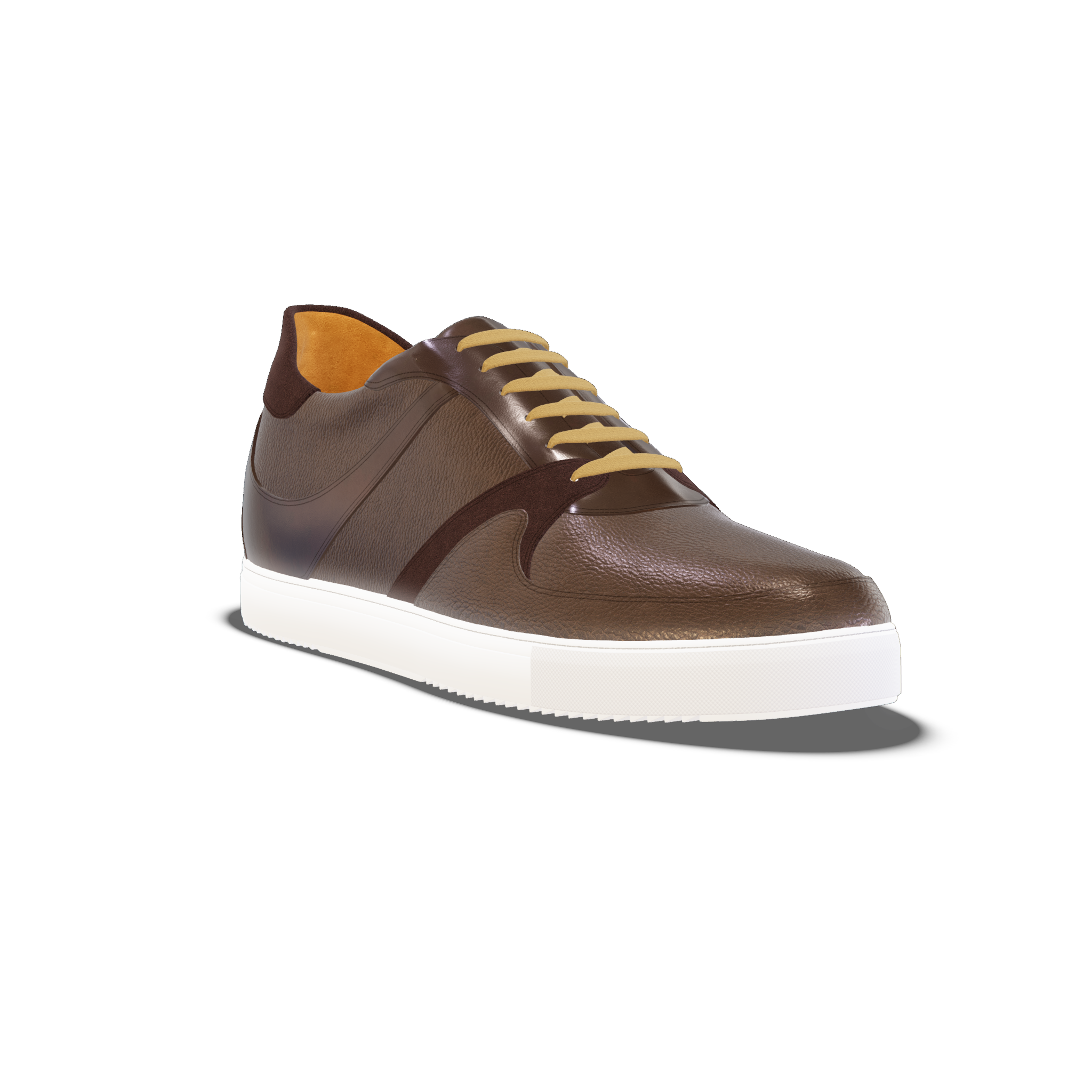
Texture tells an immediate story. Pebbled leather communicates durability and understatement. Smooth calf leather suggests refinement. Suede introduces warmth and softness. Synthetic finishes, by contrast, often feel cold and uniform, because they are.
Texture is where craftsmanship becomes tangible. It’s also why those drawn to custom made sneakers tend to care deeply about material choice. When you select texture intentionally, you’re shaping how the sneaker will age and how it will feel every time you wear it.
Why Minimal Design Is the Hardest to Execute
Minimal sneakers dominate today’s luxury footwear landscape but minimal doesn’t mean simple.
In fact, the cleaner the design, the more exposed its flaws. Poor proportions can’t hide. Cheap materials reveal themselves quickly. Inconsistent stitching becomes obvious.
This is why the rise of understated luxury is inseparable from craftsmanship. As discussed in Luxury, Not Loud: The Rise of Quiet Customisation, restraint demands confidence and technical excellence.
Minimal sneakers succeed not because they do less, but because everything they do is deliberate.
Logos Fade. Lines Endure.
Fashion history has shown this repeatedly: logos date. Proportion doesn’t.
The current shift in sneaker culture away from branding-heavy designs reflects a broader maturity among consumers. Style-conscious wearers now look for cues that signal taste rather than trend.
A well-drawn line. A balanced sole height. A considered heel tab.
These are the signals that resonate with collectors and everyday wearers alike, particularly those investing in mens designer sneakers meant to last beyond a season.
The Human Element in Design
Even the most advanced manufacturing can’t replicate intuition.
Handmade sneakers carry subtle irregularities, not flaws, but fingerprints. These details add character and individuality, reminding the wearer that the product wasn’t assembled by algorithm alone.
This human presence is central to the craft explored in Meet the Makers: The Artisans Behind Your Jasperosso Sneakers, where design intent meets skilled execution.
In an age of automation, these quiet signs of humanity have become a luxury in their own right.
When Design Tells a Story
Every design decision reflects a philosophy.
A sneaker designed for speed looks aggressive. One designed for longevity looks balanced. One designed for attention seeks contrast. One designed for confidence relies on harmony.
Jasperosso sneakers are designed to move seamlessly between contexts, work, travel, leisure, a versatility also explored in Travel in Sole-Style: From Airport to Aperitivo.
This narrative coherence is what separates thoughtful design from surface styling.
Why Personalisation Sharpens Design Awareness
When you design your own sneakers, you start noticing things you might otherwise ignore.
Panel placement suddenly matters. Stitch colour feels consequential. Texture becomes a decision rather than a default.
This heightened awareness is part of the experience described in Behind the Digital Canvas: How Our 3D Customiser Reinvents Bespoke, where design literacy becomes part of ownership.
Personalisation doesn’t just change what you wear. It changes how you see.
Reading Sneakers Like a Blueprint
Once you understand the language, sneakers become readable.
You start recognising quality instantly. You notice balance. You feel intention. And you can tell when something has been designed to endure rather than impress briefly.
This is why collectors, minimalists, and design-led consumers increasingly gravitate towards women’s designer trainers and mens designer sneakers that prioritise form, material, and construction over spectacle.
The language of design is subtle but unmistakable.
Closing Thought
The best sneakers don’t need explaining.
Their craftsmanship is visible in their lines. Their quality felt in their materials. Their intention revealed over time.
Every stitch says something. Every panel carries meaning. Every texture tells a story.
Once you learn how to read them, you’ll never look at sneakers the same way again.

By Jasper Trumble