


Journal
The New Dress Code: Why Sneakers Have Replaced Shoes (Almost Everywhere)
Once a rebellion, now a rule, sneakers didn’t just enter formal spaces. They rewrote them.
2nd February 2026
Introduction: When Nobody Announced the Change
There was no memo. No meeting. No moment where the rules were officially rewritten.
And yet, somewhere between boardrooms, private dinners, and gallery openings, sneakers quietly replaced shoes.
Not all sneakers, of course. And not everywhere. But enough that the shift feels irreversible.
What was once a signal of rebellion is now a marker of fluency, a quiet understanding of modern dress codes that are less written and more absorbed. Today, the question is no longer whether sneakers are acceptable, but which ones are.
This article isn’t about styling tips. It’s about how culture changed the rules beneath our feet and why mens designer sneakers and women’s designer trainers became the most socially adaptable footwear of the last decade.
From Subculture to Signal
Sneakers didn’t enter formal spaces politely. They arrived through disruption.
First came creatives, designers, architects, photographers, wearing sneakers not as provocation, but practicality. Then tech followed, flattening hierarchies and questioning tradition. Finance and law resisted longest, but even they eventually conceded.
The turning point wasn’t fashion. It was behaviour.
People stopped changing shoes when they changed context. They wanted footwear that could move from desk to dinner, from travel to meeting, without apology.
That demand reshaped expectations and elevated sneakers from casualwear to cultural shorthand.
Comfort as a Status Symbol
For decades, discomfort was a badge of seriousness. Leather soles. Hard edges. Pain as professionalism. That logic collapsed.
Modern luxury now signals control rather than sacrifice. Wearing comfortable footwear into formal spaces doesn’t suggest laziness, it suggests autonomy. The wearer is not bound by outdated rules, but fluent in new ones.
This shift is explored more deeply in The Psychology of Wearing: How Your Shoes Influence How You Move Through the World, where comfort is shown to affect posture, confidence, and presence.
In short: people move differently when they feel at ease. Others notice.
The Collapse of the Written Dress Code
Dress codes used to be explicit. Black tie. Business formal. Smart casual. Today, they’re interpretive.
Sneakers succeeded not because rules disappeared, but because they became ambiguous. And ambiguity rewards those who understand nuance.
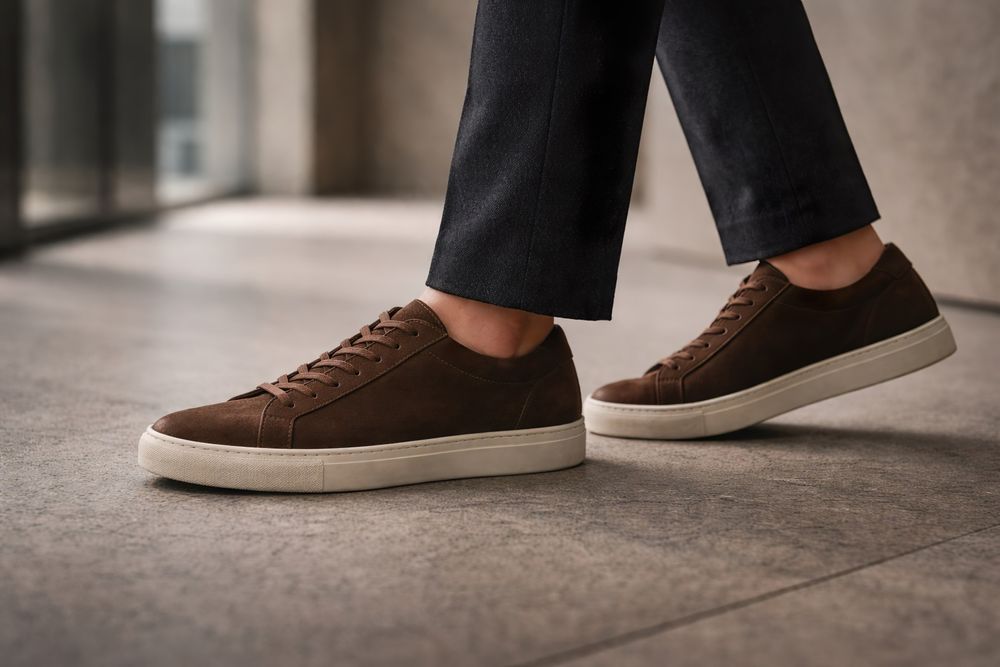
This is why not all sneakers qualify. Loud branding, exaggerated soles, and trend-led shapes still feel out of place in formal environments. The sneakers that succeed are those that borrow the language of shoes, restraint, proportion, material quality, while offering the comfort of trainers.
It’s a balance Jasperosso approaches deliberately through custom made sneakers, designed to read as composed rather than casual.
What Makes a Sneaker “Acceptable”?
Acceptance is not accidental. It’s engineered. Across offices, galleries, and social spaces, the sneakers that pass share common design cues:
- Clean silhouettes
- Neutral palettes
- High-quality leather
- Minimal branding
- Balanced sole profiles
These are not trends. They’re signals.
They suggest intention rather than ease. Choice rather than compromise. This design logic mirrors what’s explored in The Making of a Modern Classic: How Jasperosso Designs with Timelessness in Mind, where longevity and restraint are treated as functional advantages.
The sneaker doesn’t ask permission. It belongs.
Sneakers and the Death of “Occasion Dressing”
Modern life is less segmented than it once was.
Work bleeds into leisure. Travel blends with meetings. Social occasions overlap. Footwear designed for a single context now feels inefficient.
This is where sneakers thrive.
A well-designed sneaker adapts, not by being invisible, but by being appropriate enough everywhere. This versatility explains why handmade sneakers UK searches have risen alongside demand for fewer, better purchases.
The sneaker has become the backbone of a functional wardrobe.
Why Shoes Didn’t Disappear — They Were Replaced
This isn’t an argument that shoes vanished. It’s that sneakers evolved faster.
Traditional shoes struggled to adapt to new expectations around movement, comfort, and longevity. Sneakers, meanwhile, absorbed the visual language of shoes while retaining their ergonomic advantage.
The result is a hybrid category, one that performs socially and physically.
This is particularly evident in minimalist leather sneakers, where structure and material do the work once handled by formality alone.
Taste Replaced Rules
In the absence of rigid dress codes, taste became the gatekeeper.
Sneakers didn’t democratise dress, they refined it.
Wearing the right sneaker signals discernment. Wearing the wrong one still breaks the unspoken rules. This subtle distinction is why mens designer trainers and women’s designer sneakers now occupy a cultural middle ground, more expressive than shoes, more controlled than casual trainers.
Taste is no longer about following instructions. It’s about reading the room.
Sneakers in Cultural Institutions
Galleries. Museums. Theatres.
These spaces reflect cultural values and they’ve embraced sneakers not as fashion statements, but as neutral tools. The focus is no longer on the shoe itself, but on the person wearing it.
This mirrors a broader cultural shift away from performative formality and towards intellectual presence.
The sneaker, when designed with restraint, fades into the background and that invisibility is its greatest strength.
Longevity as Cultural Currency
Fast fashion eroded trust. Sneakers that fell apart quickly trained consumers to expect replacement.
But the sneakers now appearing in formal spaces are built differently. They’re chosen with longevity in mind, physically and stylistically.
This connects directly to the logic explored in The Cost-Per-Wear Fallacy: Why Expensive Sneakers Are Often the Smartest Buy, where repeated wear becomes the true measure of value.
Cultural acceptance follows durability. What lasts earns legitimacy.
Why Sneakers Feel “Modern”
Modernity isn’t about novelty. It’s about relevance.
Sneakers feel modern because they align with how people live now, fluidly, globally, without costume changes. They suit travel. They suit walking. They suit standing for long periods.
Formal shoes, by contrast, were designed for static lives.
Sneakers didn’t just enter modern spaces. They reflected modern behaviour.
The Quiet Role of Customisation
As dress codes loosened, individuality gained importance.
Sneakers offered a way to express personal preference without spectacle. Through subtle customisation, leather choice, finish, construction, wearers gained ownership without excess.
This philosophy aligns with Luxury, Not Loud: The Rise of Quiet Customisation, where control replaces decoration as the new luxury signal.
When everyone wears sneakers, the difference is in how they’re made.
What Happens Next
Sneakers won’t replace shoes everywhere. Nor should they.
But they’ve permanently claimed territory once thought inaccessible. Offices, dinners, cultural spaces, these environments no longer demand discomfort as proof of seriousness.
The new dress code is not about what’s allowed. It’s about what feels appropriate.
And increasingly, that means a sneaker designed with intention, restraint, and respect for context.
Closing Thought
Sneakers didn’t win by shouting.
They won by listening.
They adapted to how people live, move, and think and in doing so, became the most culturally fluent footwear of our time.
The dress code didn’t change overnight.
It simply stopped needing to be explained.
By Jasper Trumble