


Journal
The Invisible Decisions: Design Choices You Never Notice (But Always Feel)
Great sneakers don’t demand attention. They earn trust.
17th February 2026
The Details You Don’t Se
When people talk about sneakers, they talk about colour, silhouette, and materials. They notice panel lines. They comment on leather grain. They compare toe shapes.
What they rarely discuss are the decisions that matter most.
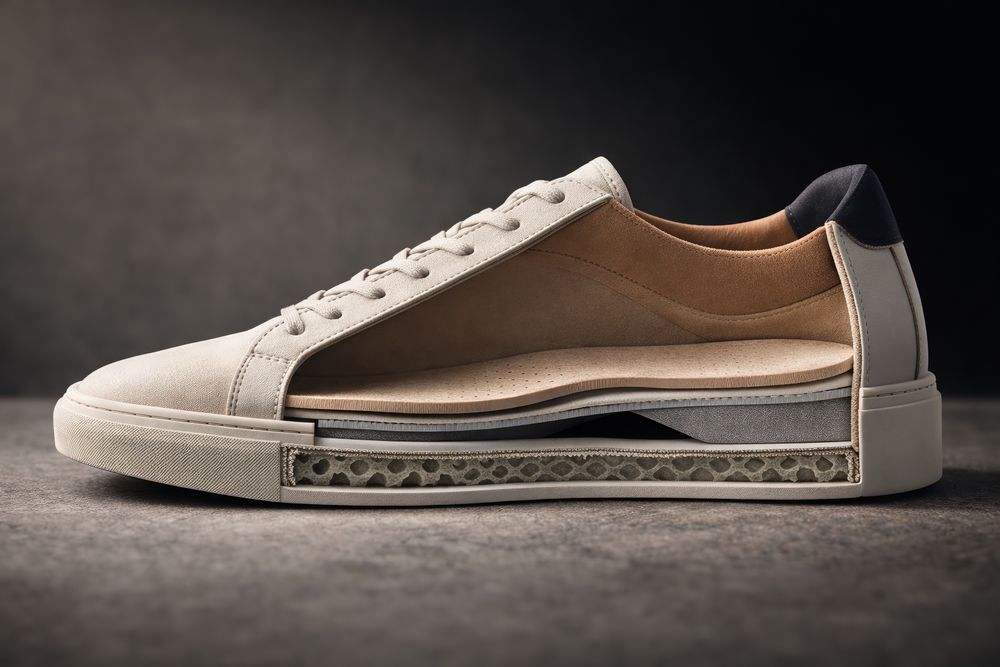
Heel pitch. Sole density. Weight distribution. Internal reinforcement. Flex geometry. These are not visible from across the room but they are felt within the first ten steps.
The best mens designer sneakers and women’s designer trainers succeed not because of what they show, but because of what they hide.
Comfort Is Engineered, Not Added
Comfort is often treated as a feature, something inserted at the end of the design process. A padded collar here. A softer insole there.
But true comfort begins far earlier.
It begins with proportion. With how the last (the mould shaping the shoe) mirrors the human foot. With how the internal volume allows movement without friction. With how materials respond to pressure over time.
This philosophy of designing from the inside out echoes the thinking behind The Making of a Modern Classic: How Jasperosso Designs with Timelessness in Mind, where longevity and structural integrity are treated as foundational, not decorative.
Comfort is not an accessory. It is architecture.
The Mathematics of Balance
Every sneaker has a centre of gravity.
If weight is distributed poorly, too much mass in the sole, too much stiffness in the heel, the wearer compensates unconsciously. Shoulders adjust. Stride shortens. Fatigue sets in earlier.
A well-balanced sneaker disappears underfoot. It supports movement rather than altering it.
This is particularly important in handmade sneakers UK, where buyers expect craftsmanship not only in appearance, but in physical experience.
When balance is correct, you don’t notice it. You simply move naturally.
Heel Pitch: The Millimetres That Change Everything
Heel pitch, the difference in height between heel and forefoot, is rarely discussed outside design studios.
Yet it profoundly affects posture.
Too steep, and the wearer leans forward. Too flat, and strain shifts to the lower back and calves. The right pitch encourages upright posture without forcing it.
These millimetres determine whether a sneaker feels athletic, relaxed, or formal. They influence how a shoe performs in environments now dominated by sneakers, offices, galleries, dinners, as explored in The New Dress Code: Why Sneakers Have Replaced Shoes (Almost Everywhere).
Invisible adjustments shape visible confidence.
Sole Density and the Illusion of Lightness
Soft soles feel comfortable, briefly.
Over time, overly soft materials compress. Shock absorption diminishes. The sneaker begins to feel tired. What once felt luxurious becomes unstable.
The right sole density strikes a balance between cushioning and structural resilience. It absorbs impact without collapsing.
This engineering contributes directly to the economic logic outlined in The Cost-Per-Wear Fallacy: Why Expensive Sneakers Are Often the Smartest Buy. When a sole maintains performance over years rather than months, value compounds.
Durability is often a density decision.
Internal Reinforcement: Strength Without Stiffness
Inside every well-made sneaker lies reinforcement the wearer never sees.
Heel counters stabilise the rear foot. Midfoot shanks distribute pressure. Internal stitching secures stress points.
The goal is paradoxical: provide structure without rigidity. Support without resistance.
This quiet strength underpins the emotional security explored in The Psychology of Wearing: How Your Shoes Influence How You Move Through the World. When footwear feels stable, the wearer moves with greater assurance.
Confidence often begins with something unseen.
Flex Points and Natural Movement
A sneaker that doesn’t bend where the foot bends will fight the wearer.
Designers study natural gait patterns to determine flex points, typically aligned with the ball of the foot. Poorly aligned flex zones create creasing, pressure, and fatigue.
The elegance of a sneaker often lies in how little resistance it offers to natural motion.
In mens designer trainers and women’s designer sneakers designed for long days rather than short appearances, this detail is critical.
When flex works correctly, walking feels intuitive.
Weight: The Silent Variable
Lightweight sneakers are often marketed as superior. But lightness alone is not the goal.
A shoe that is too light can feel insubstantial. Too heavy, and it feels burdensome.
The ideal weight creates psychological neutrality. The wearer does not feel dragged down, nor unsupported.
This subtle calibration is especially relevant in custom made sneakers, where individual preferences in materials and sole composition influence total mass.
The right weight feels inevitable.
Internal Climate and Breathability
Comfort is not just structural. It is environmental.
Internal lining materials affect temperature regulation and moisture control. Breathability influences long-term wear satisfaction more than initial try-on impressions.
Luxury footwear increasingly prioritises interior experience as much as exterior appearance, a shift aligned with modern definitions of value explored in What We Mean by “Luxury” in 2026 (And Why the Old Definition No Longer Works).
True luxury integrates comfort invisibly.
Why You Notice Bad Design Immediately
Interestingly, you rarely notice good engineering but you always notice its absence.
Hot spots. Slippage. Heel lift. Arch fatigue. These discomforts signal design compromises.
In mass-market footwear, shortcuts are common. Speed of production often outweighs precision of construction.
This is where craftsmanship becomes measurable rather than romantic. The processes detailed in Leather Diaries: From Tannery to Sneaker — The Journey Behind Your Sole reveal how internal quality decisions influence long-term wear.
The invisible choices are the ones that endure.
The Relationship Between Structure and Style
Invisible engineering does more than protect comfort. It protects appearance.
Poor internal support leads to external collapse. Toe boxes flatten. Leather creases aggressively. Soles warp.
Well-engineered sneakers maintain their silhouette over time. The visible design survives because the invisible structure supports it.
This synergy between seen and unseen ensures that mens designer sneakers remain visually composed long after trend-led alternatives fatigue.
Longevity is a structural consequence.
The Discipline Behind Minimalism
Minimal sneakers are unforgiving.
Without bold graphics or complex overlays, structural weakness becomes visible quickly. Clean design demands internal excellence.
This design discipline is examined in White Isn’t Basic: The Most Misunderstood Colour in Luxury Footwear, where simplicity exposes shortcuts.
Minimalism is not aesthetic laziness. It is structural accountability.
Why Great Sneakers Disappear
Perhaps the highest compliment a sneaker can receive is this:
“I forgot I was wearing them.”
When footwear disappears, attention shifts outward, to conversations, movement, experience. The wearer is no longer adjusting posture or noticing discomfort.
This disappearance is not accidental. It is engineered.
In the best women’s designer trainers and mens designer trainers, invisibility is the ultimate performance metric.
The New Expectation
Consumers are more discerning than ever.
They expect footwear that performs beyond aesthetics. They expect internal precision that matches external refinement.
This expectation has elevated the role of engineering in luxury sneakers. It has shifted focus from trend to structure, from novelty to performance.
The future of footwear belongs to those who master the invisible.
Closing Thought
The greatest design decisions are the ones you never consciously register. They live in the millimetres of heel pitch. In the density of a sole. In the weight distribution across a stride. In the reinforcement hidden beneath leather.
When these decisions are correct, you don’t notice them.
You simply move better.
And sometimes, that’s the most luxurious feeling of all.
By Jasper Trumble