


Journal
The Weight of a Well Made Sneaker
3rd June 2026
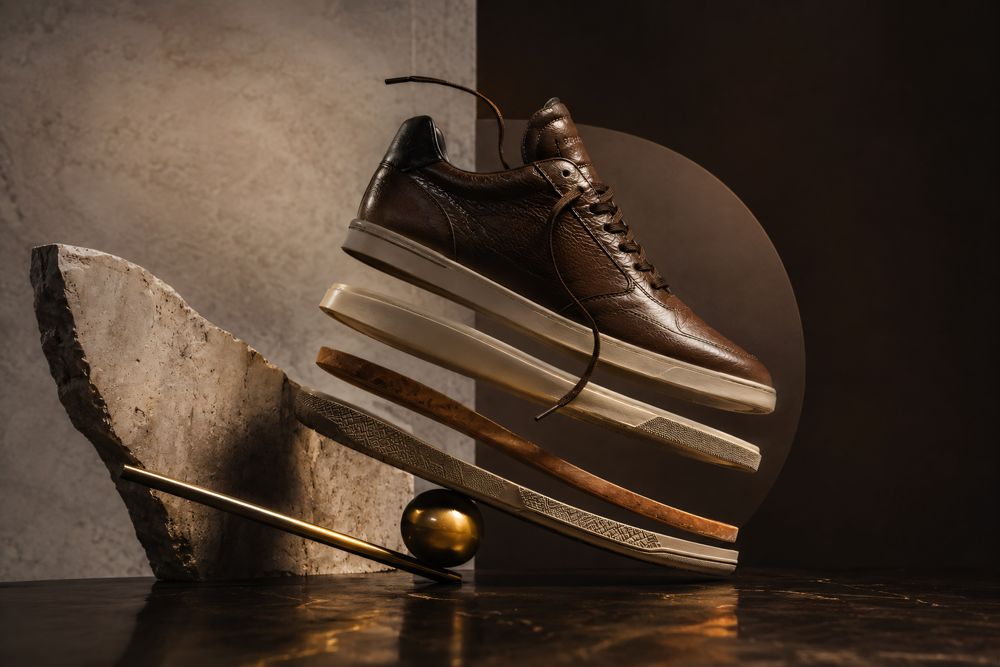
There is a moment that happens before a sneaker is worn. Before the laces are tightened, before the first step is taken, and before comfort, fit, or style have had an opportunity to influence opinion. It happens the instant the shoe is lifted from the box.
Most people do it without thinking. They pick up the sneaker, turn it over in their hands, press the leather between their fingers, and make a judgement long before they realise they are making one. Within seconds, assumptions begin to form. Does it feel substantial? Does it feel cheap? Does it feel carefully made? Does it feel worth what it costs?
What is fascinating is that these reactions are rarely conscious. Nobody stands in front of a new pair of sneakers and announces that they are conducting an assessment of material density and construction quality. Yet that is precisely what the brain is doing. Weight is one of the oldest signals of value that human beings respond to, and despite all the advances in manufacturing, design, and marketing, it remains remarkably influential.
This is not to suggest that heavier is always better. It is not. Nor is it an argument that luxury should be measured in kilograms. Rather, it is an exploration of why so many premium products share a common characteristic: they possess a reassuring sense of substance. Whether it is a mechanical watch, a handcrafted leather briefcase, or a pair of luxury sneakers, there is often something deeply satisfying about holding an object that feels as though it has been made properly.
In an era obsessed with making everything lighter, thinner, faster, and more disposable, the weight of a well made sneaker tells a surprisingly important story.
For a broader look at long-term craftsmanship and ownership, explore → Journal: Designed Once, Worn Forever
Why Heavier Doesn’t Always Mean Worse
Modern culture has developed a curious obsession with lightness. Phones become thinner every year, laptops compete to remove every possible gram, and consumer technology frequently markets weight reduction as though it were a moral achievement rather than a design choice. Footwear has followed a similar path. Many sneaker advertisements now celebrate weight savings with such enthusiasm that one could be forgiven for assuming customers spend their evenings weighing shoes on kitchen scales.
There is nothing inherently wrong with this. In performance footwear, reducing weight can deliver genuine benefits. Competitive runners, cyclists, and elite athletes operate in environments where marginal gains matter. Every gram removed may contribute to performance. But luxury footwear is rarely attempting to solve the same problem.
A luxury sneaker is not trying to disappear. It is trying to endure.
That distinction changes everything.
The qualities that define luxury are not necessarily the qualities that define elite performance products. Luxury values craftsmanship, longevity, comfort, material quality, and emotional attachment. These attributes often require materials that are naturally more substantial. Full-grain leather weighs more than synthetic alternatives. Premium linings have greater density than lightweight substitutes. Traditional construction methods often involve more material than aggressively cost-optimised manufacturing techniques.
As a result, premium sneakers frequently possess a reassuring sense of weight. Not because designers are intentionally making them heavier, but because quality has physical consequences.
This is one of the great misconceptions surrounding luxury products. Consumers are often taught to equate less material with innovation and more material with inefficiency. Yet many of the products most admired for their craftsmanship feel substantial precisely because they contain the ingredients necessary to create lasting quality.
The Psychology of Holding Quality
The relationship between weight and perceived value is deeply rooted in human psychology. Numerous studies have demonstrated that people consistently associate heavier objects with greater importance, credibility, and quality. Heavier books are perceived as containing more serious information. Heavier packaging is often judged as more premium. Even something as simple as the weight of a clipboard has been shown to influence how authoritative people perceive information to be.
This may seem irrational, but it makes a certain kind of sense.
Weight suggests effort. It implies material investment. It creates the impression that resources, attention, and care have gone into creating the object. In many cases, that assumption is correct.
Luxury industries understand this instinctively. A fine mechanical watch rarely feels weightless. A premium fountain pen possesses reassuring density. A handcrafted leather travel bag communicates quality the moment it is lifted from the floor.
The same principle applies to footwear.
When someone picks up a luxury sneaker, they are not merely evaluating its appearance. They are processing dozens of subtle signals simultaneously. Material density, structural integrity, balance, texture, and weight all contribute to an immediate impression of quality. Long before a single step has been taken, the product has already begun telling its story.
This is one reason why premium footwear often feels different before it even looks different.
What Premium Materials Actually Feel Like
Material quality is one of those things people recognise instantly but often struggle to describe. Ask someone why one sneaker feels luxurious and another does not, and the answer is usually surprisingly vague. It feels richer. It feels better made. It feels more expensive.
These descriptions may lack technical precision, but they are remarkably accurate.
Premium materials possess characteristics that are difficult to replicate convincingly. Full-grain leather has density, texture, warmth, and structure. It bends differently. It responds differently to touch. It creates resistance where synthetic materials often collapse or deform. Even before wear begins, the material communicates durability and authenticity.
This is one reason leather remains so central to luxury footwear despite decades of alternatives.
Explore this further in → Journal: Why Leather Still Wins (Despite Everything)
A high-quality leather sneaker feels alive in a way that many synthetic products do not. The material has depth. It reflects light differently. It carries subtle variation. It feels honest.
Luxury is often discussed visually, but much of its appeal is tactile. The experience of ownership begins with touch. A beautifully made sneaker should feel premium before it ever proves itself through performance. The best products create confidence through sensory experience alone.
That confidence is difficult to manufacture artificially.
The Difference Between Weight and Bulk
Of course, there is an important distinction to be made between weight and bulk. The two are often confused, but they are not the same thing.
A poorly designed sneaker can feel heavy because it is inefficient. A well-made sneaker feels substantial because it has been thoughtfully constructed. One creates fatigue. The other creates confidence.
This distinction matters enormously in luxury.
No one wants a sneaker that feels cumbersome. Luxury should never feel awkward or burdensome. Instead, it should feel balanced. The materials should provide structure without stiffness. The construction should create durability without excess. The overall experience should feel deliberate rather than over-engineered.
The best luxury sneakers achieve this balance beautifully. They possess enough substance to communicate quality, but they distribute that substance so effectively that what the wearer notices is stability rather than weight.
This is where true craftsmanship becomes visible.
The consumer may never consciously analyse the engineering decisions behind the product. They may never consider the relationship between leather thickness, lining density, sole construction, and weight distribution. But they experience the result.
And the result feels effortless.
Luxury Watches, Leather Bags, and the Comfort of Substance
There is an interesting pattern across luxury categories. The products people tend to treasure most often possess a reassuring sense of physical presence.
Consider luxury watches. A beautifully made mechanical watch does not feel fragile. It feels substantial. The same applies to premium leather briefcases, handcrafted luggage, fine furniture, and even certain writing instruments. These products often communicate quality through weight long before any technical details are discussed.
Why?
Because substance creates confidence.
Objects that feel physically present tend to feel trustworthy. They suggest durability. They imply permanence. They communicate the sense that they were built to remain rather than merely exist.
Luxury sneakers share this characteristic.
A well-made sneaker should feel capable. It should inspire confidence. It should suggest longevity before longevity has been proven.
This does not mean weight is the only indicator of quality. Far from it. But it remains one of the most immediate and instinctively understood signals available.
The moment you pick up a premium sneaker, you should feel that something meaningful has been invested in its construction.
When Lightness Becomes a Compromise
Every design decision involves trade-offs. The pursuit of lightness is no exception.
Reducing weight often requires removing material. Sometimes this is entirely appropriate. Other times it introduces compromises that remain invisible until months or years later.
Thinner materials may save weight, but they may also reduce longevity. Simplified construction may improve efficiency, but it may also affect durability. Lightweight components may feel impressive initially, but they may age differently under long-term use.
Luxury products are judged over longer timelines than most.
They are expected to justify ownership not merely at the point of purchase, but throughout years of wear. This changes the calculation. Suddenly, a modest increase in weight may be entirely worthwhile if it delivers superior comfort, durability, and craftsmanship.
Viewed through this lens, substance becomes less of a drawback and more of a reflection of priorities.
Luxury products often choose longevity over optimisation.
And that choice is frequently visible.
Why Cheap Products Often Feel Suspiciously Light
Almost everyone has experienced the strange disappointment of picking up a product and immediately sensing that something is missing.
The object may look convincing. The branding may be impressive. The photography may have been exceptional.
Then you pick it up.
Suddenly, the illusion weakens.
It feels hollow. Insubstantial. Almost as though someone forgot to finish making it.
This reaction is remarkably common because many cost-saving measures are physically detectable. Lower-density materials, thinner construction, and simplified manufacturing techniques often result in products that feel lighter not because they have been expertly engineered, but because there is simply less of them.
Consumers recognise this instinctively.
The relationship between weight and quality is not perfect, but it exists for a reason. Material shortcuts often leave physical evidence. Luxury products, by contrast, tend to embrace the materials and construction methods necessary to create lasting value.
As a result, quality often feels tangible.
And tangible evidence remains remarkably persuasive.
The Invisible Engineering of Balance
Perhaps the most impressive aspect of a well-made sneaker is that its quality rarely announces itself loudly. Instead, it reveals itself through balance.
Weight distribution is a perfect example. The finest sneakers do not draw attention to their construction. They simply feel right. The sole supports without dominating. The upper provides structure without restriction. The materials work together harmoniously.
This balance requires considerable expertise.
Explore the craftsmanship behind this process in → Journal: Meet the Makers – The Artisans Behind Your Sneakers
Great footwear is not merely assembled. It is resolved. Every decision contributes to an experience that feels effortless. Consumers may never notice the complexity involved, but they recognise the result immediately.
The sneaker feels planted without feeling heavy. Secure without feeling rigid. Luxurious without feeling excessive.
That balance is difficult to fake.
Weight as a Signal of Longevity
Longevity often leaves clues long before time has had an opportunity to confirm it.
Material density, stitching quality, structural integrity, and construction methods all provide hints about how a product is likely to age. Weight is often part of that conversation.
Products designed to last typically contain more substance than products designed to be replaced. Durability requires material. Reinforcement requires material. Quality requires investment.
None of these things are weightless.
This is why consumers frequently associate substance with longevity. The relationship is not always direct, but it is rarely accidental.
A premium sneaker should feel capable of years of ownership. It should suggest permanence. It should communicate that it was built with the future in mind.
For a deeper look at long-term wear and ageing, explore → Journal: What Your Sneakers Will Look Like in Ten Years (If You Bought Well)
The Feeling That’s Difficult to Fake
The luxury industry spends enormous resources trying to communicate quality. Photography, branding, storytelling, campaigns, and packaging all play important roles.
Yet one of the strongest indicators remains remarkably simple.
Pick it up.
The moment a product enters your hands, many of the marketing layers disappear. What remains is material reality.
The density of the leather. The precision of the construction. The balance of the design. These qualities are difficult to fake convincingly because they exist physically rather than symbolically.
Consumers recognise this.
It is one reason thoughtful ownership continues to matter.
Explore this philosophy further in → Journal: The Anti-Collection – Why One Pair Is Enough
And for a broader perspective on how products communicate identity, explore → Journal: What Your Sneakers Say When You’re Not Speaking
Conclusion: More Than Just Weight
The weight of a well-made sneaker is not really about weight at all. It is about what that weight represents.
It represents craftsmanship. It represents material quality. It represents durability, attention to detail, and a willingness to prioritise longevity over shortcuts.
Luxury products rarely rely on a single characteristic to justify their value. Instead, they create an accumulation of signals. Weight is one of those signals. Not because heavier is always better, but because quality often leaves evidence.
And sometimes that evidence is felt before it is seen.
In a world increasingly obsessed with removing substance from everything, there is something reassuring about products that still possess it. A well-made sneaker should not feel heavy. It should feel important.
And there is a difference.
By Jasper Trumble