


Journal
The last 5% is where luxury lives
Why the smallest details make the biggest difference
21st October 2026
There is a peculiar moment when you encounter something exceptionally well made. You might be sitting in a beautifully designed chair, fastening an expensive watch, closing the door of a particularly accomplished motor car or trying on a pair of handcrafted leather sneakers. Nothing dramatic happens. There is no announcement, no theatrical demonstration of craftsmanship and certainly no helpful sign explaining why the object deserves your admiration. Yet almost immediately, you sense that something is different.
The chair feels balanced. The watch clasp closes with reassuring precision. The car door produces a sound that suggests somebody spent an unreasonable amount of time deciding exactly how it should close. The sneakers fit comfortably, the leather feels substantial without being rigid and the various materials appear to belong together rather than having been assembled from a catalogue of fashionable possibilities.
Ask someone to explain precisely what makes these objects feel exceptional and the answer is often surprisingly vague. They might describe the quality, the finish or the attention to detail. Occasionally, they will simply say that it feels expensive, which is an interesting observation because the price tag may not be visible.
What they are recognising is the cumulative effect of decisions that are individually easy to overlook. A fractionally better proportion. A cleaner edge. A more carefully selected material. Stitching that follows the intended line without distraction. A lining that feels pleasant against the skin. The weight of a component, the resistance of a mechanism or the subtle relationship between two contrasting textures.
None of these details necessarily transforms a product on its own. Collectively, however, they can change the entire experience.
This is the territory where luxury becomes genuinely interesting. The obvious elements of a product are relatively easy to recognise and, increasingly, to imitate. Almost anyone can identify an attractive silhouette, an expensive-looking material or a fashionable colour combination. The difference between something that looks luxurious and something that feels exceptional is often found in the decisions made after the broad design has already been established.
The last five per cent is not a literal measurement of manufacturing effort. It is a way of describing the disproportionate influence of seemingly insignificant decisions. The difference between good and exceptional is rarely one spectacular feature. More often, it is the accumulation of small refinements that make the finished object feel coherent, considered and entirely resolved.
And perhaps the most fascinating aspect of these details is that we frequently appreciate them without consciously knowing they exist.
1. Why We Recognise Quality Before We Understand It
Human beings are remarkably good at forming impressions from incomplete information. We notice symmetry, balance, consistency and subtle differences in materials long before we can explain why those characteristics matter. This ability helps us navigate everything from architecture and furniture to clothing and product design.
Consider two leather bags with broadly similar shapes, colours and dimensions. From a distance, they may appear almost identical. Place them side by side, however, and one may immediately seem more refined. Its handles sit at a slightly more pleasing angle. The stitching follows the curves more consistently. The leather has a more natural surface, the hardware feels appropriately weighted and the edges have been finished with greater care.
Individually, these differences may be too subtle to attract attention. Together, they influence our perception of the entire object. We do not necessarily notice each decision, but we recognise the result.
This is partly because visual perception operates through relationships. We respond not only to individual components but to how those components work together. A beautifully finished zip cannot compensate for badly proportioned handles. Expensive leather cannot rescue an awkward silhouette. A technically impressive detail may even make a product less attractive if it disrupts the overall composition.
Quality, therefore, is not simply the presence of desirable characteristics. It is the successful integration of those characteristics into a coherent whole.
The principle applies equally to clothing. A jacket can be made from exceptional cloth yet appear disappointing because the shoulders, lapels and button placement are slightly wrong. Conversely, a relatively restrained garment can look extraordinary when its proportions are beautifully resolved.
This relationship between perception and design is explored in The Beauty of Restraint, where the absence of unnecessary elements allows more important decisions to become visible.
The interesting implication is that exceptional design often requires the maker to concentrate on details the customer may never identify. The objective is not to receive recognition for every decision. It is to create an experience in which those decisions contribute to an overall impression of quality.
2. Proportion: The Detail That Changes Everything Without Being Seen
Proportion is among the most influential and least discussed elements of luxury design. It determines how individual components relate to one another, how an object occupies space and whether its appearance feels balanced.
The difficulty is that good proportion rarely announces itself. We notice when something looks wrong, but we may struggle to explain why. A watch case appears too large for its bracelet. A chair has legs that seem slightly too thin. A jacket’s lapels overwhelm its shoulders. A sneaker’s sole is fractionally too heavy for the upper, making the entire design appear clumsy.
These differences can be remarkably small. A few millimetres may alter the visual relationship between a watch dial and its surrounding case. A subtle change in the height of a shoe’s toe box can influence whether the silhouette appears elegant or bulky. The placement of an eyelet row can change how the upper looks when the laces are fastened.
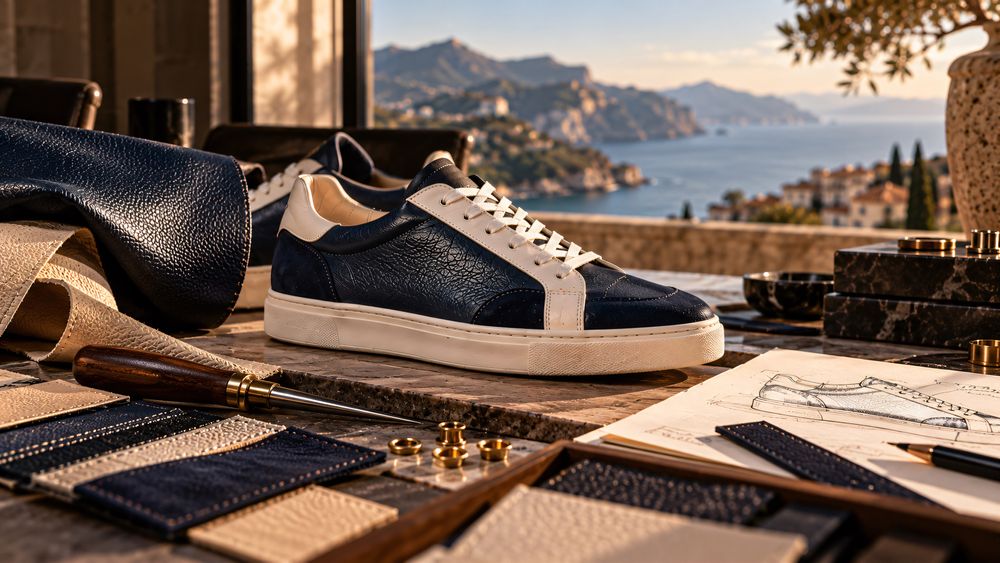
In footwear, proportion is particularly important because several complex shapes must work together. The toe, vamp, quarters, heel, sole and lacing system all contribute to the overall silhouette. Their relationships determine whether the finished sneaker appears streamlined, athletic, substantial or refined.
The challenge becomes more interesting when a design combines traditional shoemaking principles with contemporary styling. A luxury leather sneaker must retain the comfort and practicality associated with casual footwear while achieving the visual refinement expected of a more considered product.
Too much bulk can make it appear ordinary. Excessive delicacy may compromise its versatility. Overly decorative panels can disrupt the silhouette, while insufficient definition may leave the design visually anonymous.
The best proportions create a sense of inevitability. Everything appears to be exactly where it belongs, as though no other arrangement would have been quite right.
Of course, achieving this impression may require numerous adjustments. The final result looks effortless precisely because the effort has been absorbed into the design process.
That is one of the quiet paradoxes of craftsmanship: the more carefully a product has been refined, the less obvious the refinement may become.
3. Leather Selection Is About Far More Than Colour
Leather is often discussed in terms of appearance. Customers notice colour, grain, texture and finish, while product descriptions emphasise softness, quality and origin. Yet selecting appropriate leather involves considerably more than choosing an attractive surface.
Different leathers behave differently. Some are naturally supple, while others provide greater structure. Grain patterns vary, as do thickness, flexibility, surface finish and the way materials respond to repeated movement. Even within a single category, individual hides can display variations that influence how the finished product looks and performs.
These characteristics matter because leather is not merely decorative. It contributes to the object’s structure, comfort, durability and long-term appearance.
A beautifully grained leather may be visually appealing but unsuitable for a particular component if its properties do not support the intended shape. A softer leather may feel luxurious immediately but require careful consideration when used in areas that need greater stability. Suede offers a distinctive tactile quality, yet it also creates different practical and maintenance considerations from smooth leather.
The maker must therefore consider not only how the material looks but how it will behave in the finished product.
In footwear, this becomes especially important because the upper is repeatedly subjected to movement. Leather across the forefoot must accommodate flexion, while other areas contribute to structure and support. The relationship between material selection, pattern design and construction influences the experience of wearing the shoe.
There is also a visual dimension that photographs rarely capture accurately. Two leathers may appear almost identical on a screen but feel completely different in the hand. One may have a natural, softly textured surface, while another feels heavily coated or unusually rigid.
Neither appearance nor softness alone is sufficient evidence of quality. The most appropriate material is the one whose characteristics suit the intended purpose.
This is why Why Leather Still Wins (Despite Everything) considers leather as a functional and sensory material rather than simply a traditional luxury signifier.
At Jasperosso, leather and suede choices form an important part of the customer’s design experience. The combination of textures can introduce depth and individuality, but successful material selection also depends on how those surfaces work together within the sneaker’s established construction.
The most refined results often come from understanding the materials well enough to avoid asking them to do something they were never intended to do.
4. Stitching: When Precision Becomes a Form of Restraint
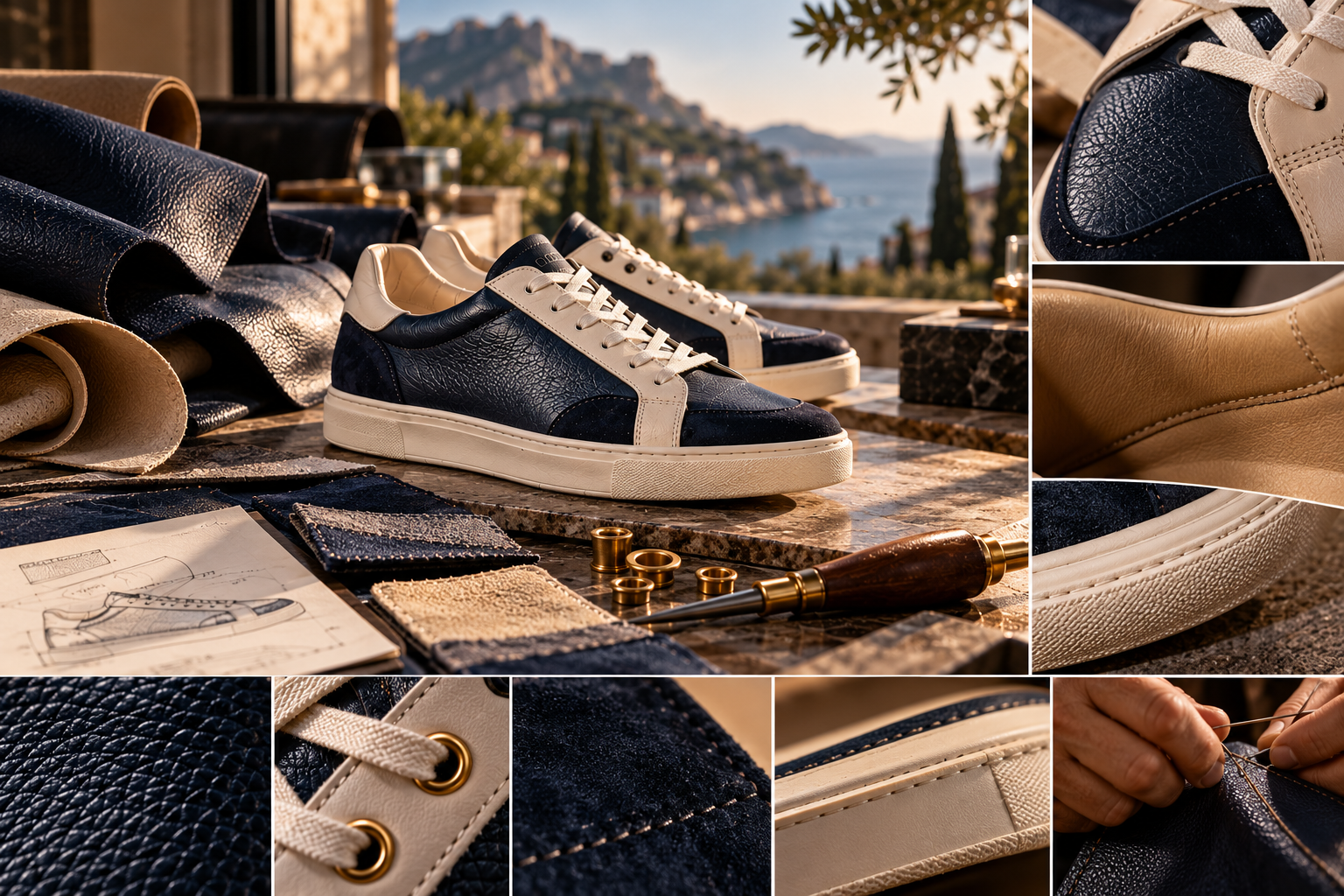
Stitching is one of the most revealing elements of a well-made leather product because it performs both structural and visual functions. It joins materials, reinforces components and defines the boundaries between panels. At the same time, it creates lines that influence the appearance of the entire design.
Poorly executed stitching can undermine otherwise excellent materials. Uneven spacing, inconsistent tension or a line that wanders away from its intended path may be subtle defects, but they introduce visual disorder. The eye begins noticing irregularities rather than appreciating the object as a whole.
Good stitching does the opposite. It follows the design naturally, supports the construction and contributes to the overall sense of precision.
The difficulty is that stitching quality cannot be reduced to a single characteristic. Very fine stitches are not automatically superior, nor is a greater number of stitches necessarily evidence of better craftsmanship. Stitch length, thread choice, placement and construction method must suit the materials and stresses involved.
In leather footwear, stitching must account for both appearance and function. Some seams help define the design, while others join components that experience repeated movement. Their execution can influence durability, comfort and how cleanly the finished upper retains its intended shape.
The relationship between visible stitching and construction is particularly interesting. Decorative stitching can be used to suggest craftsmanship, but genuine quality depends on whether the stitching is appropriate, consistent and properly integrated into the product.
This distinction becomes increasingly important in a market where visual cues associated with luxury are easy to reproduce. A product may display elaborate seams and contrasting thread without being especially well constructed.
The more sophisticated approach is often less theatrical. Stitching is used where it serves a purpose, follows the intended design and avoids drawing unnecessary attention to itself.
The subject is examined more closely in The Hidden Language of Sneaker Design: What Every Stitch Says, which considers how construction details influence the character of a finished sneaker.
The finest stitching may be the kind you barely notice until you examine the product closely. Then, suddenly, you realise how much precision has been required to make everything appear so uncomplicated.
5. The Edge of an Object Tells You How Seriously It Was Made
If you want to understand how much attention has been given to a leather product, examine its edges. Not necessarily the most prominent surfaces, the decorative details or the parts photographed for advertising, but the places where materials meet, terminate or disappear from view.
Edges are revealing because they expose decisions that are easy to overlook during the initial design process. A beautifully selected piece of leather can lose much of its refinement if its cut edges are rough, uneven or poorly finished. A carefully constructed bag can appear less accomplished when the handles reveal inconsistent finishing. A shoe upper can lose visual definition if panel boundaries appear untidy.
Depending on the product and construction, leather edges may be folded, painted, burnished or finished through other appropriate techniques. Each approach has its own practical and aesthetic considerations. The objective is not to apply the same treatment everywhere, but to create a clean, durable and coherent result.
This is a particularly useful illustration of the last five per cent because edge finishing is rarely the reason someone initially becomes interested in a product. Few customers begin their search for a leather bag by requesting detailed photographs of the underside of its handles.
Yet those details can influence the impression of quality once the object is handled.
The same principle appears throughout other areas of design. The underside of a table, the interior of a drawer, the back of a watch case or the concealed seams of a jacket can reveal how thoroughly a product has been considered.
There is a difference between finishing an object so that it looks good from the expected viewing angle and finishing it because every relevant component deserves attention.
The latter requires a more consistent philosophy of making.
This does not mean every hidden surface should receive an elaborate decorative treatment. Sometimes the most appropriate finish is simple and functional. What matters is whether the decision appears deliberate rather than neglected.
True refinement often reveals itself in places where the maker could reasonably have assumed nobody would look.
6. Texture Is the Luxury Detail You Experience Without Looking
Luxury is frequently treated as a visual experience, but touch can be equally important. The surface of a material, the resistance of a fastening, the softness of a lining and the way an object feels when handled all contribute to our perception of quality.
These sensations are difficult to communicate through photography, which explains why physical interaction can change our opinion of a product so dramatically.
A leather bag may look beautiful online but feel disappointing when handled. Its surface may be unexpectedly stiff, its hardware lightweight or its handles uncomfortable. Conversely, a product that appears relatively understated in photographs can become far more impressive once its materials are experienced directly.
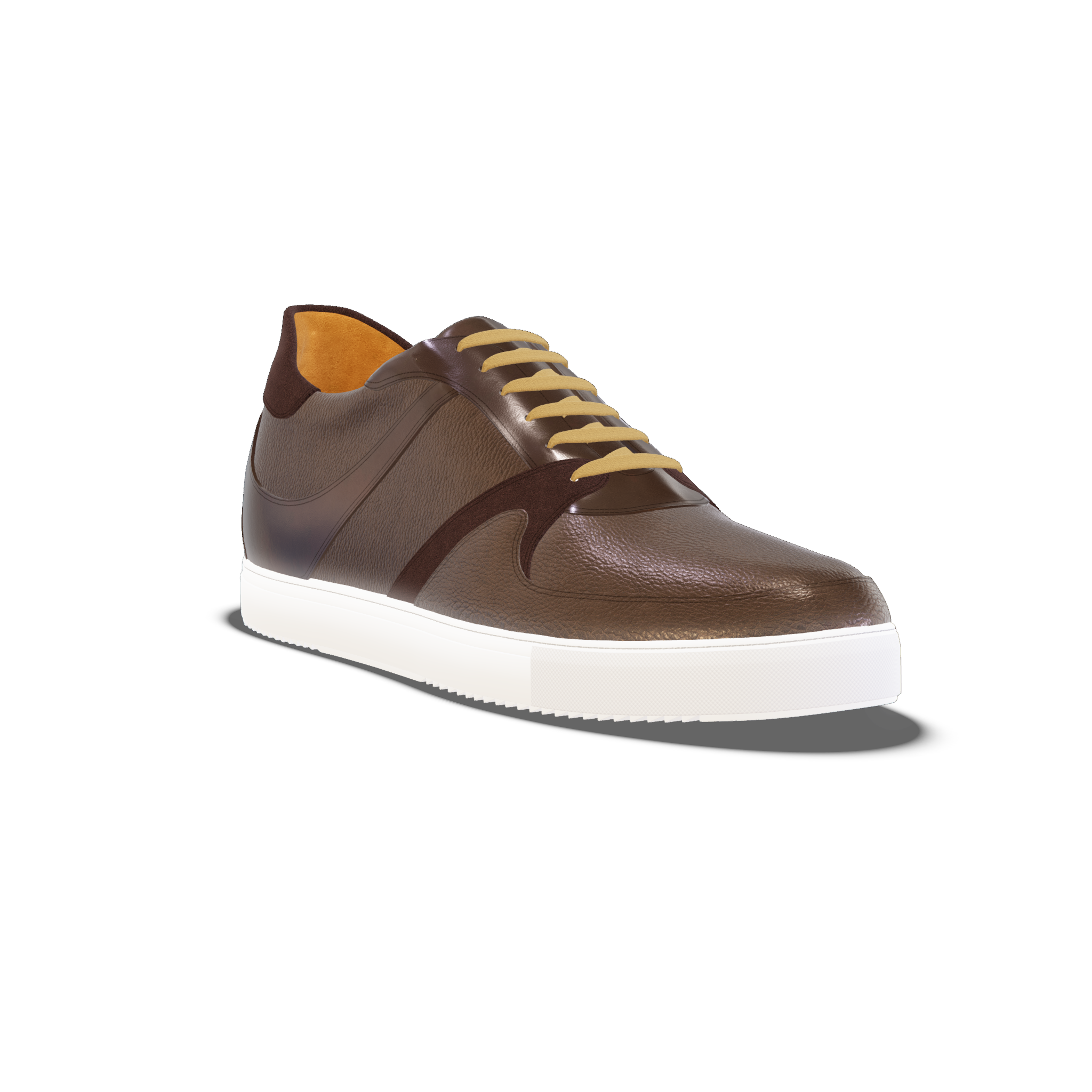
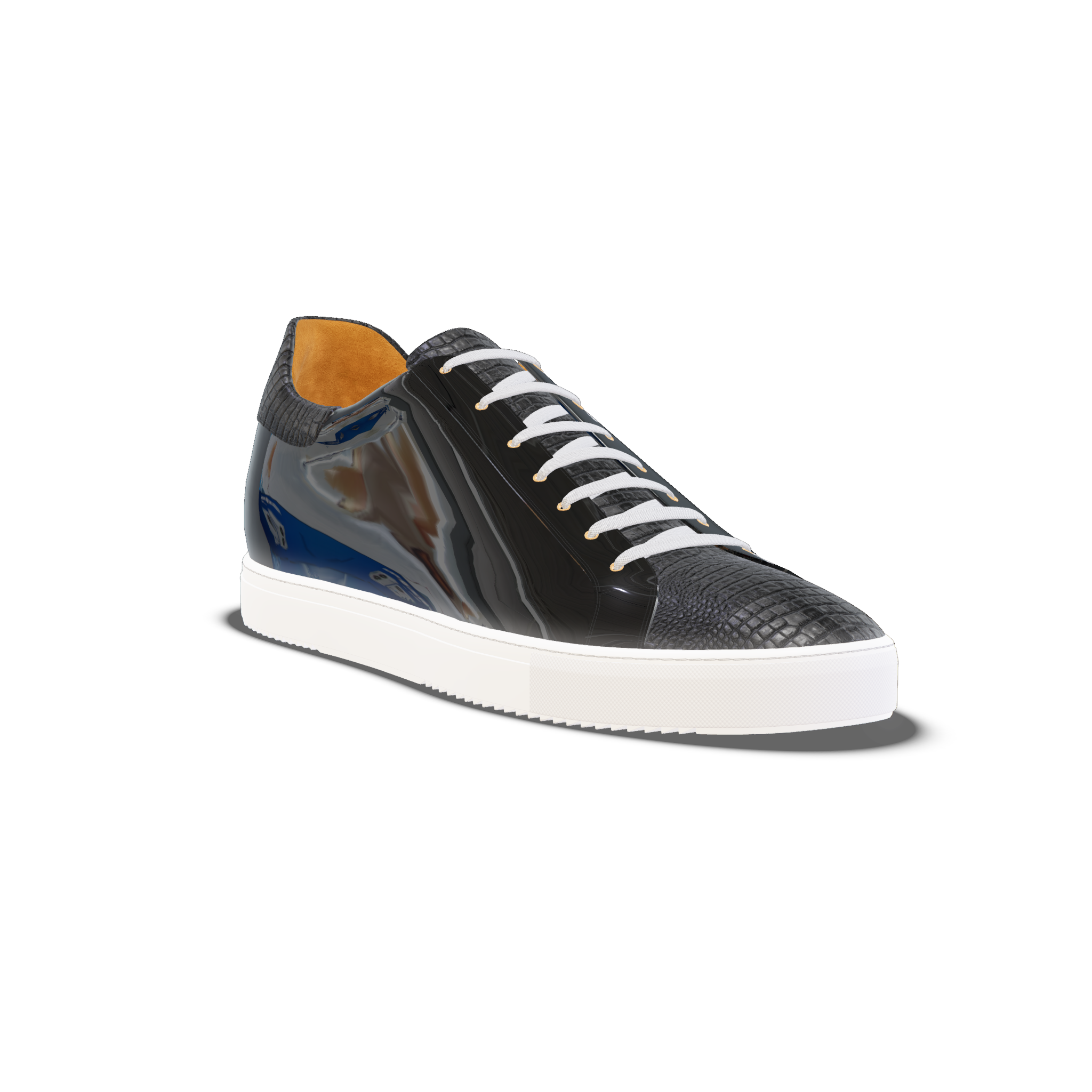
Texture also influences how different components relate to one another. Smooth leather beside suede creates contrast without necessarily requiring different colours. Pebble-grained leather introduces visual depth and a distinctive tactile character. Patent finishes reflect light differently, creating another relationship between surface and silhouette.
The challenge is to use these characteristics with judgement.
Too many competing textures can make a design feel restless. A product may contain individually beautiful materials that collectively produce an incoherent result. The eye moves from one surface to another without finding a clear hierarchy.
A more considered composition allows textures to complement one another. One material may provide the dominant character, while another introduces a subtle contrast. The relationship can be tonal, tactile or both.
This is especially relevant to custom-designed sneakers. Combining smooth leather, pebble-grained calf, suede and other available finishes can produce distinctive results, but the most successful combinations are not necessarily the most elaborate.
Sometimes the difference between an attractive sneaker and an exceptional one is simply the decision to use a contrasting texture in one carefully chosen area rather than across the entire upper.
This connects with Why Most Sneakers Are Overdesigned (And Why Yours Shouldn’t Be), where the challenge is not to demonstrate every available design possibility but to select the details that genuinely improve the finished product.
Texture is powerful precisely because it operates on several levels. It influences appearance, touch and the way light interacts with a surface. When those qualities are carefully balanced, the result can feel richer without appearing more complicated.
7. Linings, Eyelets and the Details Nobody Mentions at Dinner
Nobody is likely to interrupt a dinner conversation to praise the precise positioning of their sneaker eyelets. Equally, few people describe an enjoyable evening by discussing the technical properties of their shoe linings. Yet these apparently unremarkable components can contribute significantly to the experience of wearing a product.
A lining is a particularly good example because much of its value is experienced rather than seen. It forms part of the interface between the foot and the shoe, influencing the sensation of contact and contributing to the overall interior finish.
Its material, construction and integration with the upper all matter. A beautiful exterior can be undermined by an uncomfortable interior, just as an expensive jacket can become irritating if its lining catches, twists or feels unpleasant against the clothing beneath it.
Eyelets appear simpler, but their role is more complex than merely providing holes through which laces pass. Their placement affects the appearance of the lacing system and how it relates to the surrounding panels. Their finish contributes to the visual character of the sneaker, while their construction must be appropriate for repeated fastening and adjustment.
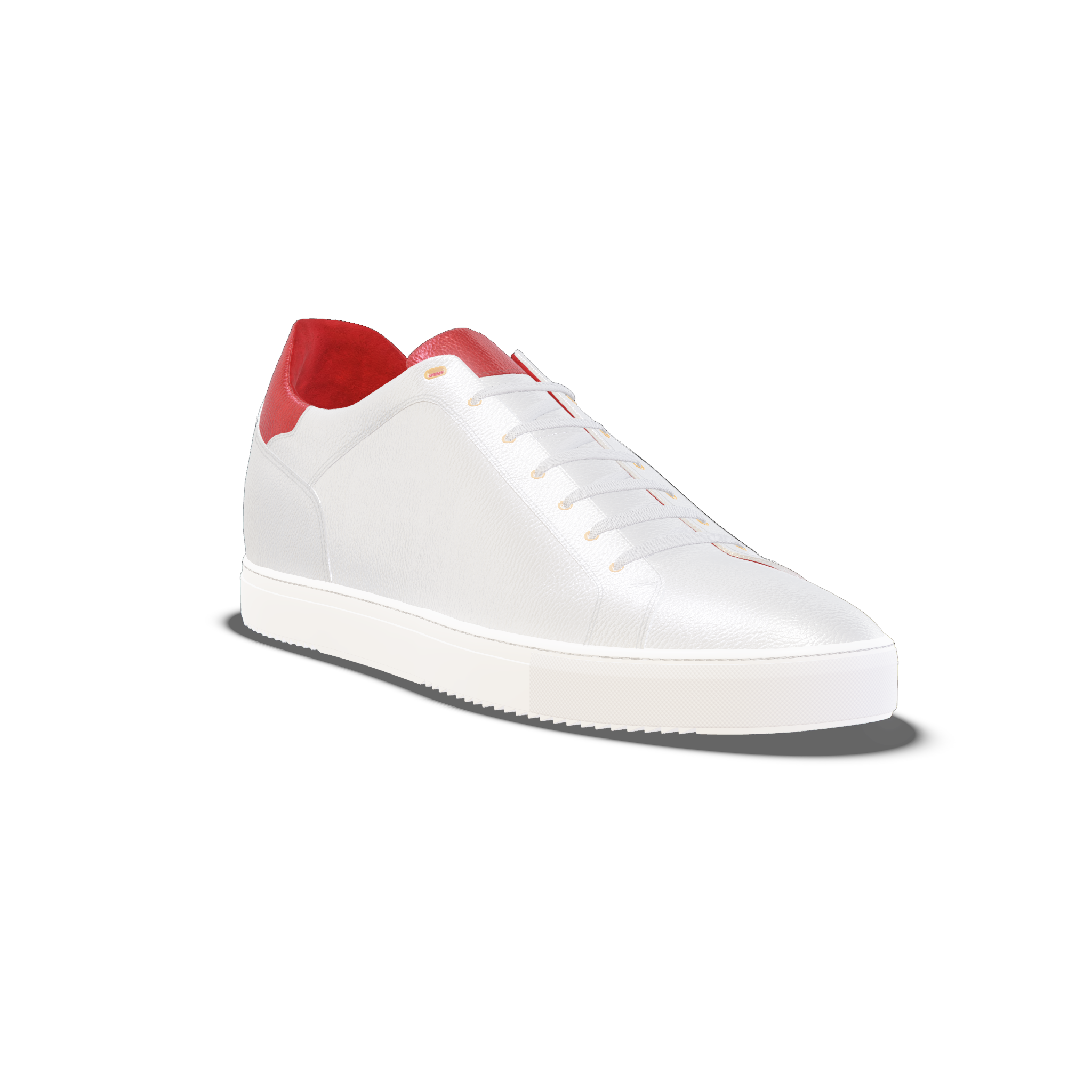
Even small variations in eyelet colour can influence the overall design. Polished metal may introduce a subtle highlight, while darker or more restrained finishes can create a quieter appearance.
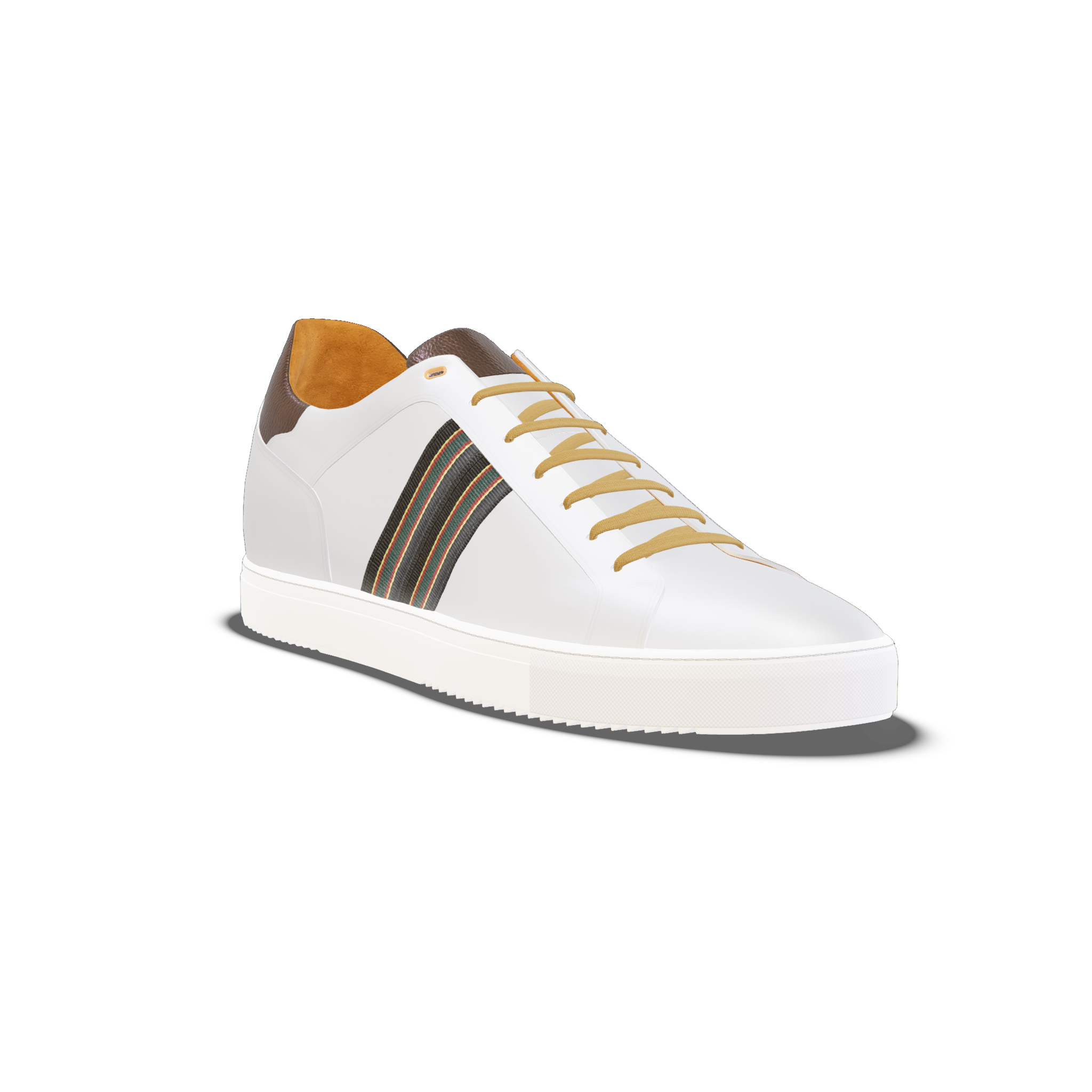
On Jasperosso’s seven-eyelet sneaker designs, the relationship between eyelets, laces and surrounding leather panels contributes to the balance of the upper. The customer may consciously choose the colour or finish, but the effectiveness of the result depends on how those details work within the established silhouette.
Laces themselves deserve more attention than they generally receive. Their width, texture and colour can alter the appearance of a sneaker without changing any of its underlying construction. A tonal lace may allow the leather to dominate, while a contrasting lace can introduce a more expressive character.
The challenge is that each of these choices affects the others. Eyelets, laces, tongue, lining and surrounding panels are not independent decorative opportunities. They form a connected design system.
This is where the last five per cent becomes particularly apparent. A slightly different lace colour may not seem consequential when considered in isolation. Yet within a carefully balanced design, it can be the difference between something that feels complete and something that remains subtly unresolved.
8. Why Removing a Detail Can Require More Skill Than Adding One
Design is often associated with invention: introducing a new feature, creating an unusual shape or discovering a novel combination of materials. Yet some of the most difficult decisions involve removing elements that are individually attractive but unnecessary to the finished product.
This requires confidence because addition is easier to demonstrate than restraint.
A designer can point to an unusual panel, distinctive fastening or decorative seam as evidence of creative effort. Removing that element leaves no obvious feature to celebrate. The improvement exists in the overall balance of the product rather than in a component that can be photographed and described.
This is why restraint is frequently misunderstood as simplicity. A product with fewer visible details may appear easier to design, when in reality it allows less room for mistakes.
Consider a minimalist leather sneaker. Without elaborate overlays, exaggerated proportions or prominent branding, the quality of the silhouette becomes immediately apparent. The leather selection matters more. The stitching must be carefully resolved. The relationship between upper and sole becomes more visible. Small inconsistencies that might disappear within a busier design can suddenly become distracting.
The same principle applies to tailoring, furniture and architecture. Removing decoration increases the importance of proportion, material and execution.
There is also a commercial tension. Products must attract attention, particularly in digital environments where customers make rapid judgements from photographs. Distinctive features can help establish recognition, but adding details purely to increase visual impact may compromise the coherence that makes an object desirable over time.
The challenge is to distinguish between details that contribute genuine character and those that merely compete for attention.
This philosophy is closely related to The Art of Quiet Statement: Why Minimalism Is the New Luxury. A restrained design can still possess considerable personality, provided its materials, proportions and carefully selected details are sufficiently expressive.
The last five per cent may therefore involve subtraction rather than refinement through addition. The designer recognises that an element is unnecessary and removes it, allowing the remaining components to work more effectively together.
The customer may never know what was taken away. They simply experience a product that feels more resolved.
9. Craftsmanship Is the Accumulation of Thousands of Small Judgements
The word craftsmanship has become so widely used in luxury marketing that it sometimes risks losing its meaning. It appears in descriptions of watches, furniture, clothing, accessories and almost anything that can plausibly be photographed beside a pair of experienced hands.
Yet craftsmanship is not simply the presence of manual labour. Nor does a product automatically become exceptional because somebody spent a long time making it.
The more meaningful distinction lies in the quality of the decisions involved.
An experienced craftsperson understands how materials behave, which tolerances matter and when an apparently minor inconsistency requires attention. They recognise whether a seam is properly aligned, whether a component has been finished appropriately and whether the assembled product reflects the intended design.
These judgements may involve techniques learned through repetition, but they also require observation and an understanding of the finished object.
In traditional shoemaking, individual stages of production contribute to the final result. Cutting, preparation, stitching, assembly and finishing each create opportunities for small errors or refinements. A problem introduced early in the process can influence later stages, making consistency and communication important throughout production.
This does not mean modern machinery is incompatible with craftsmanship. Precision equipment can improve consistency and support skilled production. The important question is how technology is used and whether appropriate human judgement remains part of the process.
The relationship is explored in Why Handmade Still Matters in an Automated World, which considers the continuing value of material knowledge, experience and human decision-making alongside technological progress.
For Jasperosso, the connection between digital personalisation and Italian shoemaking is particularly relevant. Customers make their design selections through a three dimensional studio, while the physical sneakers are handcrafted in Le Marche. These are different stages of the same process, and their successful integration depends on translating the customer’s choices into a coherent finished product.
The design studio makes personalisation accessible. Craftsmanship is responsible for giving those decisions physical form.
What ultimately matters is not how many times the word handcrafted appears in a product description. It is whether the finished object demonstrates the consistency, material understanding and care that the term is supposed to represent.
The last five per cent is rarely one final flourish performed by a particularly talented individual. It is more often the accumulated result of people making appropriate decisions throughout the entire process, including at moments when a shortcut would probably go unnoticed.
10. The Highest Compliment Is That Nothing Feels Wrong
There is a curious feature of exceptional design: its success can be difficult to describe because the experience contains so few interruptions. The object performs naturally, the proportions feel balanced and the materials behave as expected. Nothing demands explanation or compensation.
We tend to notice discomfort, inconsistency and poor finishing more readily than their absence. An awkward seam draws attention because it interrupts the experience. A poorly positioned fastening becomes memorable because it causes inconvenience. A badly balanced chair announces its shortcomings within minutes.
When these problems are absent, we simply get on with using the object.
This is not evidence that the details are unimportant. It is evidence that they have been successfully resolved.
Consider a pair of leather sneakers worn throughout a long day. The owner may never consciously think about the relationship between the upper, lining, sole and lacing system. They are unlikely to consider the exact placement of the stitching or the way different leather panels have been assembled. Their attention is elsewhere, which is precisely where it should be.
The design has succeeded because it supports the experience rather than interrupting it.
This principle is explored in Luxury Is What You Stop Thinking About. Some of the most satisfying products become almost invisible through use, not because they lack character, but because their quality removes the need for constant attention.
There is an important distinction between this kind of effortless ownership and a product that merely feels ordinary. Exceptional design does not have to be visually anonymous. A beautifully made watch can possess considerable personality, just as a pair of custom leather sneakers can express a distinctive combination of colours and textures.
The difference is that the personality should not compromise the experience.
A product can be interesting without being inconvenient, individual without being incoherent and luxurious without constantly reminding its owner how much it cost.
This is where the final refinements become most valuable. They allow the designer to reconcile qualities that might otherwise compete: beauty and comfort, individuality and balance, structure and flexibility, visual interest and restraint.
The result is not necessarily perfection in an absolute sense. Every product involves choices, compromises and practical limitations. But exceptional design makes those compromises feel intelligent rather than accidental.
Perhaps that is the real meaning of the last five per cent. It is the point at which a product stops feeling like a collection of components and begins feeling like a complete idea.
Conclusion: Luxury Lives in the Decisions You Never See
The difference between something good and something exceptional is rarely as dramatic as we imagine. We tend to expect luxury to reveal itself through obvious signs: extraordinary materials, elaborate construction, prestigious branding or a price that requires a moment of quiet reflection.
Yet the most convincing evidence of quality is often considerably less conspicuous.
It exists in the relationship between proportions, the suitability of a leather, the precision of a seam and the way an edge has been finished. It appears in the subtle contrast between textures, the comfort of a lining and the placement of details that most people will never consciously examine.
These decisions may seem insignificant when considered individually. Together, they shape the entire experience of ownership.
This is why the last five per cent matters so much. It represents the difference between making something that appears complete and making something that genuinely feels complete. The broad design may already be attractive, the materials may already be excellent and the construction may already be sound. Yet further refinement can transform the way the finished object is perceived and experienced.
There is also a deeper lesson here about the nature of luxury. Genuine quality does not always require additional complexity. Sometimes it demands fewer elements, better proportions and more careful attention to the relationship between materials. Sometimes the most important improvement is removing a detail that never needed to exist.
For Jasperosso, this philosophy is particularly relevant because personalisation introduces both opportunity and responsibility. Customers can create combinations that reflect their individual preferences, selecting colours, textures and finishing details through the design studio. But the success of the finished sneakers depends upon more than the attractiveness of those choices.
The proportions must remain coherent. The materials must work together. The stitching, lining, eyelets and construction must support the design rather than distract from it. The customer should be able to enjoy the individuality of the finished pair without sacrificing the qualities that make a well-crafted sneaker satisfying to wear.
The objective is not to persuade someone to admire every component separately. It is to create a product in which those components work together so naturally that the owner experiences the result as a whole.
And perhaps that is the most important distinction between visible luxury and genuine craftsmanship. Visible luxury asks to be noticed. Craftsmanship asks to be experienced.
A beautiful object can attract attention immediately. An exceptionally well-made object continues rewarding attention long afterwards, often through details that were barely noticed at first.
The watch clasp that closes perfectly. The leather that feels exactly right. The stitching that follows its intended line. The sneaker that looks balanced from every angle and feels natural throughout the day. None of these details needs to announce its importance.
They simply contribute to the quiet confidence that somebody cared enough to get them right.
Because the last five per cent is not really about adding more. It is about making everything that is already there feel exactly as it should.
By Jasper Trumble