


Journal
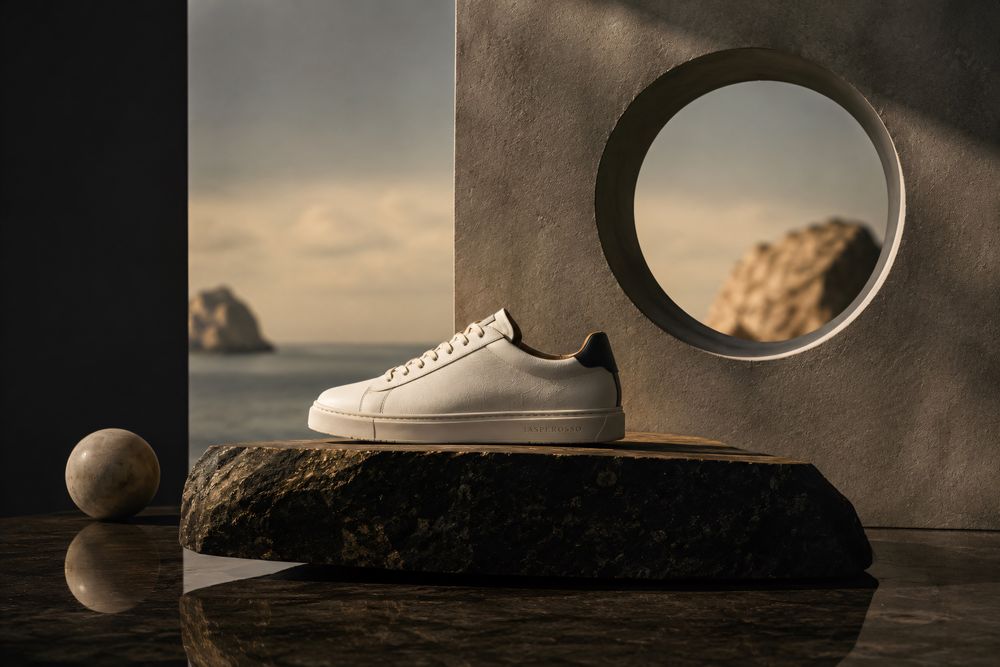
The Beauty of Restraint
Why knowing what to leave out Is the hardest part of design
17th August 2026
There is a particular moment in almost every creative process when somebody should probably say, “That’s enough.”
Unfortunately, it is also the moment when somebody usually suggests adding something else.
Perhaps another colour would make it more interesting. Perhaps the heel needs a contrasting panel. Perhaps the logo should be slightly larger. Perhaps the interior needs another feature, the restaurant another ingredient, the website another button or the building another architectural flourish. Each suggestion sounds perfectly reasonable in isolation. Collectively, they can slowly dismantle what made the original idea good.
Adding things is remarkably easy.
Knowing what to leave out is much harder.
This is one of design’s great contradictions. We often associate creativity with addition: more ideas, more possibilities, more features and more expression. Yet many of the world’s most enduring objects are defined by precisely the opposite quality. Their designers exercised sufficient confidence to stop.
A beautifully proportioned Porsche 911 does not require a dozen decorative lines to explain that it is a sports car. A Braun product designed under the influence of Dieter Rams rarely needed visual theatre to communicate its purpose. A perfectly cut jacket does not improve because someone adds another pocket. An Italian chef presented with exceptional tomatoes, olive oil and basil generally understands that introducing another seventeen ingredients may not represent progress.
Luxury sneakers are no different.
There is a point at which another colour, another texture or another decorative element stops making a sneaker more individual and simply makes it busier. The difficulty is that this point cannot be calculated. There is no formula informing the designer that 3.7 visual elements represent refinement while 4.2 constitute an unfortunate incident.
It requires judgement.
And judgement is where taste begins.
This article is a natural continuation of Why Most Sneakers Are Overdesigned, but the principle extends far beyond footwear. Overdesign is merely one symptom of a much larger cultural tendency to confuse quantity with value. More features suggest greater capability. More detail suggests greater craftsmanship. More visible branding suggests greater luxury. More choice suggests greater freedom.
Yet the objects we live with longest often prove the opposite.
They are calm.
They are resolved.
Nothing appears to be fighting for attention.
Their quality becomes apparent gradually because the designer has left enough visual space for materials, proportion and craftsmanship to speak for themselves. This is closely connected to the philosophy explored in The Luxury of Knowing Exactly What You Like. Knowing your preferences allows you to make confident choices. Restraint provides the equally important ability to stop making them.
Perhaps the real luxury of design is not having endless possibilities.
Perhaps it is knowing which possibilities are unnecessary.
1. Adding Is Easy. Removing Takes Confidence
The blank page is intimidating because everything remains possible.
Designers, writers, architects and artists all encounter some version of it. At the beginning, possibilities feel limitless. Colours can be introduced, shapes changed, materials combined and ideas explored without consequence. Creativity expands.
Eventually, however, creation has to become editing.
That transition is difficult because removing something feels psychologically different from never having created it in the first place. Once time and thought have been invested in an idea, abandoning it can feel like waste. Designers become attached to details because they remember the effort required to produce them. Businesses become attached to features because somebody fought to include them. Writers become attached to paragraphs that may be beautifully written but contribute absolutely nothing to the argument.
This is why good editing requires confidence.
The question is no longer whether an individual element is attractive. It is whether the whole becomes stronger without it.
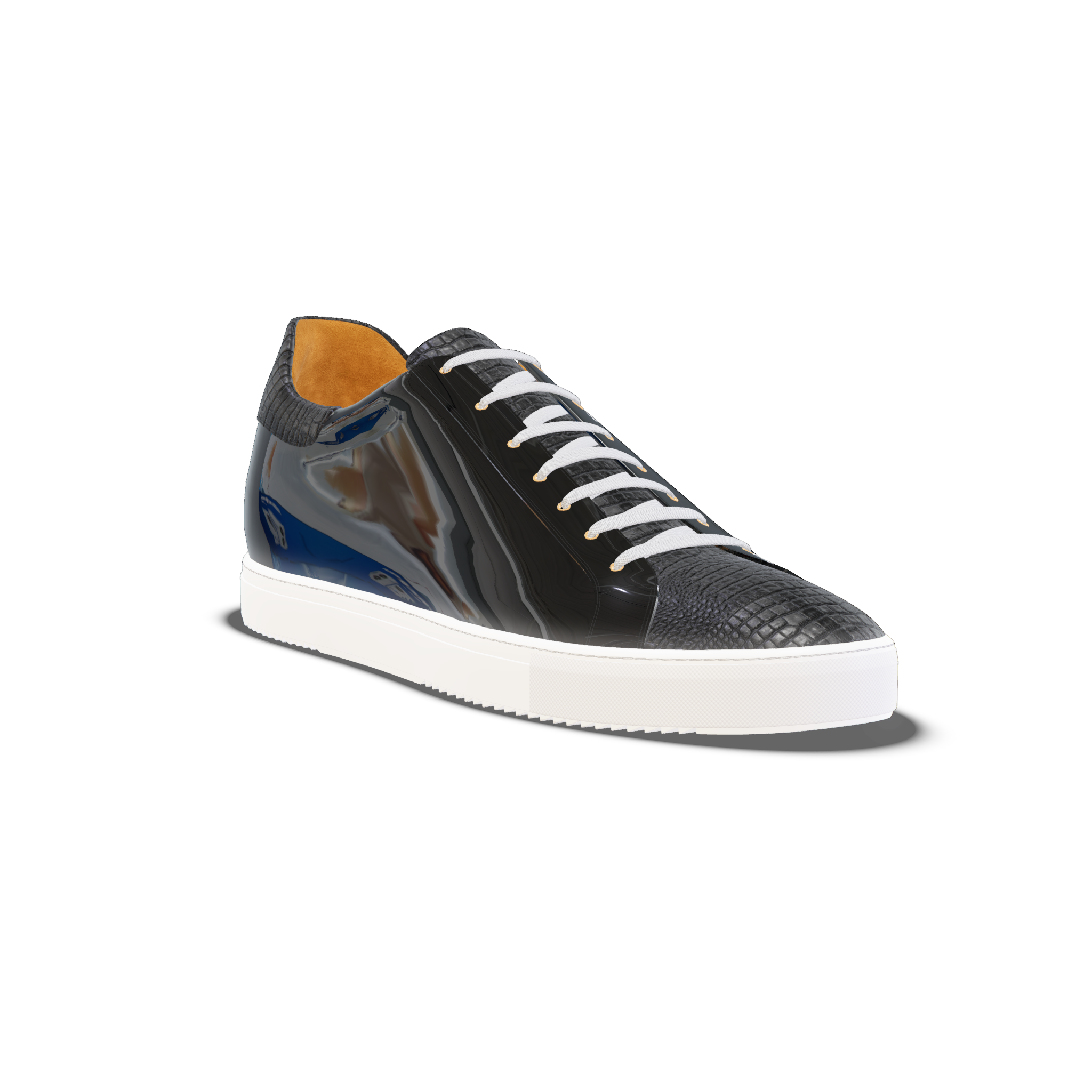
Consider a luxury sneaker combining smooth calf leather, pebble grain, suede, contrasting stitching, metallic eyelets, coloured laces and a highly distinctive sole. Every individual component might be beautiful. Every leather might be exceptional. Every colour could work perfectly well somewhere else.
Put them all together and the result may resemble a design meeting at which nobody was prepared to lose an argument.
Restraint requires someone to make that decision.
Perhaps the smooth leather disappears. Perhaps the stitching becomes tonal. Perhaps the eyelets stop contrasting with the upper. Suddenly the suede has room to become noticeable. The grain of the leather becomes more important. A single colour accent that previously competed with five others now appears deliberate.
Nothing has been added.
The design has improved.
This principle appears repeatedly across the creative disciplines. Editors remove perfectly competent sentences because the article reads better without them. Architects eliminate decorative elements so the proportions of a building become clearer. Tailors understand that the line of a jacket can be destroyed by unnecessary embellishment. Photographers deliberately leave areas of an image empty because negative space gives the subject greater power.
The same philosophy underpins The Silence of a Good Outfit Starts at Your Feet. An understated sneaker does not need to dominate an outfit in order to influence it. Quite often, its strength comes from creating visual stability while allowing everything around it to work.
This is the first lesson of restraint: removing something does not necessarily create less.
Often, it allows us to see more.
2. When More Becomes Less
Luxury has an uncomfortable relationship with abundance.
Historically, more often did mean better. Precious materials were scarce, skilled labour expensive and complicated objects difficult to manufacture. An elaborately decorated piece of furniture or intricately constructed watch demonstrated not only craftsmanship but access to resources unavailable to most people.
Modern manufacturing has changed that equation.
Complexity is no longer necessarily scarce. Machines can create extraordinary patterns repeatedly. Digital tools allow designers to experiment with thousands of variations before breakfast. Artificial intelligence can produce dozens of visual concepts in the time it once took to sketch one. Manufacturing processes can combine materials, colours and finishes with astonishing precision.
The ability to add has become almost unlimited.
Which makes the decision not to add considerably more interesting.
This is where modern luxury begins to separate itself from simple extravagance. If everybody can create complexity, complexity itself ceases to communicate sophistication. Restraint becomes valuable because it demonstrates selection.
Look at many of the objects associated with enduring design. The original Range Rover, the Leica M camera, a well-proportioned cashmere coat, a classic pair of sunglasses or a beautifully made leather bag. Their identities are strong, yet relatively few elements compete for attention.
This does not make them simplistic.
Simplicity and simplification are very different things.
Simplification removes detail without understanding its purpose. Simplicity removes everything that prevents the important details from being understood.
That distinction matters enormously in footwear. A minimalist sneaker made from mediocre materials can feel anonymous rather than sophisticated. Remove decorative distractions and the quality of the underlying object becomes more important, not less. The leather has to be exceptional because we can see it. The proportions have to work because nothing disguises them. Stitching has to be precise because there is nowhere for it to hide.
This is one reason restraint and craftsmanship are such natural partners.
As explored in Why Handmade Still Matters in an Automated World, skilled craftsmanship is often expressed through hundreds of decisions the eventual owner barely notices. Restraint allows those decisions to remain quiet rather than turning craftsmanship into theatre.
There is also a psychological dimension. When too many elements compete simultaneously, our attention fragments. Nothing becomes especially memorable because everything is asking to be remembered.
Luxury works better when hierarchy exists.
One material leads.
One detail surprises.
Everything else supports it.
That is not an absence of creativity.
It is creativity with an editor.
3. Simplicity Is Usually More Complicated Than It Looks
One of the most persistent misunderstandings in design is that simplicity must be easy.
Surely a product with fewer elements requires less thought?
In practice, the reverse is frequently true.
Decoration can disguise compromise. Simplicity exposes it.
Imagine two rooms. The first contains patterned wallpaper, decorative lighting, artwork, elaborate furniture and numerous objects. If one proportion is slightly wrong, it may disappear within the overall visual complexity.
Now imagine a room containing one chair, one table and one carefully positioned light.
Every millimetre matters.
The same principle applies to footwear. A highly decorated sneaker can direct attention towards colour, branding and surface detail. A restrained sneaker leaves the viewer with proportion, material and construction. If the toe is slightly too long, you notice it. If the sole feels too heavy, you notice it. If the relationship between the eyestay and quarter is unresolved, there is little else to distract the eye.
Simple design is unforgiving.
This is why some of the world’s most apparently straightforward products have required extraordinary amounts of development. The objective is not merely to remove components. It is to make what remains feel inevitable.
Dieter Rams famously articulated this through his philosophy of “less, but better”. The enduring power of the idea lies in the second half. Less on its own is merely less. The challenge is ensuring that every subtraction increases the quality of what remains.
Luxury footwear faces precisely this challenge.
Remove excessive embellishment and the leather becomes the visual surface. That means its grain, colour depth and tactile quality matter enormously. Remove exaggerated branding and the silhouette has to establish identity. Reduce colour and texture combinations and the relationship between those that remain becomes more important.
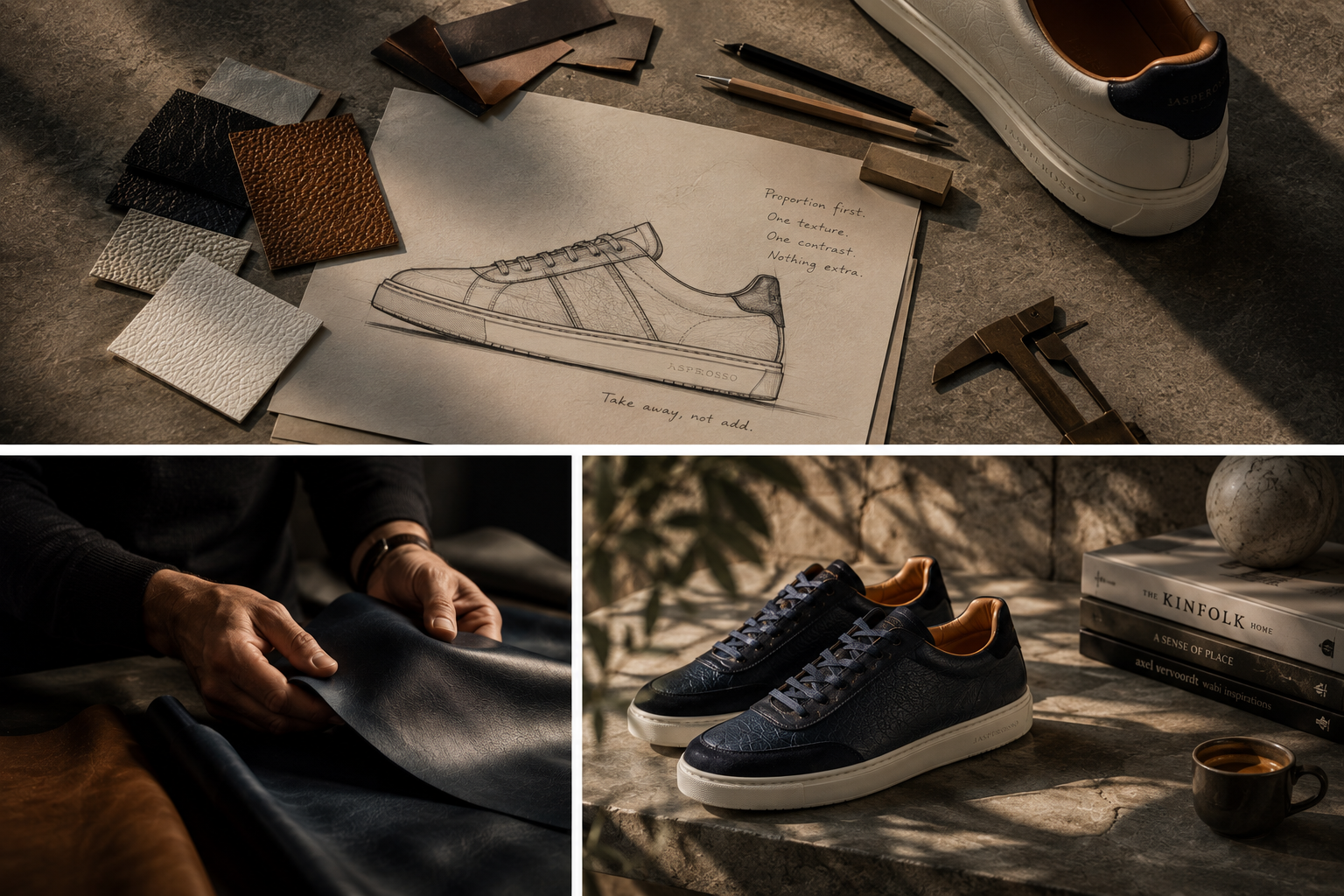
A navy pebble-grain calf upper combined with navy suede, for example, can appear far more sophisticated than combining navy with four contrasting colours. The difference between the materials creates interest through the way they absorb and reflect light rather than through obvious colour blocking.
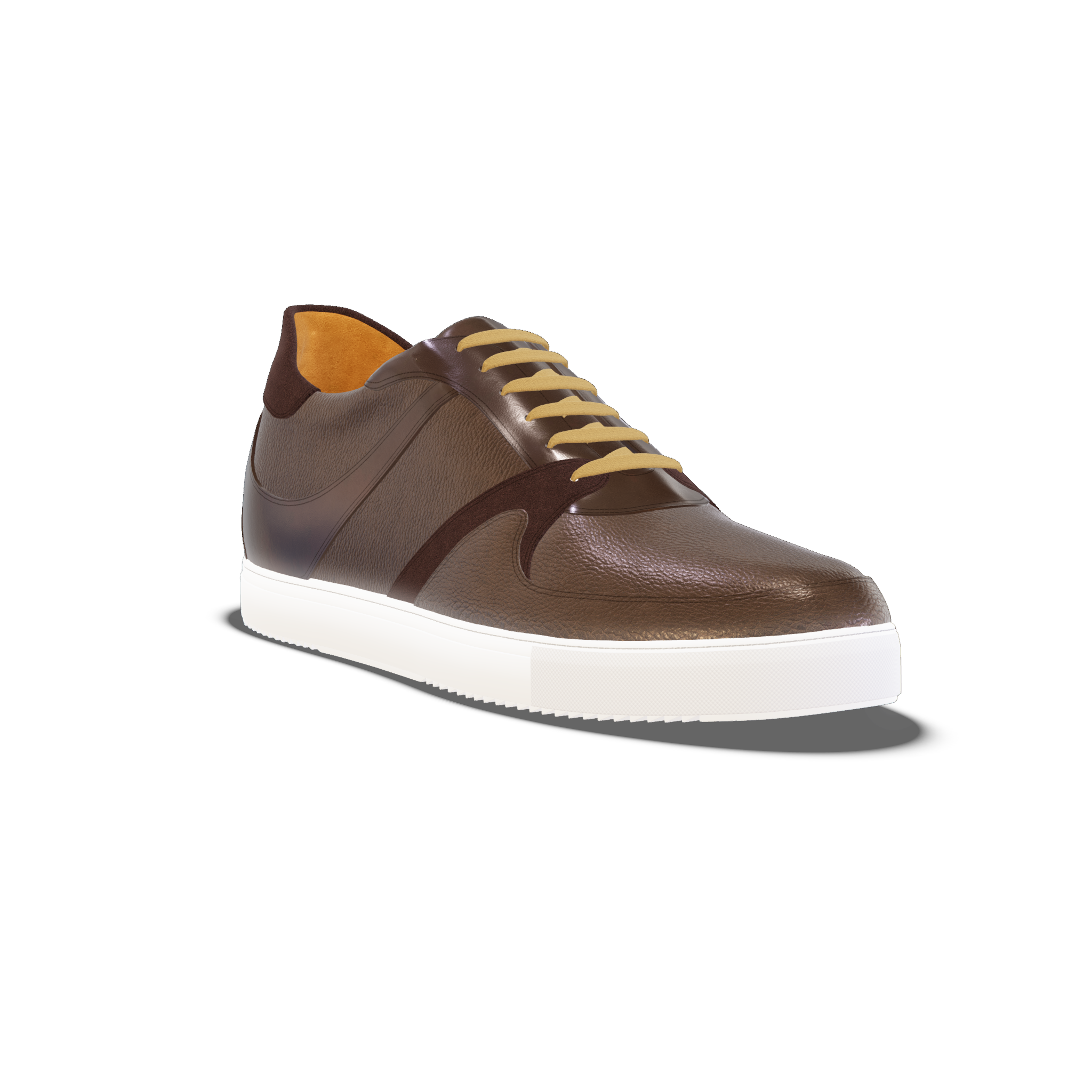
Likewise, a warm chocolate calf leather paired with a slightly darker suede heel can create depth without shouting about the fact that two materials have been used.
This is where restraint becomes particularly relevant to custom design. The availability of extensive choice can tempt us to demonstrate that choice visibly. Yet personalisation does not become more personal simply because more options have been selected.
As discussed in The Luxury of Knowing Exactly What You Like, sophisticated personal style often emerges when possibility is filtered through self-knowledge. You may have access to dozens of leathers and colours but discover that the design feels most authentically yours when only two are used.
The complexity exists in the decision-making.
The finished object does not need to display it.
4. The Confidence to Leave Something Alone
Designers are paid to design, which creates an occupational hazard.
Doing nothing can feel suspiciously like not doing one’s job.
A new model is expected to look new. A revised product needs obvious changes. A new season demands something visibly different from the previous one. The pressure to demonstrate progress can result in perfectly successful designs being altered simply because leaving them alone would be difficult to present in a meeting.
Consumers experience the same pressure.
If we customise something, we feel we ought to customise it visibly. If we buy something new, it should perhaps look noticeably different from what we already own. If a trend changes, we are encouraged to respond.
But improvement and change are not synonyms.
Sometimes an existing proportion is already correct.
Sometimes the best colour remains the same colour.
Sometimes a product has reached the point where further intervention makes it worse.
The Porsche 911 provides perhaps the most obvious automotive example. Its design has evolved enormously across generations, yet Porsche has repeatedly resisted the temptation to abandon the fundamental visual language that made the car recognisable. The designers change what needs changing while protecting what does not.
This requires considerable confidence because novelty is easy to demonstrate. Continuity is harder to explain.
The same philosophy applies to personal style. Once you discover a combination that consistently works, there is no obligation to abandon it simply because you have worn it before. Repetition can become identity. A preferred palette, silhouette or material can become more distinctive through consistency rather than less.
Our article Designed Once, Worn Forever explores the same idea from the perspective of longevity. A product intended to remain relevant for years cannot depend entirely upon the novelty of the moment it was created. It needs sufficient confidence to survive periods when fashion temporarily points elsewhere.
Restraint makes this possible because restrained design leaves room for ownership.
The object does not arrive with every aspect of its personality already predetermined. Leather can soften. Colour can deepen. Creases can develop naturally. The wearer can combine it differently over time. Instead of delivering a complete visual performance on day one, the product gradually becomes more individual through use.
That is a fundamentally different idea of luxury.
It is not about making the strongest possible first impression.
It is about creating something whose appeal survives after first impressions cease to matter.
5. Quiet Design Makes Materials Speak Louder
There is little point using exceptional materials if the design refuses to let anybody see them.
This sounds obvious, yet luxury products frequently bury their most valuable qualities beneath decoration. Logos, contrasting panels, hardware and visual effects compete with the very materials supposedly responsible for the product’s quality.
Natural leather does not need this much assistance.
Pebble-grain calf has its own visual rhythm. Suede changes character depending upon the direction of its nap and the way light moves across it. Smooth calf leather develops depth through finishing and wear. Even two leathers in almost identical colours can produce substantial visual contrast because their surfaces respond differently to light.
Restraint gives these characteristics space.
Imagine a sneaker constructed predominantly from deep forest-green calf leather. Add a tonal suede heel and perhaps a subtly different grain along the eyestay. From a distance, the design remains calm. Move closer and the differences reveal themselves gradually.
That is considerably more interesting than seeing everything immediately.
It rewards attention rather than demanding it.
The principle is familiar in architecture, where stone, timber and concrete are often most beautiful when allowed to exist honestly rather than being disguised beneath decorative finishes. It appears in furniture, where exceptional timber requires little embellishment because the grain itself becomes decoration. It appears in tailoring, where the texture of flannel or linen provides character without requiring elaborate patterns.
Luxury materials already contain information.
Good design knows when to stop talking over them.
This is particularly relevant to leather because its appeal changes through time. As discussed in Why Leather Still Wins (Despite Everything), natural leather develops rather than merely deteriorates. Grain becomes more expressive, surfaces soften and the object acquires evidence of ownership.
An excessively complicated design can fight against this evolution.
A restrained one allows it to become part of the aesthetic.
This is also why Why Real Luxury Rarely Looks New remains relevant to the argument. Luxury need not depend upon preserving an object in pristine, showroom condition forever. When the underlying materials are sufficiently good, age can add rather than subtract character.
Restraint provides the canvas for that process.
When there are fewer visual elements, we notice subtler ones.
The changing surface of leather.
The precision of a seam.
The relationship between smooth calf and suede.
The way a colour changes under natural light.
These details do not demand attention from across a room.
They reward it when someone comes closer.
And perhaps that is where restraint becomes most luxurious of all.
It assumes the object is good enough that it does not need to explain itself immediately.
It trusts the materials.
It trusts the craftsmanship.
Most importantly, it trusts the owner to notice.
6. Editing Is Where Taste Reveals Itself
Creativity and taste are often treated as though they are the same thing.
They are not.
Creativity produces possibilities. Taste decides which possibilities deserve to survive.
That distinction is important because generating ideas is only the beginning of good design. A designer may develop twenty colour combinations, twelve silhouettes and dozens of material treatments. The quality of the finished product depends less upon how many ideas were generated than upon the judgement used to eliminate nineteen of them.
This is editing.
Writers understand the principle particularly well. A first draft is rarely improved by preserving every sentence simply because somebody took the trouble to write it. The finished article emerges through deletion, restructuring and occasionally the slightly painful removal of a paragraph the writer particularly likes. The paragraph may be perfectly good. It simply does not make the whole piece better.
Design works in exactly the same way.
A colour can be beautiful but unnecessary. A material can be luxurious but wrong for the composition. A detail can demonstrate extraordinary craftsmanship while simultaneously weakening the overall object. Judging elements independently is relatively easy. Understanding how they behave together requires something much more sophisticated.
This is where taste becomes visible.
Consider a sneaker design containing three exceptional leathers. A smooth burgundy calf provides richness and depth. A chocolate suede introduces softness. A pebble-grain brown leather adds texture. Each material is attractive in isolation, and there is no technical reason they cannot coexist.
The question is whether they should.
Perhaps removing the pebble grain allows the relationship between burgundy calf and chocolate suede to become much stronger. Suddenly, the design has hierarchy. The eye understands where to look. What appeared to be a reduction has actually created greater character.
This principle appears throughout the creative world. A chef may begin developing a dish with ten components and eventually serve five. An architect may explore numerous materials before deciding that stone, timber and glass are sufficient. A photographer may deliberately exclude half the available scene because what remains tells a stronger story.
The skill is not simply knowing what looks good.
It is knowing what belongs.
This becomes particularly important in luxury because expensive materials can create a reluctance to edit. If something is rare, handcrafted or costly, surely displaying more of it must make the product feel more luxurious?
Not necessarily.
Luxury materials require space to be appreciated. Put too many exceptional things together and they begin competing rather than complementing one another. A room containing five extraordinary pieces of furniture can feel sophisticated. A room containing fifty may simply feel like an expensive furniture shop.
The same applies to footwear.
As explored in The Gap Between Price and Value, the worth of a luxury product cannot be calculated by simply adding together the cost of its components. Value emerges from how intelligently those components have been selected, combined and transformed into something greater than their individual parts.
Editing creates that transformation.
It is the quiet discipline that turns possibility into identity.
7. Understatement Doesn’t Mean Boring
There is an unfortunate assumption that restraint eventually leads to beige.
Mention understated luxury and one can almost hear the world’s colour quietly draining away. Everything becomes cream, taupe, charcoal and navy, photographed inside an extremely expensive room containing one chair and an olive tree.
There is nothing wrong with beige.
There is simply rather a lot of it about.
Restraint should never be confused with an absence of personality. It does not require eliminating colour, contrast or imagination. It simply requires those elements to have purpose.
A vivid colour can be extraordinarily restrained when used intelligently. Imagine a predominantly dark navy sneaker with a small section of burnt orange suede at the heel. The orange becomes powerful precisely because it occupies so little visual space. Repeat the same colour across the toe, tongue, laces, sole and lining and its impact begins to diminish.
Restraint creates emphasis.
The same principle applies to texture. A sneaker need not use a single material to remain understated. Combining smooth calf leather with suede or pebble grain can create substantial visual interest without changing colour at all. From several metres away, the shoe appears coherent and calm. Up close, its complexity becomes apparent.
That gradual discovery is one of the great pleasures of sophisticated design.
Nothing has been hidden.
It simply has not been shouted.
This is the distinction between understatement and anonymity. Anonymous products avoid personality because they are frightened of making a decision. Understated products possess personality but express it selectively.
The difference is confidence.
This can be seen clearly in tailoring. A beautifully cut navy jacket may appear conventional from across a room. Closer inspection reveals the texture of the cloth, the roll of the lapel, hand-finished buttonholes and subtle differences in construction. None of these details is designed to attract immediate attention. Together, however, they create something unmistakably superior to a superficially similar alternative.
Luxury footwear can operate in precisely the same way.
The leather can provide the first layer of interest. Texture can provide the second. Stitching, lining and finishing can reveal themselves later. Instead of delivering every visual idea simultaneously, the design unfolds.
This is closely related to What Your Sneakers Say When You’re Not Speaking. Personal style does not need to communicate through volume. Often, the most revealing choices are precisely those that were never designed to attract universal attention.
There is also an important distinction between simplicity and conformity.
Restraint should not produce identical wardrobes populated by identical white sneakers. That would rather defeat the purpose of personal style. A restrained design can be green, burgundy, cobalt blue or even pink. It can combine unusual leathers and unexpected textures.
The question is not whether the choices are bold.
It is whether they are coherent.
A confident design might contain one surprising decision.
An insecure one often contains seven.
8. Why Restraint Ages Better Than Spectacle
Time is an unusually effective design critic.
It has no interest in marketing campaigns, launch parties or the excitement surrounding a new collection. It simply waits.
Ten years later, the question becomes brutally straightforward: does the object still look good?
Some designs survive remarkably well. Others immediately identify the precise three-year period during which they were considered fashionable. This is not necessarily a criticism. Fashion should experiment, exaggerate and occasionally produce things that future generations will find inexplicable. Without that willingness, design would become painfully conservative.
The problem occurs when a product designed for long-term ownership borrows too heavily from short-term spectacle.
Highly distinctive trends often contain visual timestamps. Exaggerated proportions, fashionable colour combinations, oversized branding and unusual sole shapes can make a sneaker feel intensely contemporary when launched. That same specificity can make it feel equally dated when the cultural moment passes.
Restrained design tends to age differently.
It relies upon fundamentals that change much more slowly: proportion, material, construction and balance.
A beautifully shaped leather sneaker from ten years ago may still look relevant today because its identity was never dependent upon being recognisably from 2016. Likewise, a well-cut jacket, carefully proportioned watch or elegantly designed chair can survive decades because the original designer resisted the temptation to make novelty its defining characteristic.
This does not mean timeless products never evolve.
They do.
The changes are simply less theatrical.
Proportions shift subtly. Construction improves. Materials develop. Comfort increases. The product responds to contemporary life without discarding the principles that made it successful in the first place.
That is one reason restraint and longevity are so closely connected.
The fewer fashionable signals an object carries, the fewer opportunities time has to expose them.
This philosophy sits at the centre of The End of Seasonal Footwear. If luxury products are genuinely intended for long-term ownership, designing them around the artificial rhythm of Spring/Summer and Autumn/Winter becomes increasingly difficult to justify. Good leather does not suddenly become irrelevant because a calendar has changed.
Neither does good proportion.
The sustainability argument follows naturally. The most environmentally responsible product is not automatically the one carrying the most impressive collection of sustainability terminology. Longevity matters enormously. An object used regularly for ten years has a fundamentally different relationship with consumption from one replaced every season because its aesthetic relevance expired long before its physical construction did.
This is where Designed Once, Worn Forever becomes particularly relevant. Timelessness does not mean predicting what fashion will look like in twenty years. Nobody can do that reliably. It means avoiding unnecessary dependence upon whatever happens to be fashionable today.
Restraint creates breathing room around a design.
Time can move around it without immediately making it obsolete.
There is another advantage. Restrained products often improve visually as they age because the materials gradually become the story. Leather softens. Suede develops subtle tonal variations. Creasing records movement. The product becomes less pristine but more individual.
A highly decorative product can struggle with this process because its visual identity was established completely on the day it was purchased. Age may simply interfere with the original effect.
A restrained object has somewhere to go.
Its story is not finished at the checkout.
9. Personalisation Needs Restraint More Than Anything Else
Personalisation presents designers and customers with an interesting problem.
Once people are given control, there is a natural desire to use it.
If the leather can be changed, change it. If the heel can contrast, contrast it. If stitching, lining and laces can all be selected individually, perhaps each should make its own contribution.
Before long, the finished design has become extremely personal in the sense that nobody else would have made precisely the same decisions.
Whether anybody should have made them is another question.
The purpose of bespoke or personalised design is not to maximise the number of visible choices. It is to create an object that reflects its owner more accurately than a standardised product could.
Sometimes that requires bold customisation.
Sometimes it requires almost none.
A customer who habitually wears navy, charcoal and brown may create their ideal sneaker using precisely those colours. Another may love vivid combinations and deliberately pair green suede with burgundy leather. Neither approach is more sophisticated simply because one is quieter.
What matters is intentionality.
This is why The Luxury of Knowing Exactly What You Like and restraint are natural companions. Self-knowledge establishes the vocabulary. Restraint determines how many words need to be spoken.
The Jasperosso three dimensional design studio makes this particularly relevant. An extensive range of leathers, textures and colours creates genuine creative freedom, but the presence of an option is not an instruction to use it.
In fact, one of the pleasures of custom design is elimination.
Start with possibilities.
Reject most of them.
Try something unexpected.
Remove it.
Change one panel.
Return another to the original colour.
Eventually, the design reaches a point where every remaining choice feels deliberate.
This process can appear less exciting than immediately creating the loudest possible combination, but it is much closer to how professional designers actually work. Exploration is expansive. Resolution is selective.
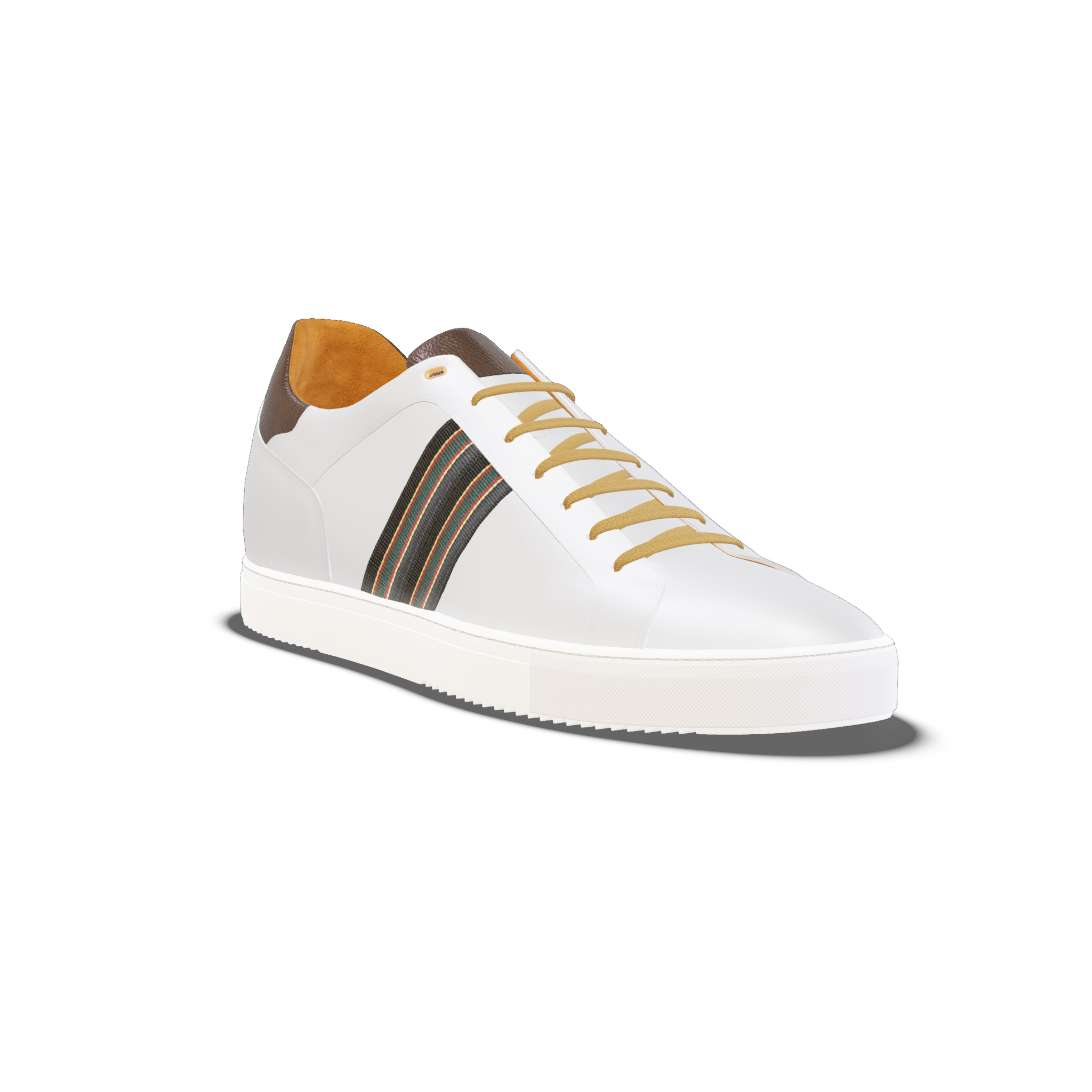
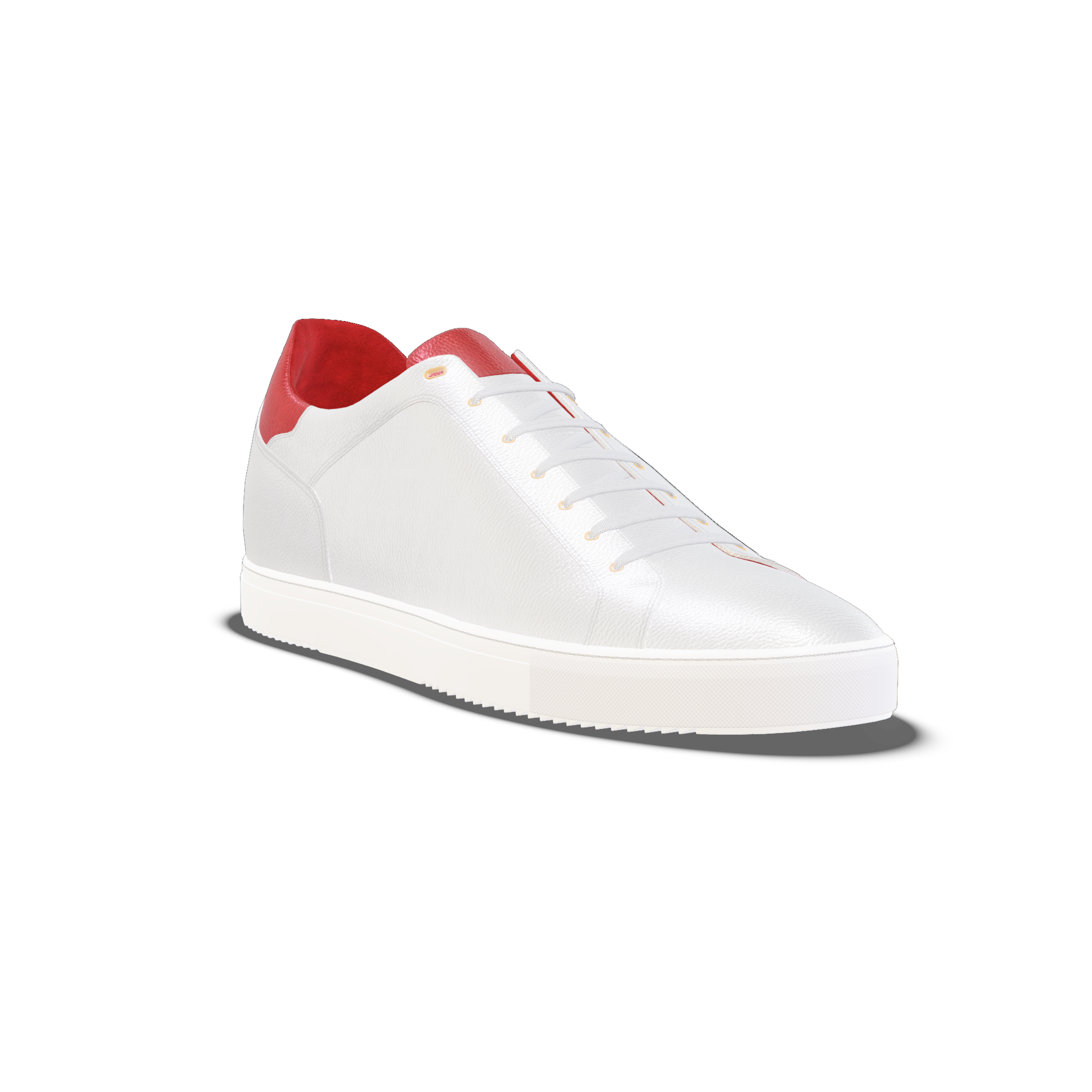
A sophisticated custom sneaker might use chocolate pebble-grain leather across most of the upper, introducing chocolate suede only at the tongue and heel. Another could use warm off-white calf with a burgundy heel tab and tonal stitching. A third might be predominantly graphite, differentiated through smooth and textured leathers rather than contrasting colours.
The design remains personal because the decisions belong to the owner.
It does not need to advertise the number of decisions involved.
This is an important point for modern luxury. Personalisation has sometimes been reduced to conspicuous differentiation: initials, monograms, contrasting colours and obvious signals that the object was specially commissioned.
There is another, quieter version.
The dimensions feel right.
The material is exactly the texture you prefer.
The lining is a colour meaningful only to you.
The sneaker works effortlessly with the clothes you already own.
Nobody walking past needs to know it was customised.
You know.
That is enough.
10. Knowing When to Stop
Every creative process eventually reaches the same difficult question.
Is it finished?
There is rarely an objective answer.
Another detail could always be adjusted. Another version could always be explored. Another colour could always be tested. Digital design has made this temptation almost limitless because experimentation costs virtually nothing until production begins.
The danger is assuming that continued activity must eventually produce continued improvement.
It doesn’t.
There is a point in almost every design where the curve reverses. Additional intervention begins reducing clarity rather than increasing it.
Knowing where that point lies is one of the defining skills of an experienced designer.
The same is true of craftsmanship. A skilled artisan understands when leather has been polished sufficiently, when an edge has been finished correctly and when further intervention would contribute nothing. Expertise is not simply the ability to do more. It is the judgement required to recognise when the work is complete.
This principle extends into personal style.
An outfit can be finished before the additional accessory is added.
A room can be finished before the empty corner is filled.
A sneaker can be finished before the contrasting lace is introduced.
The difficulty is becoming comfortable with absence.
Empty space can feel unresolved because we have been conditioned to treat unused capacity as an opportunity. Yet some of the world’s most beautiful design depends precisely upon that emptiness. Negative space in photography directs attention. Silence in music gives notes significance. Space within architecture changes how we experience form.
Restraint understands that absence can perform a function.
This brings us back to Luxury Is What You Stop Thinking About. Exceptional design often succeeds by quietly removing friction rather than continuously introducing features. Its sophistication becomes almost invisible because nothing unnecessary remains to demand attention.
Perhaps that is why the finest luxury products often appear surprisingly simple after all the work required to create them.
The complexity has not vanished.
It has been resolved.
Every material considered and rejected, every colour tested and abandoned, every unnecessary line removed and every proportion refined still exists within the history of the object. We simply do not see the process.
We see the result.
And the result feels obvious.
That is the strange achievement of restraint. When it has been executed properly, the final design can look as though there was never any other possible solution.
Of course there were hundreds.
Someone simply had the confidence to reject them.
Conclusion: Less, But More Meaningful
We live in an age extraordinarily good at producing more.
More products. More content. More features. More combinations. More recommendations. More choice. Technology has made abundance one of the defining characteristics of modern life, and in many respects that abundance is enormously beneficial.
It has also changed what feels luxurious.
When access was limited, having more represented privilege. When almost everything becomes available, the ability to discriminate becomes more valuable than the ability to accumulate.
Restraint is the discipline that makes discrimination visible.
It asks whether another element genuinely improves the object or merely proves that another element could be added. It requires designers to separate creativity from decoration, customers to distinguish personalisation from excess and luxury brands to trust craftsmanship sufficiently that it does not need to be surrounded by spectacle.
This does not mean everything should become minimalist.
The world would be considerably less interesting if every sneaker were white, every house were a concrete box and every wardrobe contained precisely the same collection of tasteful neutral clothing.
Restraint is not a style.
It is a method of judgement.
A flamboyant design can demonstrate restraint if every flamboyant element has purpose. A minimalist design can be badly overdesigned if its simplicity is artificial or self-conscious. The question is not how much we can see.
The question is whether anything remains that does not deserve to be there.
This is why restraint sits so naturally alongside craftsmanship. Both depend upon judgement accumulated through experience. As explored in Why Handmade Still Matters in an Automated World, technology can generate possibilities at extraordinary speed, but the ability to decide which possibility is worth pursuing remains profoundly human.
Artificial intelligence will make this distinction even more important. When thousands of designs can be generated within minutes, generation itself becomes less scarce. Selection becomes the valuable act.
What should we make?
Which version is better?
What should disappear?
When should we stop?
These questions cannot be answered simply by producing more alternatives.
They require taste.
For luxury footwear, the implications are particularly clear. Exceptional leather deserves space to reveal its character. Skilled craftsmanship does not need exaggerated decoration to prove its existence. Personalisation becomes more meaningful when choices reflect the owner rather than the capabilities of the design tool. And a sneaker intended to remain relevant for years should not depend entirely upon the visual language of a single season.
Perhaps this is why restraint often feels so confident.
It does not fear that something has been forgotten.
It knows something has been removed.
There is an enormous difference between the two.
The first is absence by accident.
The second is absence by design.
And ultimately, that may be the beauty of restraint: understanding that the final act of creativity is not always deciding what else to put in.
Sometimes it is having the confidence to leave something out.
By Jasper Trumble