


Journal
The Luxury of Knowing Exactly What You Like
When Personal Style Stops Asking for Permission
10th August 2026
There is a peculiar stage in the development of personal style when something rather liberating happens: you stop wondering whether you are doing it correctly.
You stop asking whether navy is fashionable this year, whether trainers should be minimalist or deliberately enormous, whether brown can be worn with black, whether your trousers are precisely the width currently approved by fashionable people in Milan, or whether some previously respectable item in your wardrobe has suddenly become unacceptable because an influential person on Instagram has declared it so.
You simply know what you like.
This is not the same as becoming indifferent to style. Quite the opposite. It is usually the consequence of having paid attention to it for long enough. You have experimented, made mistakes, bought things that looked considerably better in the shop than they ever did on you, and occasionally succumbed to trends that photographic evidence later confirmed should have been left entirely alone. Eventually, patterns begin to emerge.
Certain colours repeatedly make their way into your wardrobe. Particular materials feel right. Some proportions consistently work. You discover that the jacket you have owned for eight years somehow still gets chosen ahead of the one you bought eight weeks ago. You realise that while you admire flamboyant clothing on other people, you invariably feel more comfortable wearing something understated yourself. Or perhaps precisely the reverse.
This is taste becoming personal.
And personal taste is one of the least discussed forms of luxury.
Luxury is usually presented as access: access to better materials, exceptional craftsmanship, exclusive places and expensive objects. Yet there is another kind of luxury that cannot simply be purchased. It is the confidence that comes from understanding your own preferences sufficiently well that endless choice no longer feels particularly seductive.
The person with mature taste does not necessarily want more options. They want the right option.
That distinction matters enormously in an age of almost unlimited choice. We can browse thousands of shoes without leaving the sofa, compare hundreds of watches before breakfast and encounter more new clothes during ten minutes of scrolling than previous generations might have seen during an entire shopping trip. Algorithms continuously present alternatives, recommendations and supposedly essential discoveries. There is always another colour, another collaboration, another limited edition and another thing we are assured will somehow complete us.
Against this abundance, certainty feels remarkably sophisticated.
Knowing what you like allows you to step outside the endless cycle of persuasion. Trends can remain interesting without becoming instructions. Other people’s style can be admired without being copied. Choice becomes useful rather than overwhelming.
This is where personalisation becomes particularly interesting. The freedom to design something for yourself is only genuinely valuable when accompanied by the confidence to decide what that something should be. Otherwise, infinite possibility simply becomes another form of uncertainty.
True bespoke luxury is therefore not really about having more choices.
It is about finally knowing which choices matter.
Taste Is Something You Grow Into
Very few people emerge into adulthood with fully formed taste. Thankfully so, because otherwise adolescence would have produced some deeply troubling permanent wardrobes.
Taste develops through exposure, experimentation and, inevitably, mistakes. We discover what works partly by discovering what does not. A colour we admired on someone else turns out to do absolutely nothing for us. A fashionable silhouette looks magnificent in a magazine and faintly ridiculous in the mirror. Something purchased enthusiastically remains untouched for months while another seemingly ordinary piece becomes indispensable.
These experiences are not failures of taste. They are how taste is formed.
The process resembles developing an appreciation for food, architecture, wine, art or music. Initially, our preferences can be broad and heavily influenced by those around us. With experience comes discrimination. We begin noticing subtleties that previously escaped us. Eventually, preference becomes more precise.
Clothing follows the same trajectory. Someone interested in style at twenty may be fascinated by novelty because novelty provides an opportunity to explore identity. Twenty years later, the same person may own considerably fewer styles yet understand each of them far better. Their wardrobe may appear less adventurous from the outside while actually becoming much more personal.
This is the distinction between experimentation and refinement.
Experimentation asks, “Could this work?”
Refinement asks, “Is this me?”
The second question is considerably harder because it requires self-awareness rather than simply curiosity. It means accepting that something can be beautiful, fashionable and exquisitely made while still being completely wrong for you.
That is a surprisingly difficult lesson in luxury, where desirability is often presented as universal. A celebrated watch does not automatically belong on every wrist. A beautifully cut jacket need not belong in every wardrobe. A striking sneaker can deserve admiration without deserving ownership.
Mature taste allows these ideas to coexist comfortably.
As explored in What Your Sneakers Say When You’re Not Speaking, the objects we choose inevitably communicate something about us. The difference is that mature personal style becomes less concerned with controlling what others hear and more concerned with ensuring that the message genuinely belongs to us.
Eventually, taste stops being primarily about discovery and becomes increasingly about recognition. You encounter something and instinctively understand whether it belongs in your world.
That instinct may feel effortless.
It took years to acquire.
The Moment You Stop Dressing for Other People
Much of fashion depends upon an audience.
We dress for work, occasions, social groups and cultural expectations. Even people who insist they pay absolutely no attention to clothing tend to make choices influenced by the environment around them. Humans are social creatures, and clothing has always been one of the ways we communicate belonging, status, personality and intention.
There is nothing inherently superficial about this. Clothes are a language, and languages only work when other people understand at least some of the vocabulary.
The problem begins when the audience becomes more important than the wearer.
Social media has intensified this tension considerably. Style that once developed gradually through communities, travel, magazines and personal experience can now be observed globally and instantaneously. An outfit photographed in Copenhagen this morning may influence purchasing decisions in London by lunchtime. Inspiration has never been more accessible.
Neither has comparison.
The result can be an odd form of stylistic anxiety in which people become increasingly knowledgeable about what everyone else is wearing while becoming progressively less certain about what they actually like themselves.
Personal style begins to mature when that relationship reverses.
You may still notice trends. You may enjoy fashion, follow designers and appreciate what other people wear. The difference is that these things become references rather than instructions. They enter the consideration set but no longer determine the outcome.
This confidence often produces wardrobes that are quieter but considerably more distinctive. A person may repeatedly choose similar colours, silhouettes or materials because those choices have become part of their visual identity. From a purely commercial perspective, this is inconvenient. Fashion would rather we became bored and started again every six months.
Personal style has other ideas.
There is a useful parallel with The Anti-Collection: Why One Pair Is Enough. Once an individual discovers what genuinely works, the desire for endless variation can begin to diminish. Owning more stops being automatically preferable to knowing that what you already own is exactly right.
This does not mean wearing precisely the same thing forever. Personal style should evolve because people evolve. The difference is that evolution becomes gradual and intentional rather than dictated by somebody else’s calendar.
Confidence, in this sense, is not the belief that everyone will approve of your choices.
It is becoming comfortable with the possibility that they won’t.
Knowing What You Don’t Like Matters Just as Much
Luxury marketing tends to focus relentlessly on desire. What do you want? What would you like next? Which colour appeals to you? Which new product belongs in your life?
Yet one of the clearest signs of developed taste is knowing what you do not want.
This is where restraint begins.
A person with uncertain taste frequently evaluates each object independently. They may like a dramatic sneaker on Monday, a minimalist one on Tuesday and something completely different by Friday. Each decision makes sense in isolation, yet collectively the wardrobe lacks coherence because there is no established filter through which those choices pass.
Mature taste creates that filter.
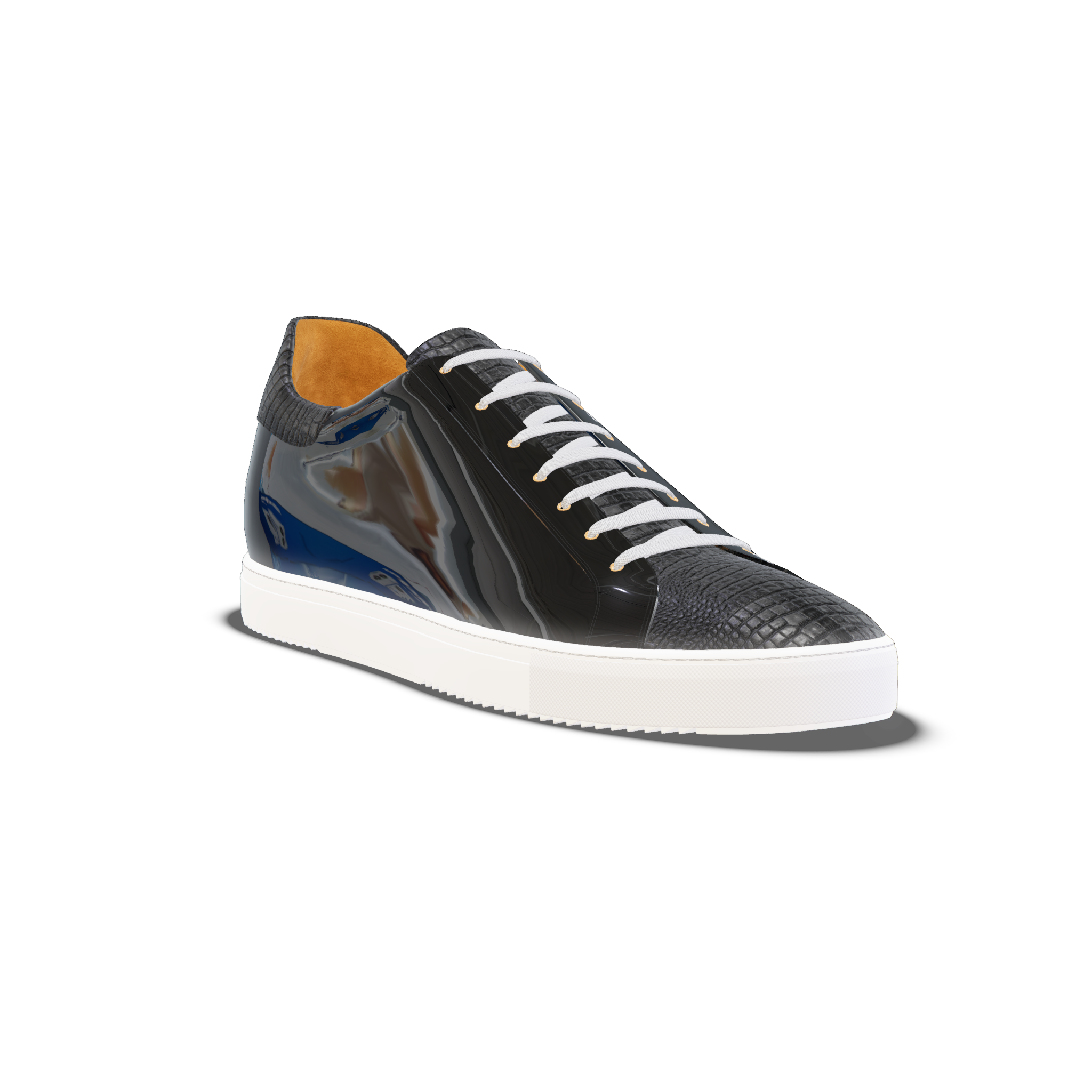
You might know that highly polished leather never feels quite right for your everyday style, however beautifully executed it may be. Perhaps you instinctively avoid prominent logos. You may favour warm earth tones over primary colours, suede over patent leather, tonal combinations over contrast, or precisely the opposite. The specific preferences are largely irrelevant. What matters is their consistency.
Knowing what you dislike dramatically reduces the complexity of choice.
This is particularly important with bespoke design. Theoretically, the ability to choose every colour, texture and detail creates enormous creative freedom. In practice, freedom without restraint can produce something resembling the aftermath of an argument in a paint shop.
Just because a detail can be added does not mean it should be.
This is where good personalisation differs from decoration. The objective is not to demonstrate how many decisions were available. It is to make a small number of decisions exceptionally well.
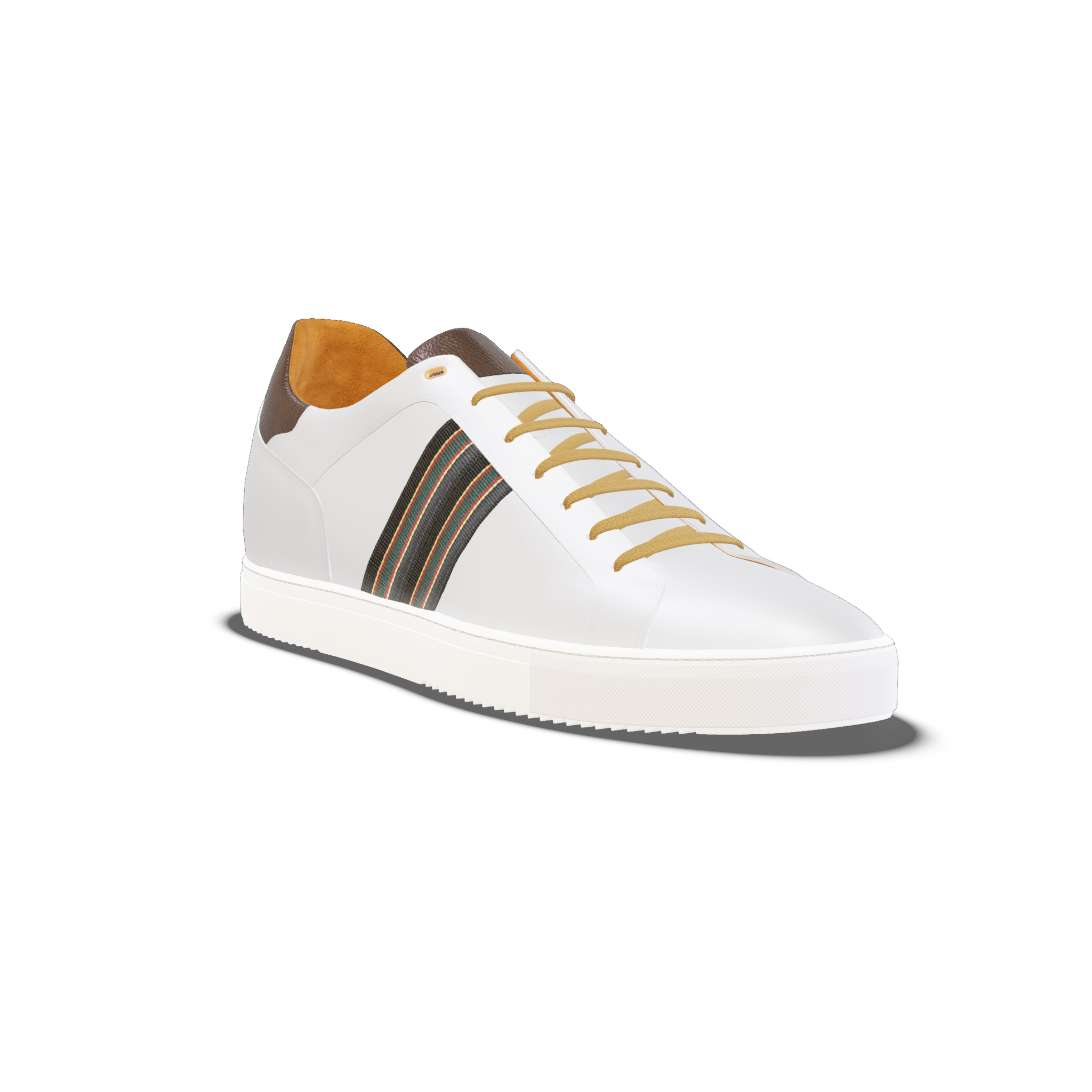
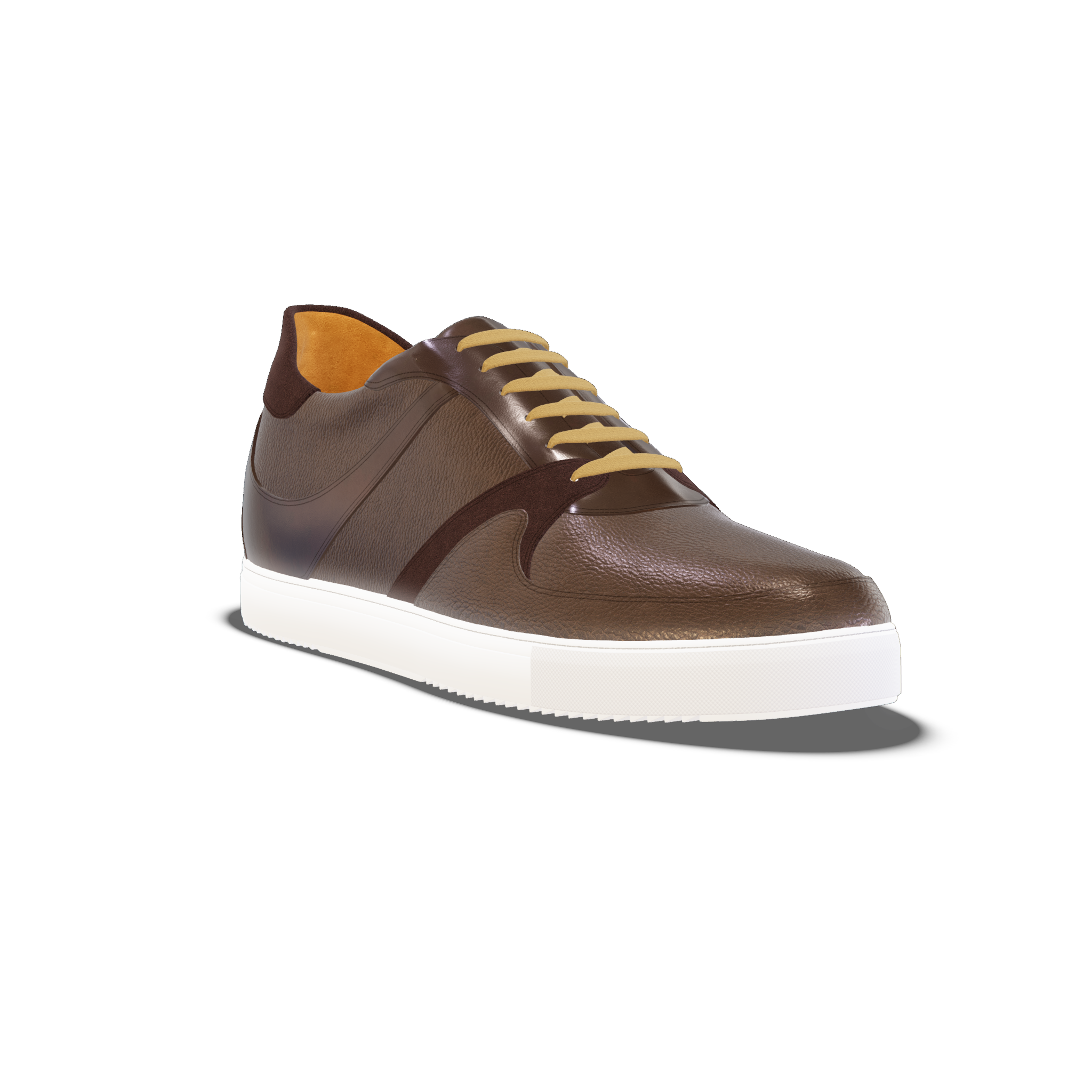
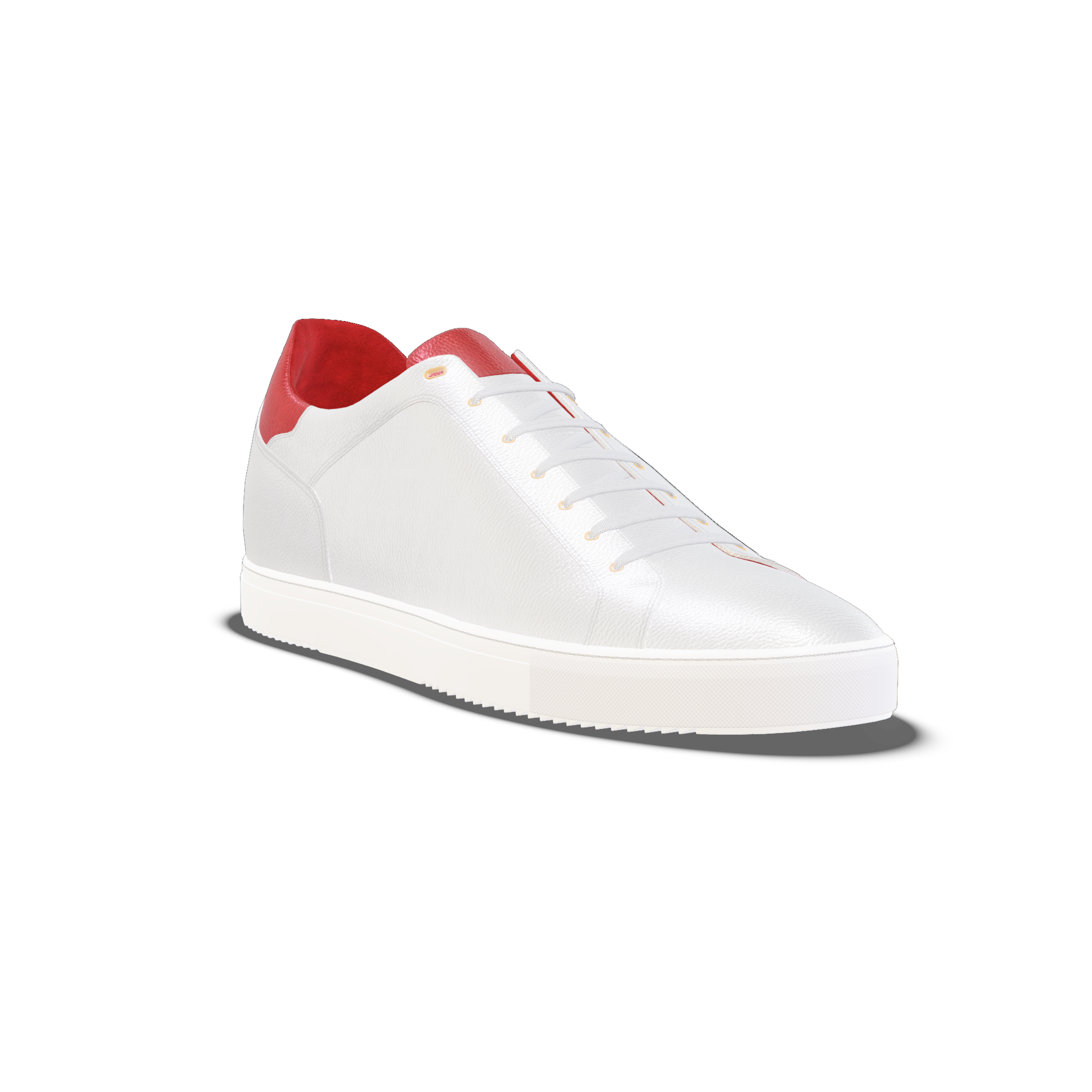
A navy pebble-grain leather might sit alongside a navy suede panel, differentiated by texture rather than colour. A restrained brown upper could be interrupted by one unexpected burgundy detail. A predominantly neutral sneaker might use the lining as the only place where a more personal colour appears. None of these approaches is inherently correct. Their strength comes from intentionality.
The same principle underpins The Silence of a Good Outfit Starts at Your Feet, where restraint becomes a form of confidence rather than an absence of imagination. Knowing when to stop is one of the hardest skills in design because possibility is seductive.
The mature customer eventually becomes comfortable leaving possibilities unexplored.
That is not limitation.
It is discernment.
Why More Choice Doesn’t Always Mean More Freedom
Choice is one of modern commerce’s favourite promises.
More colours. More materials. More combinations. More products. More ways to personalise. The assumption is straightforward: if choice is good, more choice must be better.
Psychology suggests otherwise.
When options multiply beyond a certain point, decision-making can become more difficult rather than more enjoyable. Instead of feeling liberated, we begin worrying about the alternatives we have rejected. Would the darker shade have been better? Should we have chosen suede? What about the other sole? Perhaps we should look at another twenty possibilities before deciding.
Choice becomes work.
This is sometimes described as the paradox of choice: expanding options can increase opportunity while simultaneously reducing confidence in the final decision. When everything remains possible, committing to one possibility becomes strangely difficult.
Taste solves much of this problem.
Someone who knows their preferences does not experience a hundred choices in the same way as someone approaching them without a clear point of view. Most possibilities are eliminated almost immediately. They are not bad; they are simply irrelevant.
This is where mature taste transforms personalisation.
The Jasperosso three dimensional design studio, for example, provides the freedom to explore different leathers, colours and details. Yet the most satisfying result need not be the design that uses that freedom most conspicuously. Quite often, it will be the one created by someone confident enough to use only the possibilities that strengthen their original idea.
This mirrors the philosophy explored in Designed Once, Worn Forever. A successful design does not need to demonstrate how many decisions went into creating it. It simply needs to continue feeling right long after those decisions have been forgotten.
There is a broader lesson here about modern luxury.
For decades, abundance represented privilege because most people had limited access to choice. Today, abundance is ordinary. Almost anyone with an internet connection can browse more products in an evening than they could realistically evaluate in a lifetime.
Scarcity has moved.
The scarce commodity is no longer choice.
It is certainty.
The person who knows exactly what they like can walk through an almost infinite marketplace and remain surprisingly unmoved by most of it. They are not deprived of choice. They have simply become very good at ignoring choices that do not matter.
In a world engineered to make us perpetually reconsider what we already own, that confidence may be one of the most luxurious things of all.
Personal Style Begins Where Trends End
Trends are useful. They introduce new ideas, challenge established conventions and occasionally rescue something perfectly good that fashion had inexplicably decided to abandon twenty years earlier. Without trends, style would stagnate. The problem arises when observing a trend becomes indistinguishable from obeying it.
Fashion operates on movement. Something must continuously change because an industry built entirely around telling customers that everything they already own is perfectly adequate would have certain commercial difficulties. Hemlines rise, trousers widen, trainers become slimmer, then larger, then slimmer again. Colours are rediscovered, renamed and presented as though nobody had previously encountered dark green. None of this is necessarily cynical; change is part of fashion’s creativity. It simply should not be confused with personal style.
Personal style moves more slowly.
It borrows from fashion selectively, accepting ideas that complement an existing identity and ignoring those that do not. Someone who understands their own aesthetic can appreciate an emerging trend without feeling obliged to participate in it. They may introduce a new silhouette, colour or material because it genuinely adds something to their wardrobe, but the decision remains theirs.
This distinction becomes particularly important when buying luxury products. A relatively inexpensive trend-driven purchase can be enjoyed briefly and discarded without catastrophic financial consequences. A handcrafted object intended to last for years requires a different calculation. Designing it around what happens to be fashionable this season risks giving an object with a ten-year physical lifespan a twelve-month aesthetic one.
Timelessness does not mean blandness. Nor does it require a wardrobe populated exclusively by navy, grey and beige, although certain corners of menswear occasionally seem determined to test that proposition. A highly individual combination of colour and texture can remain timeless if it genuinely reflects the person who chose it. What dates an object most quickly is often not boldness but imitation.
The strongest personal style therefore exists slightly outside the fashion cycle. It remains aware of what is happening without becoming dependent upon it. This is closely connected to the argument in The End of Seasonal Footwear: products designed around individual taste and enduring materials need not become irrelevant simply because the industry has moved from one season to another.
There is freedom in reaching this point. A trend can arrive, dominate social media and disappear again without requiring any response whatsoever. You might enjoy observing it. You might even admire it. You simply do not mistake admiration for a purchasing instruction.
That is when fashion becomes enjoyable again.
Bespoke Is Most Powerful When You Know Yourself
The word bespoke has acquired an extraordinary amount of baggage. It appears on everything from tailoring to kitchen cabinets and, rather optimistically, certain sandwiches. In its most meaningful form, however, bespoke describes something straightforward: an object created around the preferences and requirements of an individual rather than an individual adapting themselves to whatever has already been produced.
That distinction becomes much more powerful when the customer arrives with a clear sense of identity.
Personalisation without self knowledge can easily become an exercise in possibility. If twenty colours are available, there is a temptation to use six of them. If several textures can be combined, perhaps all of them deserve an appearance. Every additional choice feels like another opportunity to make the finished object more personal.
Except personality does not work like that.
The most distinctive people are rarely those expressing every aspect of themselves simultaneously. Personal style relies on editing. It identifies which details matter and allows them sufficient space to be noticed.
This is why the most successful bespoke designs can appear deceptively simple. Perhaps the owner consistently wears navy and chooses a deep navy pebble-grain leather, adding tonal suede because texture provides enough contrast without introducing another colour. Someone else may prefer warm browns and creams but add a discreet burgundy heel detail that has personal significance. Another customer might create something considerably more colourful because restraint, for them, would feel artificial.
All three can be equally sophisticated.
The objective is not minimalism. It is coherence.
This is an important distinction for custom footwear. The ability to select materials, colours, laces, linings and other details through a three dimensional design studio provides creative freedom, but the technology cannot decide what feels authentically yours. It can show possibilities. Taste must edit them.
That editing process is where personalisation becomes meaningful. Instead of asking, “What can I change?” the better question becomes, “What should remain?”
The difference is subtle but significant. The first question encourages novelty. The second encourages authorship.
Clothing communicates identity whether we intend it to or not, but bespoke design allows that communication to become more deliberate. You are no longer choosing the nearest approximation of your taste from somebody else’s collection. You are defining the combination yourself.
The ultimate purpose of bespoke, therefore, is not to create something nobody else could own.
It is to create something nobody else would have chosen in quite the same way.
Restraint Is the Ultimate Expression of Confidence
One of the hardest things to do when given creative freedom is almost nothing.
Designers understand this particularly well. Adding another element is relatively easy. Removing one requires confidence. Every additional colour, seam, material or embellishment can be defended individually, yet successful design depends upon whether those elements improve the whole rather than whether each one looks attractive in isolation.
Personal style follows precisely the same rule.
When taste is still developing, there can be a temptation to demonstrate it. The outfit contains the interesting jacket, the unusual watch, the statement glasses, the distinctive trousers and the attention-grabbing footwear, each piece competing enthusiastically to prove that its owner has thought about what they are wearing.
Eventually, many people discover that one point of interest is usually enough.
This is not the same as becoming conservative. Restraint can be extraordinarily expressive. A charcoal outfit with an unexpected pair of oxblood sneakers may say considerably more than an ensemble containing six competing colours. A familiar silhouette executed in an unusual leather can feel more individual than an aggressively unconventional shape. Texture can provide contrast without changing colour at all.
The sophistication lies in understanding how little is required.
This principle appears repeatedly throughout luxury design. Great architecture often gains its power from space rather than decoration. The finest interiors leave room around important objects. Exceptional tailoring depends upon proportion before embellishment. Even food at the highest level is frequently characterised by chefs removing ingredients until only those that genuinely contribute remain.
Luxury becomes an exercise in editing.
There is also a practical benefit. Restrained designs tend to remain relevant because their identity does not depend upon a single fashionable device. A beautifully judged combination of leather, colour and texture can acquire character over time without becoming a timestamp for the year in which it was purchased.
As explored in Why Real Luxury Rarely Looks New, the best materials frequently become more interesting through ownership. Restraint gives them room to do so. Rather than competing against excessive design, the leather itself becomes part of the visual story as it softens, creases and develops the subtle evidence of use.
Knowing when enough is enough may therefore be one of the clearest signs of mature taste.
It is also considerably harder than it looks.
The Things You Keep Choosing Tell You Who You Are
Open almost any well used wardrobe and ignore the things its owner says they like. Look instead at what they actually wear.
The difference can be revealing.
There may be fifteen shirts hanging neatly together, but four are worn repeatedly. Six pairs of shoes occupy the floor, yet one pair seems permanently positioned nearest the door. Several jackets looked excellent when purchased, but the same navy one somehow accompanies dinners, meetings and weekends year after year.
These repetitions are not failures of imagination.
They are evidence.
We often discover our real preferences through behaviour long before we consciously articulate them. The things repeatedly chosen reveal what makes us comfortable, what fits naturally into our lives and what feels most authentically ours. Over time, these patterns form a personal vocabulary.
Colour is often the easiest pattern to recognise. Someone may gradually realise that almost everything they genuinely enjoy wearing belongs to a narrow family of blues, browns and neutrals. Another person’s wardrobe might repeatedly return to black, white and strong accents of colour. Texture reveals similar preferences: smooth calf leather, suede, pebble grain, wool, linen or denim appear again and again because they feel familiar.
None of this means the wardrobe must become monotonous. A vocabulary containing twenty words can produce an extraordinary number of sentences. Personal style works similarly. Limiting the underlying language often makes individual combinations more coherent rather than less imaginative.
This is where familiarity becomes useful rather than restrictive.
If you already know that navy suede works exceptionally well with the clothes you wear most often, choosing it again is not evidence of creative failure. It may simply mean you have learned something about yourself. The modern obsession with novelty sometimes encourages us to abandon perfectly good preferences merely because we have expressed them before.
Luxury offers an alternative perspective.
If something works beautifully, perhaps repetition is precisely the point.
This idea connects naturally with Luxury Is What You Stop Thinking About. The objects that become most valuable in everyday life are frequently those we choose instinctively. They no longer require evaluation because experience has already answered the important questions. They fit, they work and they feel right.
Eventually, personal style becomes visible through these repetitions. Other people may even recognise them before we do. The same colours, materials and proportions quietly become signatures, not because they were deliberately constructed as branding, but because they emerged naturally through years of consistent choices.
That is the difference between developing a style and manufacturing one.
One is discovered.
The other is performed.
When Your Wardrobe Stops Being an Experiment
There comes a point when a wardrobe stops behaving like a laboratory.
For years, buying clothes can involve a surprising amount of experimentation. Something catches your attention, you imagine an entirely plausible future in which you will wear it regularly, and the purchase is made. Three months later, it remains hanging exactly where you placed it, patiently awaiting the lifestyle transformation that apparently never occurred.
Most wardrobes contain evidence of these experiments. The jacket that required an entirely different personality. The trainers that looked wonderfully understated online but somehow resembled orthopaedic equipment once worn. The aggressively patterned shirt purchased on holiday when sunshine, good wine and temporarily impaired judgement combined to suggest that life back home was about to become considerably more flamboyant.
These mistakes are useful.
They teach us something.
With experience, the gap between the person we imagine ourselves becoming and the person we actually are begins to narrow. Purchases become less aspirational in the superficial sense and more reflective of real life. Instead of asking whether an item is interesting, we begin asking whether we will genuinely wear it. Instead of imagining an entirely new wardrobe around a single purchase, we consider whether it belongs naturally alongside what we already own.
This may sound less adventurous, but it is actually the point at which personal style becomes considerably more sophisticated.
A mature wardrobe is rarely assembled around isolated objects. It functions as a system. Colours work together. Materials complement one another. Footwear has relationships with trousers, jackets and knitwear rather than existing as a separate collection of impressive objects. The result is that fewer individual pieces can create more combinations because everything shares a common language.
This is essentially the clothing equivalent of knowing your way around a familiar city. At first, every journey requires conscious navigation. Eventually, you stop thinking about individual turns because you understand how everything connects.
Personal style develops in much the same way.
The objective is not to eliminate experimentation entirely. That would eventually turn certainty into stagnation, which is not the same thing as taste. New ideas remain important because preferences continue to evolve. The difference is that experimentation becomes selective. A new colour might be introduced because it complements an established palette. A different texture may add depth to familiar combinations. A more unusual sneaker might work precisely because the rest of the wardrobe provides a restrained backdrop.
The foundation remains stable while individual details continue to evolve.
This is why the concept of a capsule wardrobe has resonated so strongly in recent years. Its appeal is not simply minimalism. It is coherence. A smaller number of carefully selected pieces can actually provide greater practical freedom because fewer decisions result in dead ends. The question changes from “What should I wear?” to “Which version of what already works feels right today?”
Reducing quantity does not automatically improve a wardrobe, but understanding why certain things consistently earn their place often does. The objective is not austerity. It is removing the unnecessary until what remains feels unmistakably right.
There is also an economic advantage that luxury marketing rarely discusses. Knowing your taste makes expensive mistakes less frequent.
A £100 purchase that is worn twice is considerably more extravagant than a £400 purchase worn hundreds of times. The arithmetic may be unromantic, but it is difficult to argue with. As examined in The Gap Between Price and Value, purchase price tells us remarkably little about the eventual value of ownership. What matters is whether the product continues earning its place.
Mature taste improves those odds.
You stop buying for imaginary occasions. You become suspicious of things that require three additional purchases before they can be worn. You recognise colours that look magnificent in photographs but never quite work with anything you own. Most importantly, you learn that wanting something and wanting to live with something are not necessarily the same thing.
That is a useful distinction.
Luxury should be exceptionally good to live with.
The Ultimate Luxury Is Not Having to Decide
We are surrounded by decisions.
What to watch. Where to eat. Which route to take. Which email deserves an immediate response. Which of several hundred nearly identical products has somehow earned a 4.8 rather than 4.7-star rating. Modern convenience has eliminated countless inconveniences while simultaneously producing an extraordinary quantity of choice.
Even buying a simple object can become research.
We compare specifications, reviews, colours, prices and alternatives. We open twelve browser tabs, close four, reopen two of them and eventually discover that the product we were considering is now available in another version we had not previously realised existed.
Luxury ought to offer an escape from this.
Not by removing choice, but by making choice easier.
When you know exactly what you like, the vast majority of possibilities cease to require consideration. A wardrobe containing hundreds of theoretical combinations becomes a relatively small number of instinctive ones. A design studio offering an extensive palette of leathers and colours stops feeling overwhelming because you already understand the territory you want to explore.
This is where certainty becomes a form of freedom.
The customer who knows they favour dark blue does not need to be persuaded that orange has become fashionable. The person who prefers subtle textural contrast does not need six competing colours simply because six are available. Someone who has discovered that a particular silhouette works beautifully can return to it repeatedly without worrying that familiarity suggests a lack of imagination.
Quite the opposite.
Repetition can become signature.
Many of the world’s most stylish people have understood this intuitively. Their wardrobes are often surprisingly consistent because personal style becomes stronger through repetition. Steve Jobs had the black roll-neck. Giorgio Armani built an entire aesthetic around softened tailoring and restrained colour. Karl Lagerfeld transformed a white shirt, dark tailoring and sunglasses into something approaching a uniform. Their styles were dramatically different, but the principle was identical: certainty eliminated unnecessary decisions.
The same phenomenon occurs outside fashion. An architect develops preferences for particular materials. A chef returns repeatedly to certain ingredients and techniques. A photographer gradually develops a recognisable visual language. Expertise does not necessarily produce endless variety. Often, it produces increasingly precise selection.
This is where taste and confidence eventually meet.
You no longer need every possibility because you have learned which possibilities deserve your attention.
The result can feel surprisingly liberating. Getting dressed becomes easier. Buying becomes more deliberate. Bespoke design becomes more satisfying because the objective is no longer to explore every available combination. It is to translate an existing sense of self into something tangible.
This also changes the emotional relationship with the finished product. When an object reflects preferences already established over years rather than a temporary experiment, there is a much greater chance it will continue feeling relevant. Novelty fades, but recognition remains.
You put something on and it simply feels like you.
That sensation is difficult to quantify, but it may be one of the clearest expressions of personal luxury.
Certainty Is the New Exclusivity
For much of luxury’s history, exclusivity was relatively straightforward. Something was luxurious because relatively few people could obtain it. Scarcity came from cost, geography, materials, production capacity or social access. To own something rare was itself a statement.
The internet has complicated that model.
Almost everything is visible now. A product launched in Milan can be viewed around the world within seconds. Rare watches are photographed thousands of times. Private hotels appear endlessly on social media. Previously obscure brands can become globally recognised almost overnight. Even exclusivity has become strangely public.
Perhaps the more interesting form of exclusivity today is not possessing something other people cannot have.
It is possessing something other people would not have chosen.
That is where personal taste becomes particularly powerful.
Two people can enter exactly the same design environment, encounter the same materials and be presented with precisely the same possibilities, yet create entirely different results. Neither requires permission from a trend forecaster because each design originates from an individual set of preferences.
This is the difference between exclusivity through scarcity and exclusivity through identity.
The first says, “You cannot have this.”
The second says, “You probably wouldn’t choose this.”
For bespoke luxury, the second is considerably more interesting.
It moves the conversation away from status and towards authorship. The value lies not simply in owning something uncommon, but in understanding why every decision belongs there. A particular leather may have been chosen because of how it feels rather than how it photographs. A colour might relate to a favourite jacket, car interior or watch strap. A contrasting lining may be visible only to the owner.
These decisions need not make sense to everybody else.
In fact, that may be precisely the point.
Personalisation becomes most authentic when it stops trying to demonstrate that it has been personalised.
This connects with Luxury Is What You Stop Thinking About. The most successful luxury objects eventually cease performing for an audience and simply become exceptionally good companions to their owners. Their significance becomes private rather than public.
Knowing exactly what you like produces the same effect.
Approval becomes optional.
From Unlimited Choice to One Right Choice
There is a tendency to imagine luxury as accumulation. More options, more possessions, more exclusivity and more access. Yet mature taste often moves in the opposite direction.
It edits.
Years of experimentation gradually reduce uncertainty. You discover which colours consistently work, which materials you enjoy touching, which silhouettes make you comfortable and which details still interest you after novelty has disappeared. The list of possibilities becomes shorter, but the quality of each decision improves.
This is why the development of taste can initially appear restrictive. You begin rejecting things you might once have bought. You become harder to persuade. Advertising loses some of its power because the promise of novelty no longer automatically creates desire.
From a consumption perspective, this is inconvenient.
From a personal perspective, it is enormously liberating.
You no longer need to reinvent yourself every season.
This is not an argument against change. Style that never evolves eventually becomes costume. Preferences should develop as lives, environments and experiences change. The objective is not to decide at thirty-five exactly what you will wear at seventy and then defend the decision heroically for the next three decades.
The point is to evolve from a foundation rather than constantly rebuilding it.
Someone who understands their taste can introduce new ideas without losing themselves within them. A different material, unexpected colour or contemporary silhouette becomes an addition to an established vocabulary rather than an attempt to acquire an entirely new identity.
That is why the strongest personal style often appears effortless from the outside.
It isn’t.
The effort simply happened years earlier.
It occurred through all the unsuccessful purchases, changing preferences, experiments and gradual discoveries that eventually produced certainty. What now looks instinctive is accumulated experience operating almost automatically.
The same principle applies to the finest bespoke design. The finished object may look simple, but simplicity is frequently the result of considerable thought. Every unnecessary option has been removed until only the decisions that genuinely matter remain.
The ultimate test of a design is not how exciting it feels when completed, but whether it continues feeling right long after the excitement has disappeared.
That is where taste proves itself.
Conclusion: Luxury Becomes Certainty
There is a particular confidence in knowing exactly what you like.
It does not require believing that your preferences are superior to anyone else’s. Mature taste is rarely evangelical. Someone secure in their own style has little need to convince everybody else to adopt it.
That may be the most sophisticated aspect of all.
Taste is personal.
The navy suede sneaker that feels perfect to one person may leave another completely unmoved. Someone who lives happily in neutral tailoring may admire a friend who wears extraordinary colour without feeling any desire to imitate them. Confidence allows admiration and preference to remain separate.
This is where luxury becomes something more interesting than price or exclusivity.
It becomes self-knowledge.
The freedom to personalise an object is valuable because it provides possibilities. The luxury lies in knowing what to do with them.
That distinction becomes increasingly important as technology gives us access to almost unlimited choice. We can configure cars, customise watches, design interiors and personalise footwear with a degree of freedom previous generations could scarcely have imagined. Artificial intelligence will undoubtedly expand those possibilities further, generating thousands of potential combinations within seconds.
Yet technology cannot make the final decision meaningful.
That remains ours.
Perhaps this is why the future of bespoke luxury will depend less upon offering endless options and more upon helping people express increasingly sophisticated preferences. Choice is only useful when it leads somewhere. The objective should not be to create the most complicated object possible, but the one that feels most completely resolved.
As explored in Why Handmade Still Matters in an Automated World, technology is at its best when it supports human judgement rather than attempts to replace it. Personalisation follows the same principle. Digital tools can reveal possibilities, skilled artisans can transform those decisions into physical objects, but taste remains the thread connecting the two.
Eventually, the customer reaches a point where the process becomes remarkably simple.
They know the colours.
They know the materials.
They know the proportions.
They know when something feels wrong.
And, most importantly, they know when to stop.
There will always be another trend, another collection and another supposedly essential object arriving next season. Fashion depends upon that movement, and much of the pleasure of style comes from watching it unfold.
But you do not have to follow every movement.
You can simply take what interests you and leave the rest.
That may ultimately be the luxury of knowing exactly what you like: not the ability to choose from everything, but the confidence to realise that you never needed everything in the first place.
You only needed to know yourself well enough to choose what was right.
By Jasper Trumble