

Journal
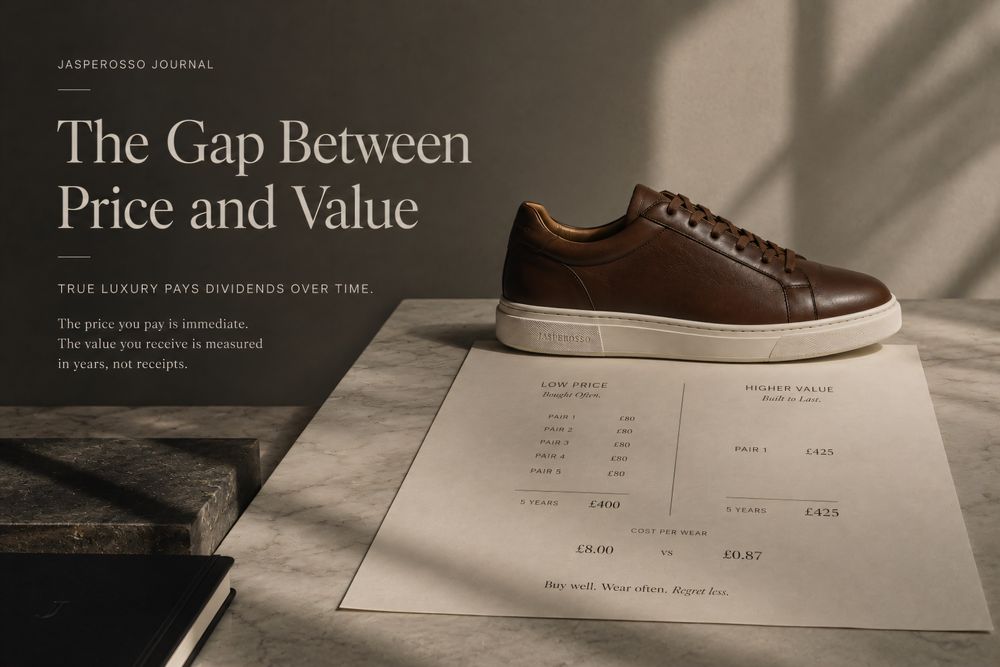
The Gap Between Price and Value
11th July 2026
There is a question almost every luxury brand is asked at some point. It may not always be voiced directly, but it lingers quietly in the minds of customers standing in front of a product that costs considerably more than the alternatives surrounding it.
“Why is it worth that much?”
It is an entirely reasonable question.
After all, we have become accustomed to comparing products by their price rather than by their value. We glance at the number attached to an item, compare it with another, and instinctively assume that the smaller figure represents the better deal. It is a habit encouraged by decades of advertising, discount culture and endless online comparison tools that reduce complex purchasing decisions to little more than competing numbers on a screen.
Yet price and value have never been the same thing.
Price is immediate. It appears the moment you reach the checkout. Value unfolds gradually, sometimes over months, often over years, and occasionally over decades. One can be measured instantly; the other can only be understood through experience.
This distinction lies at the heart of almost every worthwhile luxury purchase.
A beautifully made mechanical watch may cost several times more than a digital alternative, yet still become the better investment after twenty years of daily wear. A handcrafted leather briefcase may initially appear expensive compared with a synthetic equivalent, only to remain in service long after the cheaper bag has been replaced several times. A solid oak dining table may seem extravagant until it quietly survives three generations of family life.
Luxury footwear follows exactly the same principle.
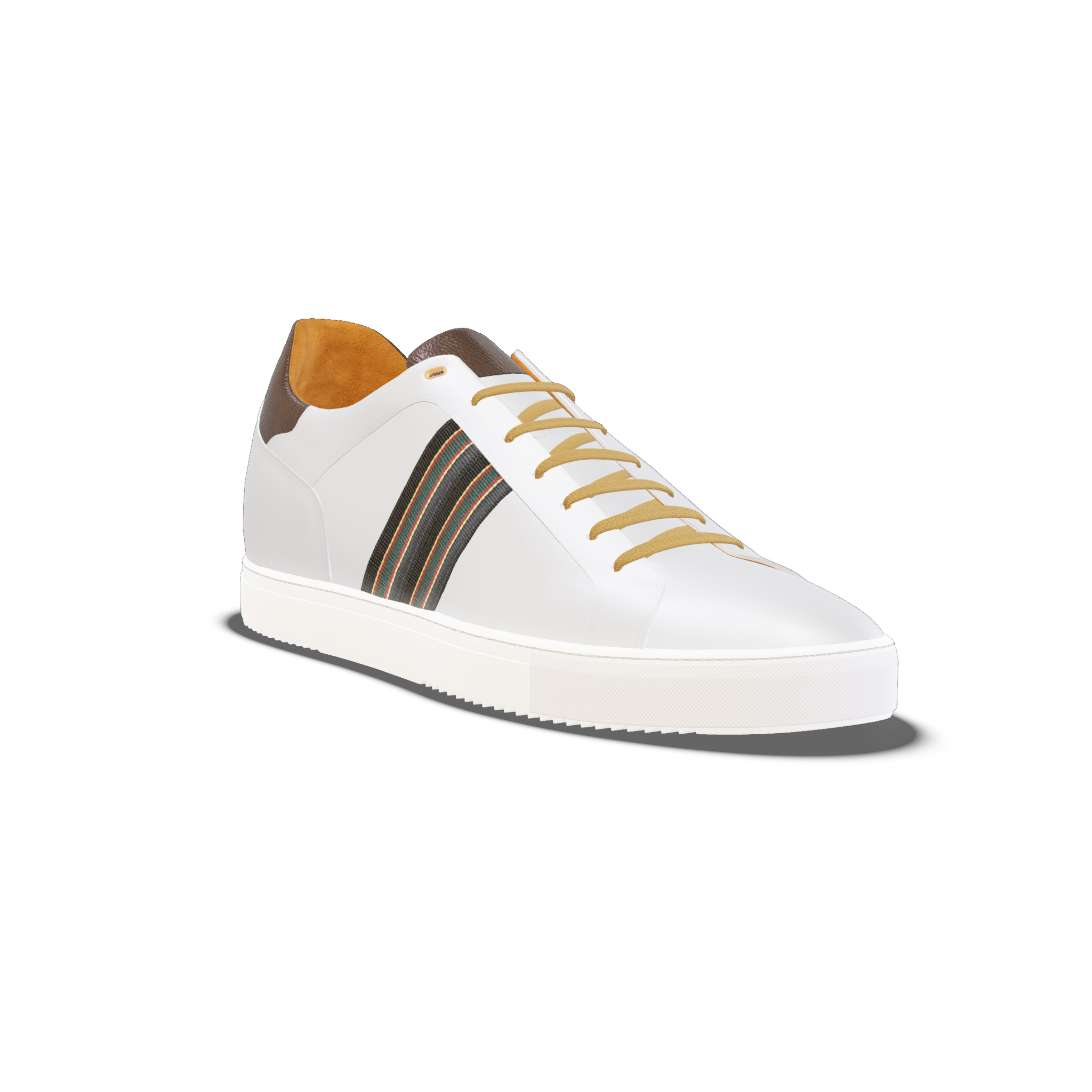
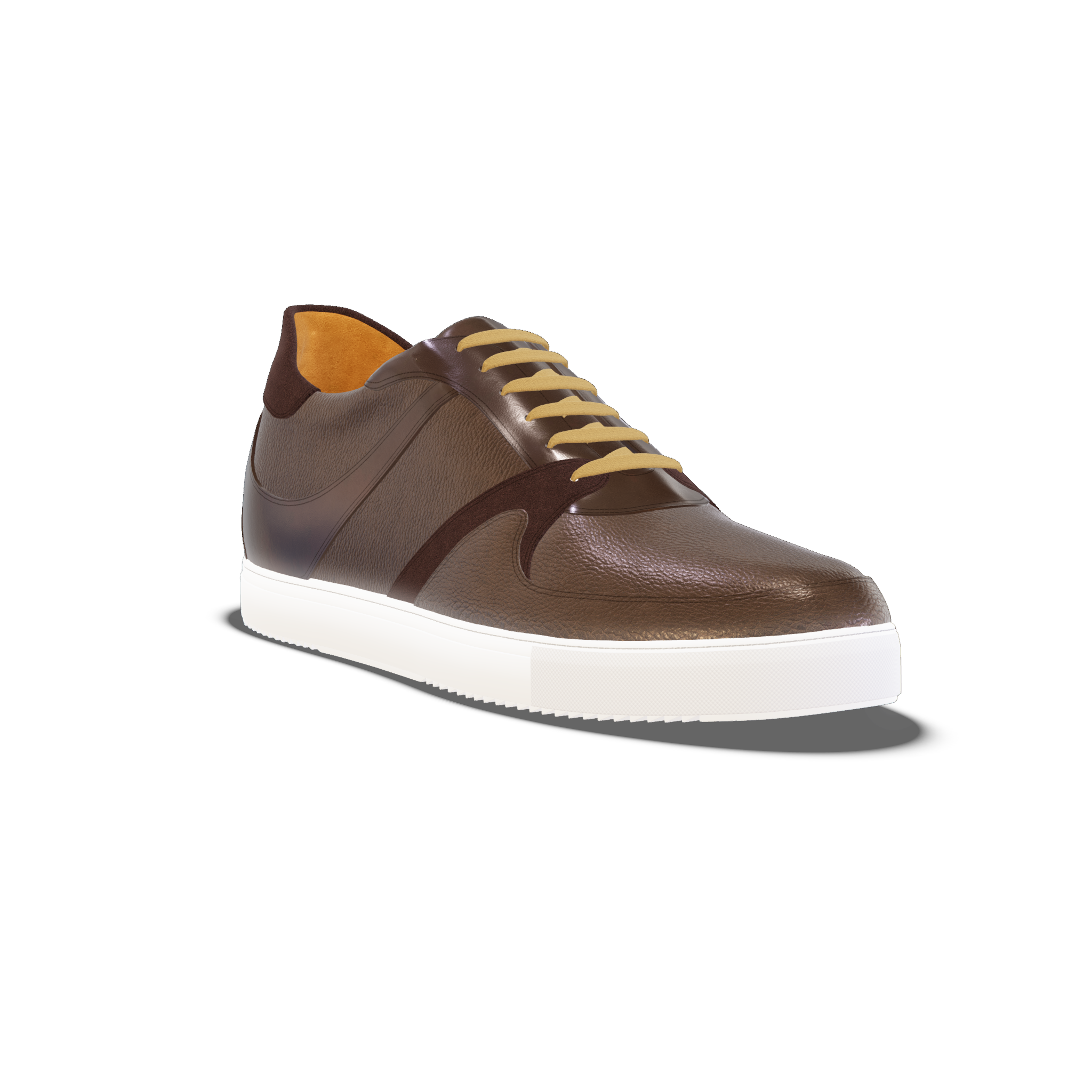
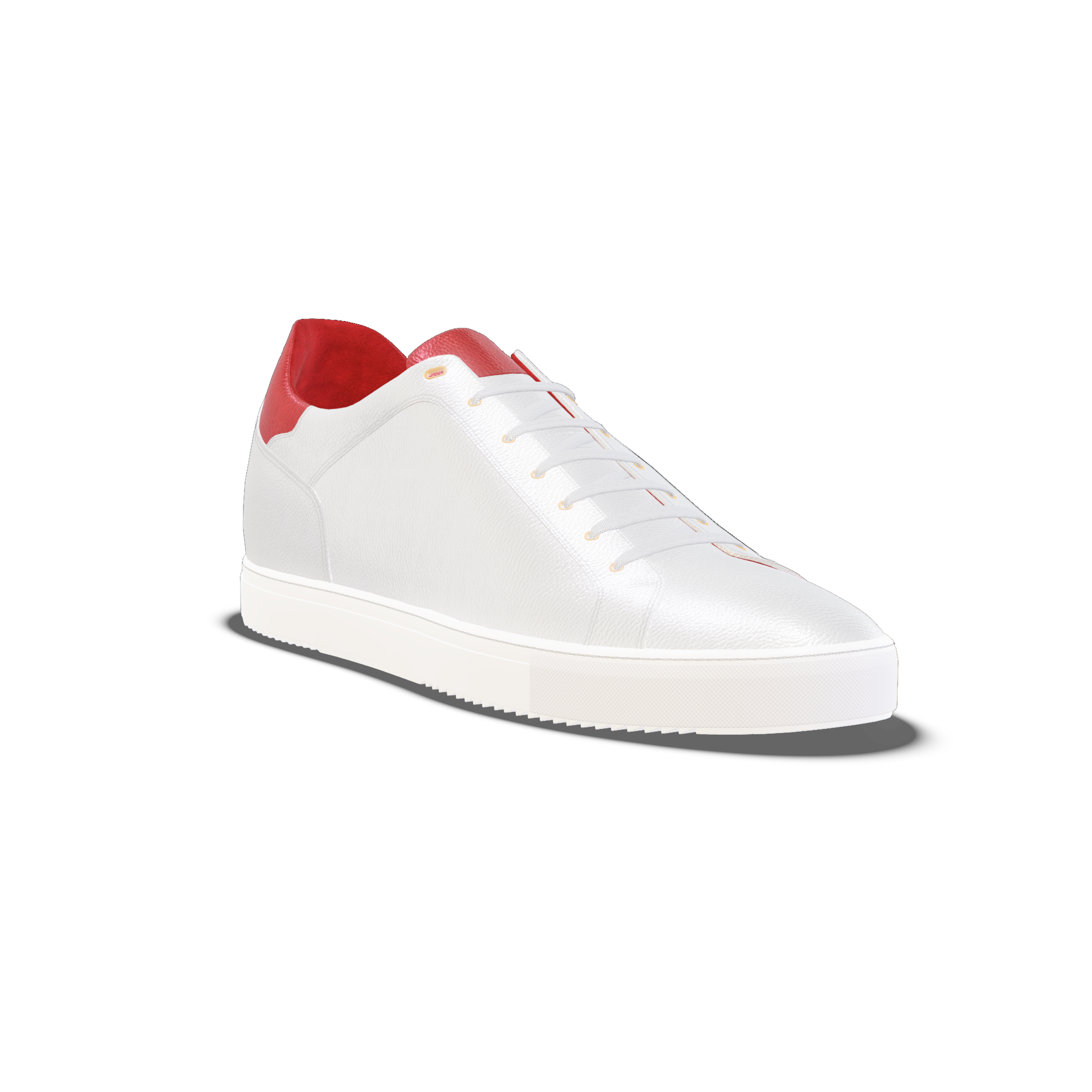
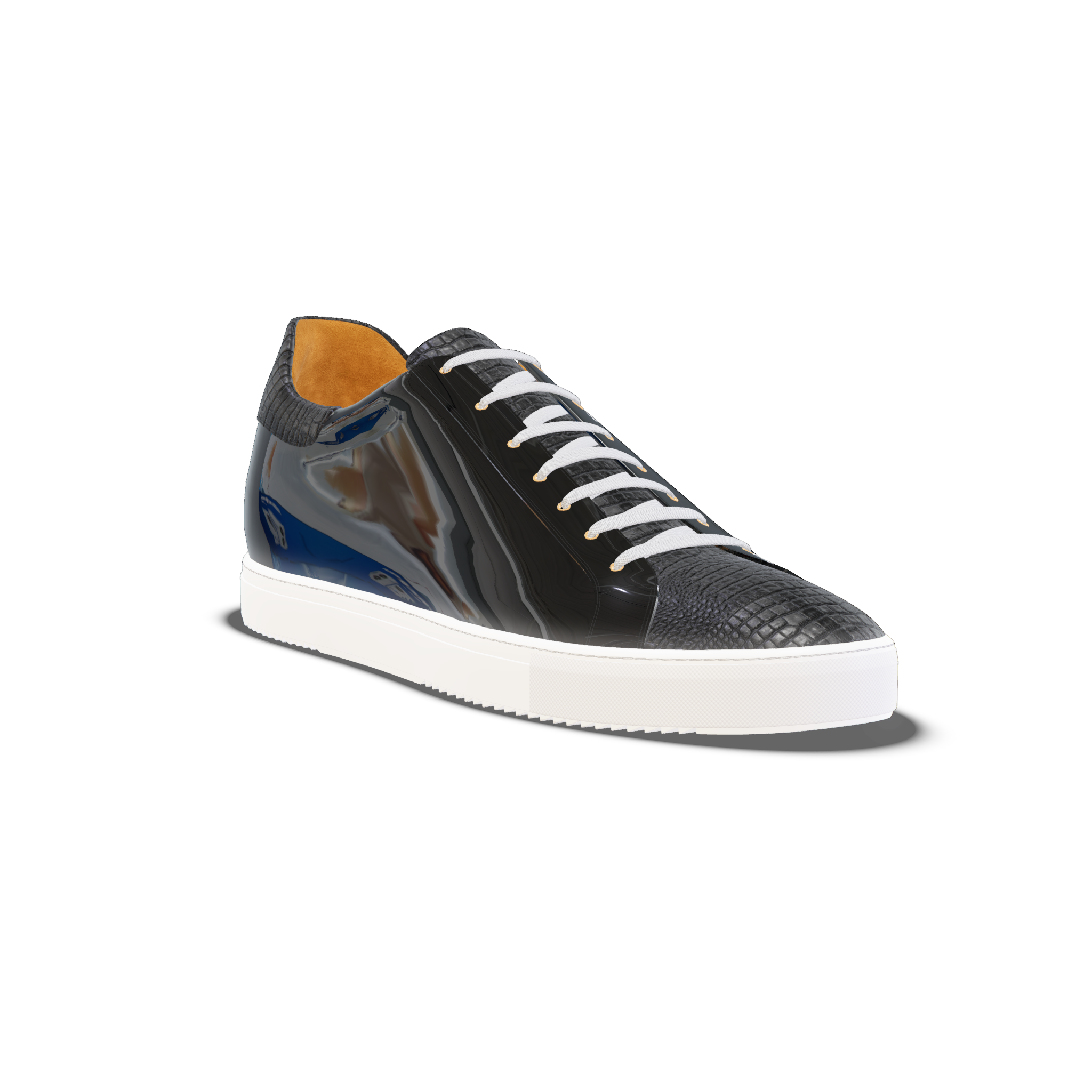
A handcrafted Italian leather sneaker is not simply more expensive because someone decided to charge more. It is more expensive because different decisions were made long before the customer ever encountered it. Different materials were selected. Different construction methods were chosen. Different priorities guided every stage of its creation. Those decisions inevitably influence the purchase price, but they also influence everything that happens afterwards.
Unfortunately, modern consumer culture rarely encourages us to think beyond the moment of purchase. Marketing celebrates acquisition rather than ownership. Sales promotions reward immediate decisions. Fashion trends encourage replacement before existing products have even begun to realise their potential.
The result is that many people have become exceptionally good at recognising low prices while becoming increasingly unfamiliar with recognising genuine value.
Perhaps nowhere is this more evident than in footwear.
It is entirely possible to purchase several inexpensive pairs of sneakers for the price of one carefully handcrafted pair. On paper, the cheaper option appears sensible. The numbers look convincing. The receipt appears reassuring.
Then life begins.
The cheaper shoes lose their structure. The synthetic materials begin showing signs of fatigue. Comfort gradually declines. Fashion moves elsewhere. Replacement becomes inevitable.
Meanwhile, the better-made sneaker quietly settles into everyday life. The leather softens naturally. The fit becomes increasingly personal. Confidence replaces novelty, and satisfaction quietly replaces excitement.
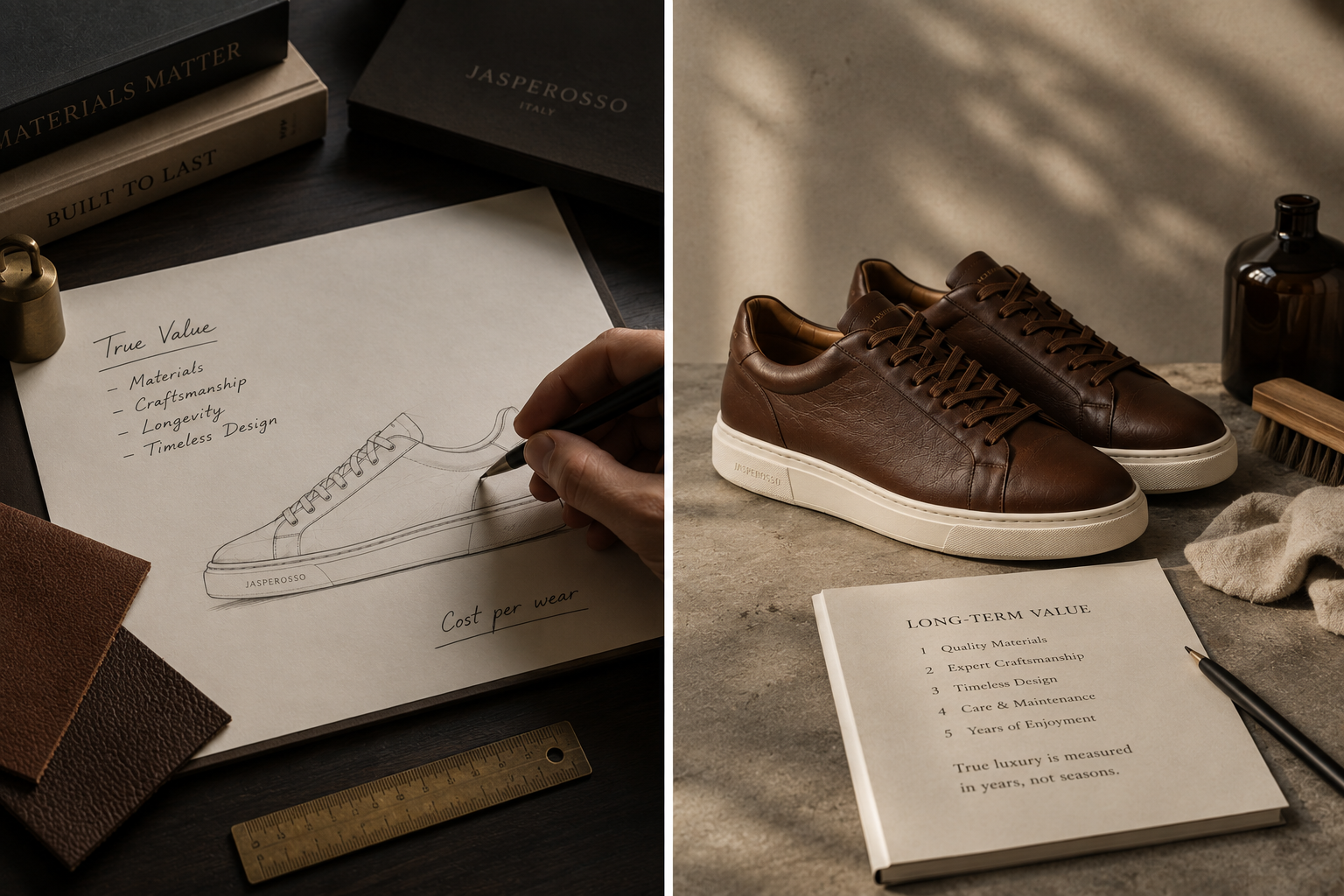
The original price never changes.
Our understanding of its value does.
This is the difference between buying a product and investing in ownership.
For a broader exploration of thoughtful purchasing, explore Designed Once, Worn Forever.
The Most Expensive Purchase Is Often the Cheapest One
At first glance, the title of this section appears almost contradictory. How can something expensive possibly become the cheapest option?
The answer lies not in the receipt, but in the years that follow.
Consumers have traditionally been encouraged to evaluate purchases at the point of sale. We compare prices, search for discounts and calculate immediate savings. It is a perfectly understandable approach because price is visible, measurable and reassuringly simple.
Value, by contrast, is frustratingly patient.
It refuses to reveal itself immediately. Instead, it waits until ownership has had time to unfold.
Imagine purchasing a pair of inexpensive sneakers that need replacing every twelve months. Each individual purchase appears affordable, perhaps even sensible. The financial commitment feels modest, and replacing them every year becomes accepted as normal.
Now compare that with a beautifully made leather sneaker designed to remain comfortable, structurally sound and visually appealing for many years. The initial investment feels considerably larger, yet the replacement cycle changes completely.
Five years later, the arithmetic often tells a very different story.
The less expensive purchase may have become the more expensive habit.
This pattern extends far beyond footwear. The same principle explains why people continue buying quality kitchen knives, premium luggage, handmade furniture and mechanical watches despite the existence of cheaper alternatives.
Longevity quietly transforms economics.
Products designed to last spread their cost across years rather than months. Their value accumulates gradually while their price remains fixed. Eventually, the initial investment becomes almost irrelevant because the product continues delivering satisfaction long after the purchase has been forgotten.
This is one of the least understood aspects of luxury.
Luxury is not always about spending more.
Very often, it is about spending less often.
Cost Is Immediate. Value Takes Time.
One of the most revealing characteristics of genuine luxury is that it rarely attempts to justify itself immediately.
Mass-market products often rely upon instant gratification. They are designed to impress during the first few moments of ownership. Bright packaging, exaggerated features and attention-grabbing marketing all work together to create excitement at the point of purchase.
Luxury tends to behave differently.
Rather than concentrating all of its appeal into the first impression, it distributes satisfaction across years of ownership. The reward comes gradually. Every month of comfortable wear, every journey completed, every occasion confidently attended adds another layer of appreciation.
This slower relationship with value requires patience, but it also creates something far more enduring.
Consider the first time you wear a pair of handcrafted leather sneakers. They are undoubtedly beautiful, but they are also unfamiliar. The leather has not yet softened. The shape has not yet adapted to your foot. The experience is promising rather than complete.
Six months later, something remarkable has happened.
The sneakers feel uniquely yours.
The leather has responded naturally to movement. The fit has become instinctive. You no longer think about them because they simply perform exactly as expected every single day.
The value has grown without the price changing at all.
This quiet evolution explains why luxury products often become more satisfying with time instead of less. Their relationship with the owner deepens rather than diminishes. They stop being purchases and begin becoming companions.
For a deeper exploration of this journey, explore: What Your Sneakers Will Look Like in Ten Years (If You Bought Well).
Why Cost Per Wear Changes Everything
Perhaps no concept illustrates the relationship between price and value more effectively than cost per wear.
Although simple in principle, it has the remarkable ability to transform almost every purchasing decision.
Rather than asking, “How much does this cost?” the question becomes, “How much will this cost every time I use it?”
The difference is profound.
A £425 pair of handcrafted leather sneakers worn three times every week for ten years quickly becomes one of the least expensive items in an entire wardrobe when viewed through the lens of regular use. The initial figure, once seemingly significant, becomes increasingly modest as the number of wears continues to grow.
Conversely, an inexpensive impulse purchase worn only a handful of times before falling out of favour suddenly appears remarkably costly.
Cost per wear encourages an entirely different philosophy of consumption.
Instead of rewarding quantity, it rewards longevity.
Instead of encouraging frequent replacement, it encourages thoughtful selection.
Most importantly, it aligns perfectly with the principles of sustainability, not through fashionable slogans, but through practical behaviour. The product that remains useful for years inevitably consumes fewer resources than several products manufactured, transported and discarded during the same period.
This philosophy also changes how we think about quality.
Craftsmanship is no longer viewed simply as a luxury indulgence. It becomes an economic advantage. Premium leather, skilled construction and timeless design all contribute to extending the life of the product, reducing its true cost every time it is worn.
This is why so many carefully considered purchases become unexpectedly economical over time.
They simply refuse to stop delivering value.
For another perspective on buying fewer, better things, explore: The Anti-Collection – Why One Pair Is Enough.
Paying for Craftsmanship, Not Just a Logo
One of the most persistent myths surrounding luxury is that higher prices are simply the result of higher margins. It is an easy conclusion to reach, particularly in an age where branding often appears to carry as much commercial weight as the product itself. Walk through any luxury shopping district and you will find sneakers whose prices seem to rise in direct proportion to the size of the logo displayed across them. It is little wonder that consumers occasionally question whether they are paying for craftsmanship or merely financing a marketing budget.
The answer, of course, depends entirely on the brand.
There are undoubtedly products whose value is driven primarily by perception. Their appeal lies in recognition, exclusivity and cultural relevance. For many buyers that is perfectly acceptable, because the logo itself forms part of the ownership experience. Fashion has always carried an element of symbolism, and there is nothing inherently wrong with choosing a product because of what it represents socially.
Craftsmanship, however, tells a different story.
When a product is built around craftsmanship rather than branding, the investment is directed towards things that remain long after advertising campaigns have been forgotten. It pays for full-grain Italian leather rather than synthetic substitutes. It supports skilled artisans who have spent years refining techniques that cannot be replicated by automated production lines. It allows more time to be spent cutting, stitching, finishing and inspecting every pair before it ever reaches the customer.
These investments are largely invisible at first glance, which is perhaps why they are so often overlooked. They do not shout for attention. They reveal themselves gradually through comfort, durability and the quiet confidence that comes from using something exceptionally well made.
There is a profound difference between products designed to attract admiration at the point of purchase and products designed to reward ownership for years afterwards. One relies upon image. The other relies upon substance.
This distinction becomes increasingly important over time. A logo may capture attention for a season, but beautifully worked leather continues improving long after trends have shifted elsewhere. Hand-finished construction continues performing long after marketing campaigns have ended. The owner benefits every single day, whether anyone else notices the shoes or not.
That is one of the defining characteristics of genuine luxury. It invests in the experience of the owner rather than simply the perception of the observer.
For a closer look at the enduring appeal of premium materials, explore: Why Leather Still Wins (Despite Everything).
The Hidden Cost of Buying Cheap Repeatedly
It has often been said that buying cheaply can become surprisingly expensive, and nowhere is this more apparent than in everyday products. The mathematics appear convincing initially. Spending a modest amount on a pair of sneakers feels financially sensible, particularly when compared with a handcrafted alternative costing several times as much.
The calculation seems complete.
Until time enters the equation.
The inexpensive sneakers begin to lose their structure after months of regular wear. The synthetic upper develops creases that resemble fatigue rather than character. The sole compresses. Comfort gradually disappears. Before long, the search begins again for another replacement, followed inevitably by another purchase and, eventually, another replacement.
Individually, none of these purchases appears significant. Collectively, they tell a very different story.
Repeated replacement quietly accumulates costs that are rarely considered during the original purchase. Money is spent again and again, while the owner repeatedly experiences the inconvenience of searching, choosing, breaking in and eventually replacing products that were never designed for longevity in the first place.
This cycle extends beyond footwear. Cheap luggage that fails after a handful of journeys, inexpensive furniture that begins to wobble after a few years, and low-quality accessories that deteriorate long before their time all demonstrate the same principle. The purchase may have been inexpensive, but ownership becomes remarkably costly.
Luxury seeks to interrupt this cycle rather than participate in it.
By investing in materials, craftsmanship and timeless design from the beginning, it reduces the likelihood of constant replacement. More importantly, it encourages a different relationship with ownership. Instead of treating products as temporary, it invites the owner to live with them, care for them and allow them to improve naturally over time.
This philosophy is not rooted in extravagance. It is rooted in practicality.
The products that remain useful for many years are often the most economical, even when they require greater commitment at the outset.
For another perspective on thoughtful long-term ownership, explore: Designed Once, Worn Forever.
When Ownership Becomes an Investment
The word “investment” is frequently overused within luxury. Almost every premium product is described as an investment, regardless of whether it appreciates in value or quietly depreciates the moment it leaves the shop. Yet the idea becomes much more meaningful when we move beyond financial return and begin considering the value ownership itself creates.
A beautifully made pair of sneakers is unlikely to outperform the stock market, nor should it be expected to. Its return is measured differently.
It is measured in confidence every morning when you instinctively reach for the same trusted pair. It is measured in comfort after thousands of steps, in reliability during long journeys and in the quiet satisfaction that comes from knowing something has been made properly. It is measured through familiarity, because the product gradually adapts to its owner rather than demanding constant adjustment in return.
These qualities may never appear on a balance sheet, yet they represent genuine value. They influence everyday experience in ways that are difficult to quantify but impossible to ignore.
There is also an emotional dimension that becomes increasingly significant over time. Objects that accompany us through important periods of life acquire meaning beyond their physical form. The sneakers worn on memorable holidays, significant milestones or ordinary days that quietly became unforgettable eventually become repositories of memory. Their value no longer resides solely in leather, stitching or construction. It resides in association.
No receipt can calculate that.
This is why thoughtful ownership often feels richer than constant acquisition. The relationship deepens with time. The product becomes less replaceable, not because an identical version cannot be purchased, but because its history cannot.
That is perhaps the greatest return luxury can offer.
It transforms ownership into something personal.
For a deeper exploration of how everyday objects become part of our identity, explore: The Ritual of Putting Your Shoes On.
Luxury Isn’t Expensive If It Lasts Long Enough
One of the most interesting questions a customer can ask before making any purchase is not, “Can I afford this?” but rather, “How long will this remain part of my life?”
The answer changes everything.
Products designed around trends often struggle to survive changing tastes. Their appeal depends upon remaining current, which means they inevitably become vulnerable when fashion moves elsewhere. Products designed around quality, however, occupy a very different position. They are not attempting to capture a particular moment. They are attempting to remain relevant regardless of the year, the season or the prevailing direction of style.
This is one reason timeless design represents such extraordinary value. A carefully considered leather sneaker should feel as appropriate five years from now as it does today. Its appeal comes not from novelty but from proportion, material quality and understated design. These characteristics have a remarkable ability to outlast trends because they are rooted in balance rather than spectacle.
Durability reinforces this advantage. Every additional year of comfortable wear quietly reduces the true cost of ownership while simultaneously increasing familiarity and attachment. Eventually, the original purchase price becomes little more than a distant memory, replaced by the daily experience of using something that continues performing exceptionally well.
Viewed through this perspective, luxury begins to look rather different. Instead of appearing expensive, it begins to resemble remarkably good value.
Not because it costs less.
Because it delivers more.
For another perspective on products that improve rather than decline with time, explore: Why Real Luxury Rarely Looks New.
The Economics of Emotional Value
Economists have spent centuries attempting to explain why people assign value to the things they buy. Markets rise and fall, prices fluctuate and consumer behaviour evolves, yet one element consistently escapes precise measurement. It is the value that exists beyond function.
No spreadsheet can calculate familiarity.
No financial model can accurately measure confidence.
No receipt can record the comfort of reaching automatically for an object that has quietly earned its place in your life.
This is where luxury begins to separate itself from ordinary consumption.
A thoughtfully made product rarely becomes more valuable simply because it exists. It becomes more valuable because of what happens after it enters someone’s life. The first journey taken in a favourite pair of sneakers. The holiday where they were worn every day without a second thought. The countless ordinary mornings when they were laced up before work, weekend walks or evenings spent with friends. Individually these moments appear insignificant. Collectively they become part of the product’s identity.
In many respects, the owner completes the work that began in the workshop.
The artisan creates the foundation through craftsmanship, but time supplies something that no factory, however skilled, can manufacture. It supplies memory. The leather records movement, softens with familiarity and gradually develops a patina that belongs to one person and one person alone. The product ceases to be simply an object and becomes part of a personal narrative.
This emotional value often explains why people struggle to replace favourite possessions, even when newer alternatives are readily available. Rationally, buying another pair may seem straightforward. Emotionally, it feels surprisingly difficult. The replacement may be identical in appearance, but it cannot replicate the years already invested in the original.
That is because ownership has created value that money never purchased.
Perhaps this is one of luxury’s greatest achievements. It reminds us that the most rewarding products are not always the newest, nor the most technologically advanced, but often the ones that quietly accompany us through life until they become almost inseparable from our routines.
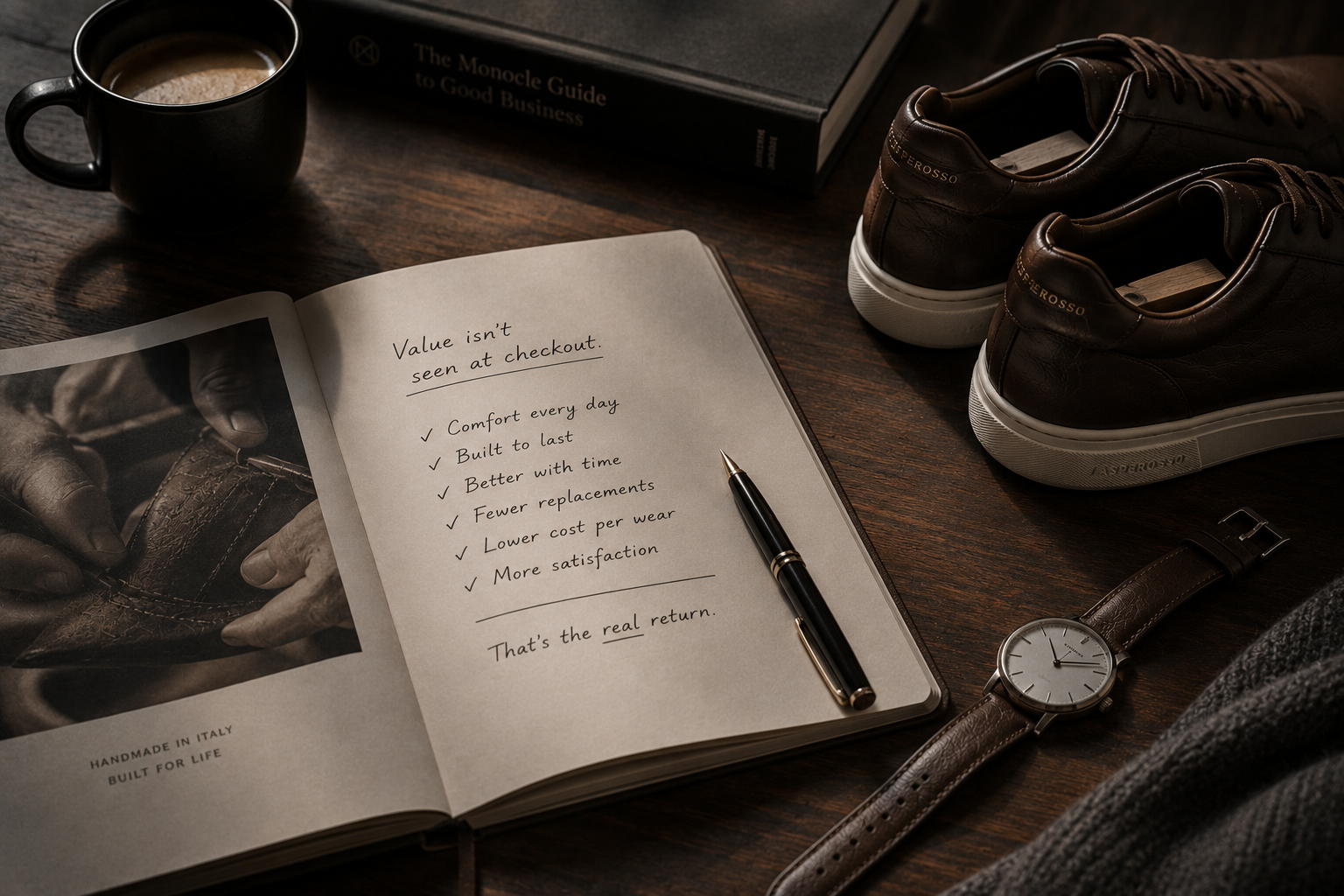
For another perspective on this relationship between ownership and identity, explore: What Your Sneakers Say When You’re Not Speaking.
Why Value Rarely Appears on the Receipt
Modern retail has become remarkably good at communicating price. Every product carries a clearly defined figure. Discounts are highlighted in bold, promotions occupy prominent positions and comparison websites reduce purchasing decisions to a competition between numbers.
Value is far less cooperative.
It refuses to fit neatly onto a label because it continues evolving long after the payment has been made. It reveals itself gradually through reliability, comfort, durability and satisfaction. Unlike price, which is fixed and immediate, value remains dynamic. It changes every time the product is used.
This distinction explains why two products carrying similar price tags can deliver entirely different ownership experiences. One may provide short-term excitement before fading quietly into irrelevance. The other may become increasingly appreciated with every passing year.
Receipts cannot measure confidence.
They cannot calculate the pleasure of slipping into perfectly broken-in leather. They cannot estimate the reassurance that comes from knowing your footwear will remain comfortable from morning until evening, or the satisfaction of owning something that continues to look elegant long after passing trends have disappeared.
These qualities are invisible at the checkout, yet they are precisely the reasons people continue investing in craftsmanship.
There is another dimension that often goes unnoticed. Products built around quality tend to simplify life rather than complicate it. They require fewer replacements, inspire fewer regrets and reduce the constant search for something better. Over time, they become trusted companions rather than recurring purchasing decisions.
That trust has value.
Not because it can be measured precisely, but because it quietly improves everyday life.
Perhaps the greatest misunderstanding surrounding luxury is the belief that it exists to impress other people. In reality, its greatest rewards are often entirely private. They are experienced by the owner every day, regardless of whether anyone else notices.
That is a remarkably different kind of value.
For a broader reflection on thoughtful ownership, explore: The Weight of a Well-Made Sneaker.
Buy Once. Enjoy for Years. Regret Less.
There is an old saying that the bitterness of poor quality remains long after the sweetness of a low price has been forgotten. Whether or not Benjamin Franklin actually said those words has become the subject of endless debate, but the principle itself has endured because it continues proving true.
Regret in purchasing rarely stems from spending slightly more on something exceptional. More often, it comes from repeatedly replacing products that never quite delivered what they promised.
Most people can remember buying something because it seemed like a bargain, only to discover months later that the bargain had quietly disappeared. The product wore out sooner than expected, never felt entirely comfortable or simply failed to become part of everyday life. The money was not wasted in a dramatic sense, but it never created lasting satisfaction either.
The opposite experience is rather different.
Occasionally we purchase something that immediately feels right. It performs beautifully, integrates naturally into our routine and continues exceeding expectations long after the original purchase has faded from memory. Looking back years later, it becomes difficult to remember the price because the value has completely eclipsed it.
These purchases rarely happen by accident.
They are the result of slowing down, asking better questions and recognising the difference between immediate affordability and long-term worth. They reflect an understanding that ownership continues long after the excitement of buying has disappeared.
Luxury encourages exactly this mindset.
Not because every expensive product automatically deserves admiration, but because the best luxury products are designed to remain relevant for years rather than months. They reward patience instead of impulse. They encourage care instead of disposal. They quietly become indispensable.
Perhaps the smartest purchase is not the one that costs the least.
Perhaps it is the one you never feel the need to replace.
Conclusion: Looking Beyond the Price Tag
The difference between price and value is ultimately the difference between a transaction and a relationship.
Price belongs to a single moment. It exists at the checkout, appears on the receipt and is quickly forgotten. Value, by contrast, belongs to the years that follow. It is discovered gradually through repeated use, quiet reliability and the satisfaction that comes from owning something built with care rather than compromise.
This distinction explains why the finest luxury products often seem expensive only at the beginning of their story. As months become years and years become memories, the original purchase price begins to lose its significance. What remains is the experience of ownership itself. The comfort of beautifully worked leather. The confidence inspired by exceptional craftsmanship. The familiarity that develops when an object becomes part of everyday life rather than something reserved for special occasions.
Thoughtful luxury has never been about encouraging people to spend more for the sake of spending more. It has always been about encouraging people to buy more intelligently. To choose craftsmanship over shortcuts. Longevity over novelty. Timeless design over passing trends. In doing so, it quietly challenges one of modern consumer culture’s greatest assumptions: that the cheapest option is automatically the best value.
Very often, the opposite is true.
The products that remain beside us for years, quietly improving with age and rewarding continued ownership, become the purchases we remember most fondly. They remind us that true luxury is not measured by the number on a price tag but by the quality of the experiences it creates long after that price has been paid.
In the end, the smartest luxury purchase is rarely the one that attracts the most attention. It is the one that becomes so deeply woven into daily life that you stop thinking about what it cost and simply appreciate what it continues to give.
Perhaps that is the real definition of value.
Not what you paid.
But what you continue to receive.

By Katy Trumble