


Journal
The Luxury of Familiarity: Why We Wear the Same Sneakers Again and Again
The best sneakers don’t impress you once. They become part of how you live.
30th March 2026
The Decision You Don’t Realise You’re Making
Every morning, there is a moment, brief, almost invisible, where you decide what to wear. Most of the time, it doesn’t feel like a decision at all.
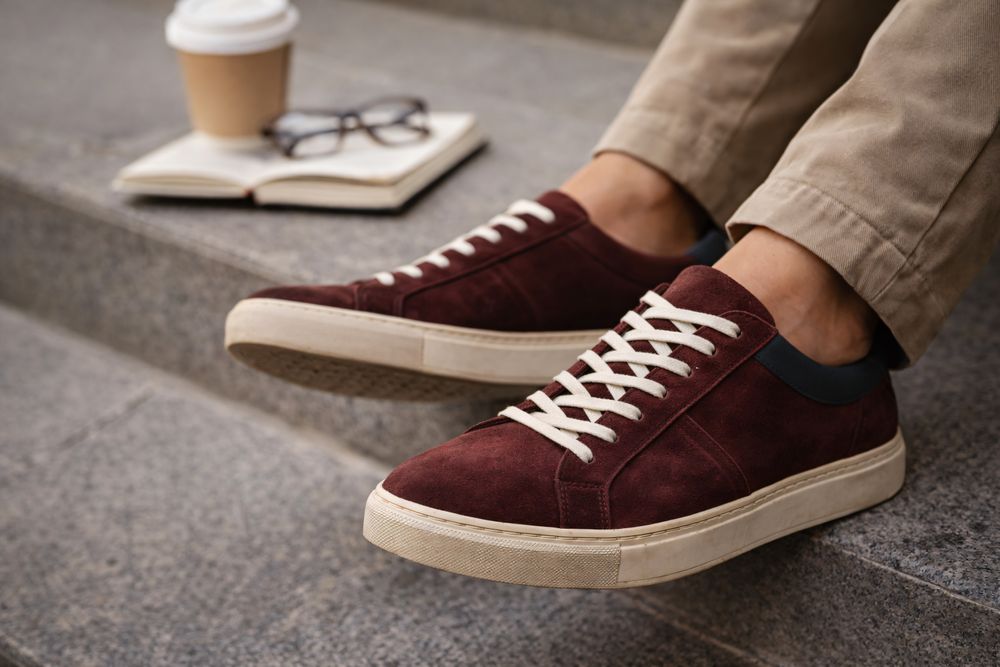
Your hand reaches for the same pair of sneakers. Not because they are new. Not because they are the most expensive. Not even because they are the most visually striking. But because they are known. They fit without thought. They work without adjustment. They integrate into your day without negotiation.
This quiet instinct reveals something important: the most successful mens designer sneakers and women’s designer trainers are not the ones that attract attention once but the ones that are chosen repeatedly.
And in that repetition lies a different kind of luxury.
Comfort as a Form of Trust
Comfort is often discussed in physical terms, cushioning, softness, flexibility. But comfort evolves. Over time, it becomes trust.
You trust that the sneaker will feel right after a long day. You trust that it won’t create discomfort halfway through an evening. You trust that it will behave predictably, regardless of context.
This transition from comfort to trust is explored in The Psychology of Wearing: How Your Shoes Influence How You Move Through the World, where physical ease shapes confidence and behaviour.
When footwear becomes predictable in the best possible way, it removes uncertainty.
And removing uncertainty is a form of luxury.
The Power of the Known
Modern life is filled with decisions. What to wear. Where to go. What to prioritise. What to ignore. Familiar objects reduce this cognitive load.
When you own a pair of sneakers that consistently works, across outfits, occasions, and environments, you eliminate one decision entirely.
This is why repeat wear becomes so powerful.
In the same way that a favourite chair or watch becomes part of routine, a trusted pair of handmade sneakers UK consumers rely on becomes part of daily infrastructure.
It is no longer evaluated. It is simply used.
Breaking In vs Settling In
There is a difference between breaking something in and settling into it. Breaking in is physical. The leather softens. The sole adapts. The structure relaxes. Settling in is psychological. It is the moment when the sneaker stops feeling like something you are wearing and starts feeling like something that belongs.
This transition cannot be rushed. It happens through repetition.
It is also why custom made sneakers hold particular appeal. When the initial fit aligns more closely with the wearer, the journey from newness to familiarity becomes shorter and more meaningful.
Familiarity is not immediate. It is earned.
The Psychology of Repeat Wear
Why do we return to the same pair again and again? Because predictability reduces friction. Unfamiliar footwear introduces variables:
- Will it be comfortable after a few hours?
- Will it work with this outfit?
- Will it feel right in this setting?
Familiar sneakers remove those questions entirely.
This behavioural pattern connects directly to the ideas explored in The Ownership Era: Why Modern Consumers Care More About Keeping Than Buying, where retention becomes more valuable than acquisition.
Repeat wear is not laziness. It is optimisation.
Versatility as the Foundation of Loyalty
The sneakers that become favourites are rarely the most specialised. They are the most adaptable. They work with tailoring and denim. With travel and evenings out. With structured and relaxed clothing.
This versatility is a key reason sneakers have replaced traditional footwear in so many environments, as explored in The New Dress Code: Why Sneakers Have Replaced Shoes (Almost Everywhere). A versatile sneaker becomes a default. And defaults are worn more often than anything else.
The Quiet Confidence of Familiar Footwear
There is a noticeable difference in how people move when they are wearing something familiar. Posture relaxes. Movement becomes more fluid. Attention shifts away from the body and toward the environment. This quiet confidence is rarely discussed, but it is significant.
In contrast, unfamiliar footwear can create subtle tension, small adjustments in stride, awareness of fit, hesitation in movement. Familiar sneakers remove that tension entirely. They allow the wearer to focus on everything else. And that freedom is deeply valuable.
From Rotation to Reliance
Most wardrobes begin with rotation. Different sneakers for different moods, outfits, or occasions. Over time, something changes. One pair begins to dominate. It is chosen more frequently. It performs more reliably. It integrates more seamlessly. Eventually, it becomes the default. This shift from rotation to reliance is not accidental. It is the result of consistent performance. It is also the clearest indicator of successful design. Because the ultimate goal of a sneaker is not to be worn occasionally. It is to be worn repeatedly.
Familiarity and Longevity
Familiarity and longevity are closely linked.
The more often a sneaker is worn, the more value it delivers. This reinforces the economic logic outlined in The Cost-Per-Wear Fallacy: Why Expensive Sneakers Are Often the Smartest Buy.
A sneaker worn hundreds of times becomes far more valuable than one worn occasionally, regardless of price. But longevity is not just about durability. It is about relevance. A sneaker must remain aesthetically and functionally appropriate over time. It must adapt to evolving wardrobes and changing environments. This is why restrained design matters.
Why Overdesigned Sneakers Rarely Become Favourites
Overdesigned sneakers often struggle to achieve familiarity. Their boldness limits versatility. Their specificity restricts usage. Their visual intensity can fatigue over time.
This limitation is explored in Why Most Sneakers Are Overdesigned (And Why Yours Shouldn’t Be), where excess is shown to reduce long-term value.
Familiarity thrives on neutrality, balance, and adaptability. The sneakers you wear most are rarely the ones that try hardest to stand out.
The Role of Invisible Design
Familiarity is not just about appearance. It is deeply connected to how a sneaker feels. Weight distribution. Sole density. Flex points. Internal structure. These invisible decisions determine whether a sneaker remains comfortable over repeated wear.
As explored in The Invisible Decisions: Design Choices You Never Notice (But Always Feel), great design disappears underfoot.
The less you notice a sneaker while wearing it, the more likely you are to choose it again. Comfort encourages repetition. Repetition builds familiarity.
Habit as a Marker of Quality
Habits are revealing. We build habits around what works. When a sneaker becomes part of a daily routine, it has passed a series of unconscious tests:
- comfort over time
- compatibility with different outfits
- suitability across environments
- durability under repeated use
This makes habit one of the most honest indicators of quality. A sneaker that becomes habitual has earned its place.
Familiarity as Modern Luxury
Luxury is often associated with rarity and exclusivity. But familiarity represents a different kind of luxury. It is the luxury of ease. Of predictability. Of knowing that something will perform exactly as expected.
This aligns with the broader shift explored in What We Mean by “Luxury” in 2026 (And Why the Old Definition No Longer Works), where modern luxury prioritises relevance and integration over spectacle.
Familiarity is not boring. It is refined.
Why We Keep Coming Back
Ultimately, we return to the same sneakers because they simplify life. They remove decisions. They reduce uncertainty. They deliver consistent performance. They become reliable in a way that newer alternatives cannot immediately replicate. This reliability creates attachment. And attachment creates loyalty.
The Ultimate Test of Design
There is a simple question that reveals everything about a sneaker: Would you wear it again tomorrow? If the answer is yes, repeatedly, over time, then the design has succeeded. Not because it impressed once. But because it endured.
Closing Thought
The most valuable sneakers are not the ones that stand out in a single moment. They are the ones that quietly integrate into everyday life. The ones you reach for without thinking. The ones you trust without question. The ones that feel familiar in the best possible way. In a culture that often celebrates newness, familiarity offers something different. Something calmer. Something more reliable. Something that lasts.
And that, increasingly, is what luxury feels like.
By Jasper Trumble