


Journal
The objects that quietly define us
How the things we choose again and again become part of who we are
24th August 2026
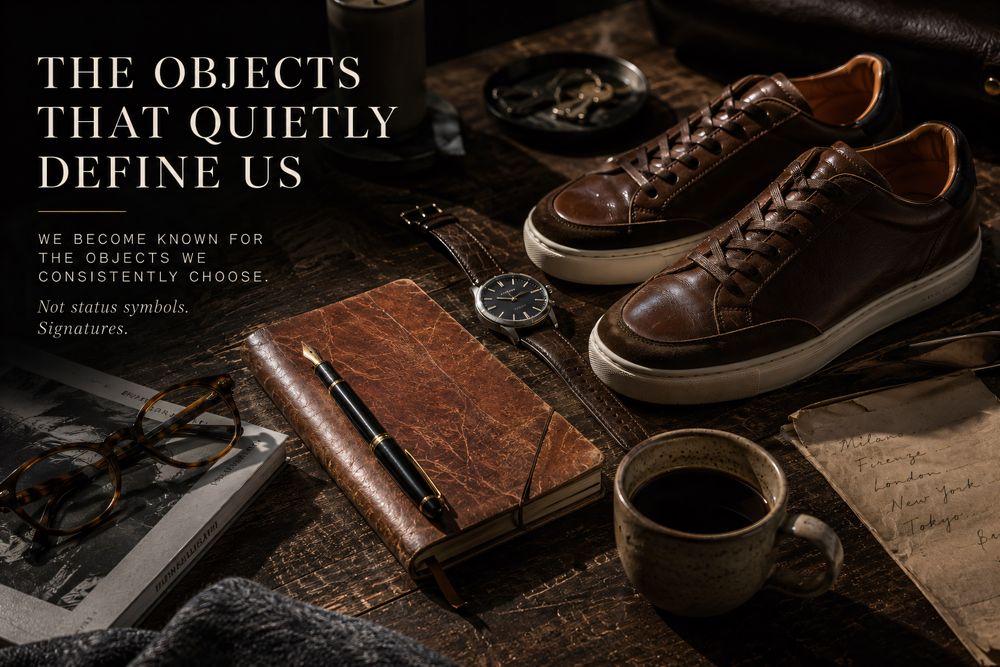
There are certain people we can describe without mentioning their face, their job or even their personality. We remember the battered leather notebook permanently tucked under one arm. The same mechanical watch that appears whether they are wearing a dinner jacket or gardening clothes. The fountain pen they inexplicably refuse to lend anybody. The tortoiseshell glasses. The old leather briefcase. The pair of sneakers that seem to have attended more meetings than most members of staff.
These objects are rarely spectacular.
That is precisely what makes them interesting.
They have not necessarily been chosen to impress anyone, and they are certainly not always the most expensive things their owners possess. Quite often, there is a newer version sitting somewhere at home that never quite manages to replace them. Yet through repetition, familiarity and association, certain objects quietly become connected to the people who use them.
Eventually, we stop seeing the object independently.
We see the person.
This is very different from the conventional relationship between luxury and status. A status object relies upon recognition. Its cultural value depends partly upon other people understanding what it is, what it costs or what membership of a particular tribe it supposedly represents. A personal signature works in almost the opposite direction. Its significance grows because one particular person keeps choosing it.
The watch becomes his watch. The notebook becomes her notebook. The sneakers become the pair everyone expects you to arrive wearing.
Nobody planned this.
There was no personal-brand strategy meeting. Nobody commissioned a consultant to identify an appropriate signature pen. Hopefully.
Instead, identity emerged through behaviour.
This is where the psychology becomes more interesting than the fashion. Human beings develop preferences partly through repetition, familiarity and emotional association. We return to objects that have worked well before because doing so reduces uncertainty. Over time, those repeated choices become habits. Habits become familiar to us and, eventually, familiar to other people.
The objects begin accumulating meaning that wasn’t present when they were bought.
A watch becomes associated with journeys and occasions. Leather footwear gradually records the physical patterns of its owner. A notebook becomes filled with years of thoughts that make its monetary value almost irrelevant. A pen develops tiny marks from thousands of hours in the same hand.
These are not simply possessions anymore.
They are evidence of a life being lived.
This article explores how that happens, why we repeatedly return to particular objects and why the things that eventually define us are often very different from the things deliberately purchased to do so. It also develops an idea explored elsewhere in the Jasperosso Journal: that personal style is usually strongest when it stops trying quite so hard.
As discussed in The Luxury of Knowing Exactly What You Like, mature taste is less about having unlimited possibilities than developing sufficient self-awareness to recognise which possibilities actually belong to you. The objects that quietly define us are what happens next.
We choose them.
Then we choose them again.
Eventually, choosing stops altogether.
We simply reach for them.
1. We Are Remembered in Details
Memory is surprisingly selective.
We may forget precisely what somebody wore to dinner six months ago, yet remember that they always wear a particular watch. We forget individual outfits but remember someone’s preference for dark tailoring, colourful socks or beautifully worn leather shoes. We may not remember which notebook a colleague carried into a meeting, but after seeing the same one for three years, its presence becomes almost inseparable from them.
Identity is constructed through these small repetitions.
This makes sense when we consider how people actually encounter one another. We rarely absorb somebody’s entire appearance analytically. We recognise patterns. The same glasses appear repeatedly. A particular colour returns. The watch remains constant while everything around it changes. Footwear follows a familiar aesthetic even when the individual pair differs.
Over time, these recurring details become shortcuts.
They help us recognise people not simply physically, but stylistically.
This is subtly different from the argument explored in What Your Sneakers Say When You’re Not Speaking. Clothing certainly communicates information, intentionally or otherwise, but a signature object does something more gradual. Its meaning develops through accumulated association.
Imagine two people wearing precisely the same distinctive watch.
For the first, it was purchased last Tuesday.
For the second, it has been worn almost every day for twenty years.
Technically, the object is identical. Psychologically, it is not remotely the same.
The second watch has history.
Its owner may remember buying it after achieving something important. There may be a scratch acquired while travelling, another from an incident whose retelling improves annually, and a bracelet polished by thousands of days against the same wrist. Other people may have seen that watch at weddings, dinners, holidays and meetings.
Eventually, replacing it with an objectively superior watch becomes surprisingly difficult.
The specifications are no longer the point.
This happens with inexpensive objects too, which is important because otherwise we risk confusing emotional attachment with luxury consumption. The pen somebody has carried for fifteen years might have cost £20. The notebook could be utterly ordinary. The coffee mug everyone knows belongs to one particular person may possess approximately no aesthetic merit whatsoever.
Yet remove it and people notice.
That is because identity is not created by monetary value.
It is created by association.
Luxury can strengthen that relationship when superior materials and craftsmanship allow an object to remain useful for long enough to accumulate those associations. But price alone cannot manufacture them. A £10,000 object abandoned after six months has considerably less personal history than a £100 object used for a decade.
This is one reason long-term ownership matters so much.
Objects need time before they can become signatures.
2. Why We Keep Reaching for the Same Things
Most of us own more alternatives than our daily behaviour would suggest.
There may be several watches in a drawer, but one gets worn disproportionately often. Multiple pens sit on a desk, yet the hand reaches towards the same one. The wardrobe contains an optimistic number of shoes, but perhaps three pairs account for most actual use.
If asked why, we may struggle to provide a sophisticated answer.
“It just feels right” is often about as far as the explanation gets.
Psychologically, however, quite a lot is happening beneath that apparently simple decision.
Humans generally like familiarity. Familiar objects reduce cognitive effort because we already understand them. We know how they feel, how they perform and what to expect. There is no need to evaluate them again.
This is one reason routines can be comforting. Repeating an established choice removes a tiny decision from an already crowded day. The benefit may appear insignificant until multiplied across the hundreds of decisions modern life asks us to make.
Consider getting dressed.
Technically, you could evaluate every possible combination each morning. You could reconsider your entire aesthetic identity before breakfast and emerge daily as a thrillingly unpredictable reinvention of yourself.
Most people have other things to do.
Instead, we rely upon familiar combinations. We know which trousers work with which shoes. We know which jacket feels comfortable. We know the watch that works almost everywhere. Our preferences reduce the number of decisions requiring conscious thought.
The same behavioural mechanism helps explain why familiar objects become disproportionately valuable. Every successful interaction reinforces the original choice.
The shoes were comfortable yesterday.
The pen worked beautifully yesterday.
The bag carried everything without irritating us yesterday.
So we choose them again today.
Eventually, this repetition creates trust.
This idea sits naturally alongside Luxury Is What You Stop Thinking About. Exceptional products often become less noticeable through ownership because their reliability removes the need for conscious evaluation. We stop thinking about whether they will work because experience has already answered the question.
Poor products behave differently.
They force themselves back into consciousness.
The shoe pinches. The zip catches. The strap irritates. The pen decides that halfway through signing an important document would be an excellent moment to reconsider its purpose in life.
Suddenly, the object is impossible to ignore.
Good design gradually disappears because nothing needs correcting.
And once an object becomes reliably invisible, replacing it becomes harder than marketing departments might prefer.
3. When an Object Stops Being a Possession
There is a point in long-term ownership when an object undergoes an unusual psychological promotion.
It stops feeling like something we bought.
It simply becomes ours.
The distinction sounds trivial until something happens to it.
Lose an ordinary pen and you find another pen. Lose the pen you have carried for twelve years and suddenly there is an investigation. Pockets are searched. Cars are dismantled emotionally, if not mechanically. Restaurants receive telephone calls containing unnecessarily detailed descriptions of a writing instrument.
The financial value may be almost irrelevant.
What has been lost is familiarity.
Objects acquire this status gradually. At first, we remain conscious of their newness. We notice the leather, the weight, the finish and the tiny details that influenced the purchase. We treat them carefully because ownership still feels novel.
Then normal life begins.
The watch gets knocked against a doorframe. The notebook develops a bent corner. The sneaker creases across precisely the point where the foot naturally flexes. The immaculate leather bag acquires its first mark, producing approximately seven minutes of emotional devastation before everyone carries on.
Something important happens after that first imperfection.
The object becomes easier to use.
Perfection can create distance because pristine possessions require protection. Once normal evidence of ownership appears, that relationship changes. The object begins serving us rather than the other way around.
This is particularly noticeable with natural materials.
Leather responds physically to ownership. It flexes, softens and develops subtle tonal variations. Rather than remaining completely static, it records interaction. That is one reason Why Real Luxury Rarely Looks New argues that the obsession with box-fresh perfection can misunderstand one of the pleasures of well-made objects.
A sneaker that has been worn carefully for several years should not necessarily look identical to the day it arrived.
It should look like yours.
This is not an excuse for neglect. There is a substantial difference between patina and abuse, despite the heroic claims occasionally made by owners of catastrophically maintained leather goods. Proper care allows materials to age well.
But ageing itself is not the enemy.
It is often the process through which an object becomes individual.
The fascinating part is that this physical transformation occurs alongside a psychological one. As the object changes to reflect its owner, the owner increasingly regards the object as part of their normal environment.
Eventually, putting on the watch or lacing the sneakers is no longer really a purchasing decision.
It is routine.
And routines are remarkably powerful markers of identity.
4. The Difference Between a Status Symbol and a Signature
A status symbol and a signature object can sometimes be exactly the same thing.
The difference is why it matters.
Take a famous luxury watch. It may initially be purchased partly because of what it represents. There is nothing particularly shocking about this. Human beings have used objects to communicate status for thousands of years, and pretending modern consumers have somehow evolved beyond the practice requires an impressive level of optimism.
The interesting question is what happens afterwards.
If the watch spends most of its life in a safe and appears primarily when recognition is useful, its status function remains dominant.
If it is worn every day for twenty years, something else begins happening.
It becomes associated with the owner.
The cultural meaning of the brand has not disappeared, but it has been overtaken by personal history.
A signature therefore emerges through repetition rather than acquisition.
You cannot simply buy one.
You can buy an object with the potential to become one, but only behaviour determines whether it actually does.
This is where luxury marketing occasionally gets things backwards. Brands often attempt to sell customers the idea of instant identity: buy this and become adventurous; wear this and become sophisticated; carry this and apparently acquire the lifestyle of someone who spends Wednesday afternoons driving vintage convertibles around Lake Como.
Real identity is less cooperative.
It takes time.
A signature object gains meaning because it repeatedly appears alongside the same person. Other people begin associating the two. The object gradually becomes recognisable not because everybody knows its manufacturer, but because everybody knows its owner.
That is a much more interesting form of exclusivity.
A status symbol says something about the category to which the object belongs.
A signature says something about the individual who chose it.
This distinction matters particularly in a period when conspicuous luxury is becoming increasingly easy to imitate. Logos can be copied. Aesthetic codes can be reproduced. Trends can spread globally within hours.
Personal history cannot.
The years someone spends with an object are inherently exclusive because nobody else can reproduce them.
This helps explain why the most interesting personal possessions are often not the rarest ones. Their individuality comes from use rather than scarcity.
The same idea appears in The Gap Between Price and Value. Price is established at the moment of purchase. Value continues developing afterwards. An object used repeatedly for years may become increasingly valuable to its owner even while its resale value does something entirely different.
This is also where personalised design begins to acquire greater significance.
A sneaker created around your own preferences starts its life with an advantage: it already reflects choices that belong to you. But personalisation alone does not turn it into a signature.
You still have to wear it.
The real transformation happens afterwards.
5. Familiarity Is More Powerful Than Novelty
Novelty has excellent marketing.
Familiarity, by comparison, rarely gets much of a campaign.
Newness photographs beautifully. It provides launches, announcements, limited editions and reasons to pay attention. Familiarity is considerably quieter. It is the old jacket pulled from the wardrobe without thought. The same watch fastened every morning. The leather notebook that has somehow followed you through three jobs and two house moves.
Novelty produces excitement.
Familiarity produces attachment.
The two are not interchangeable.
Behavioural psychology has long recognised the influence of repeated exposure on preference. Broadly, familiarity can increase our comfort with people, places, sounds and objects. What we encounter repeatedly becomes easier to process and more predictable.
But personal possessions add another layer: experience.
We do not merely see the same object repeatedly. We use it during events that accumulate emotional significance.
The notebook was there when the idea was first written down.
The watch was worn on the wedding day.
The sneakers travelled through Florence, London and New York.
The pen signed the contract.
None of these events fundamentally changes the physical object. Yet psychologically, the object begins functioning as a repository for memory.
This is why replacements can feel strangely unsatisfactory even when technically superior.
The new watch may be more accurate.
The new notebook may use better paper.
The new sneaker may be pristine.
But the old one already knows you.
Obviously it doesn’t actually know you. We should avoid attributing consciousness to footwear; the world has enough problems. But emotionally, that is how familiarity can feel.
This is also why durability has an importance beyond economics. As explored in Designed Once, Worn Forever, longevity allows a product to remain present long enough for a deeper relationship to develop.
Disposable products rarely receive that opportunity.
They arrive, perform briefly and leave.
A well-made object can stay.
And staying changes everything.
Eventually, we may become known for it.
The fascinating part is that this usually happens without intention. Nobody wakes up and announces that from today onwards a particular notebook shall become an essential component of their identity.
They simply keep choosing it.
Other people notice.
Years pass.
And somewhere along the way, an ordinary possession quietly becomes a signature.
6. The Psychology of the Personal Uniform
The phrase personal uniform does not immediately sound like the height of creative expression. Uniforms are supposed to remove individuality, not encourage it. They suggest school corridors, military formations and jobs involving laminated identification cards.
Yet some of the most distinctive people in fashion, business, art and design have relied heavily on repetition.
They find something that works and keep returning to it.
The details vary. It might be dark tailoring and white shirts, denim and cashmere, black trousers and a roll-neck, or simply the same basic silhouette interpreted through slightly different materials and colours. The point is not that these people wear identical clothes every day. It is that they have established a framework within which most of their choices comfortably sit.
Objects become part of that framework.
The same watch works with almost everything. The preferred pen permanently occupies a jacket pocket. The familiar leather bag moves between work and travel. Footwear changes, perhaps, but usually within an established vocabulary of colours, materials and proportions.
Psychologically, there is considerable logic behind this behaviour.
Every decision requires some degree of mental effort. Most individual decisions are insignificant, but modern life supplies them in industrial quantities. Before many people have reached their desk in the morning, they have already decided when to wake up, what to eat, what to wear, which messages require answers, whether the weather forecast can be trusted and whether an email marked “urgent” is actually urgent or merely written by somebody who enjoys the word.
Reducing unnecessary decisions has value.
A personal uniform does precisely that. It creates a reliable framework from which choices can be made quickly because most of the difficult questions have already been answered.
You know which colours work.
You know which proportions feel comfortable.
You know which shoes work with which trousers.
You know the watch.
You know the bag.
This does not make style less personal. In many cases, it makes it more recognisable.
Consistency creates identity.
The interesting distinction is between repetition caused by indifference and repetition caused by knowledge. Someone who wears the same thing because they have never considered clothing is doing something quite different from someone who has considered hundreds of alternatives and deliberately returned to the same principles.
From the outside, the result might look remarkably similar.
Internally, one is habit by default.
The other is preference refined through experience.
This connects directly with The Luxury of Knowing Exactly What You Like. Mature taste frequently involves reducing rather than expanding the number of decisions we make. Once we understand our preferences, we no longer need to reconsider every possibility simply because it exists.
There is also something quietly confident about repetition. Fashion often encourages us to demonstrate awareness through change. A personal uniform suggests that awareness has already been processed and a conclusion reached.
You have looked.
You have experimented.
You have made some regrettable purchases.
You are now fine.
The result is not necessarily less stylish. It may be the moment when style finally becomes yours.
7. The Marks We Leave Behind
New objects belong primarily to their makers.
Used objects gradually begin belonging to their owners.
The transformation is visible.
A leather wallet develops a darker edge where fingers repeatedly hold it. A watch bracelet acquires tiny scratches that would horrify its owner during the first week and become completely irrelevant by the fifth year. A notebook bends slightly where it has been carried. A wooden pen becomes smoother at precisely the points where the fingers grip it.
Sneakers record movement even more directly.
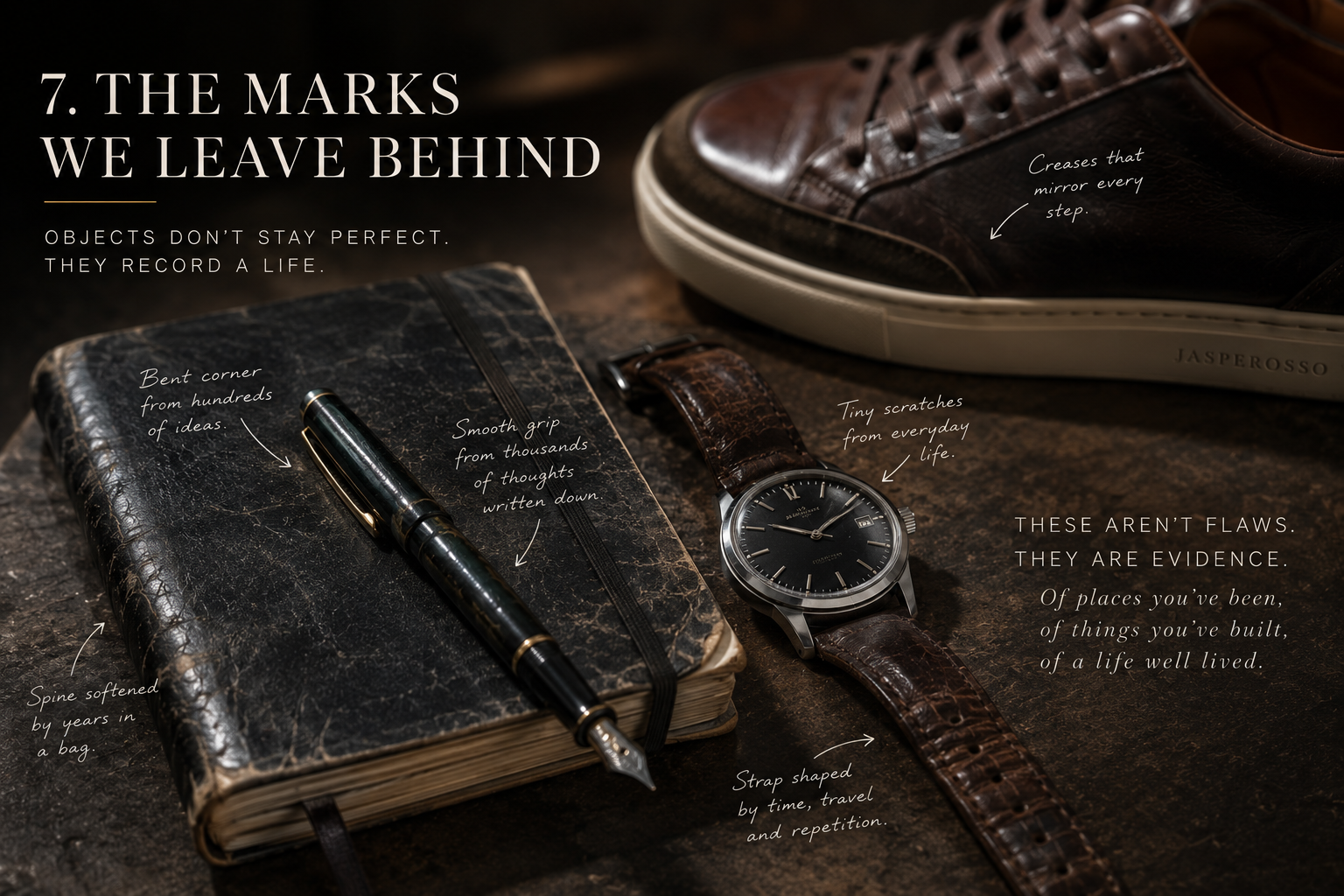
Leather flexes according to the foot inside it. Creases form where the toes bend. The upper gradually softens. The sole records hundreds of thousands of individual steps. Suede develops subtle variations in nap and colour. Provided the footwear is properly cared for, these changes need not represent deterioration.
They represent use.
There is a fascinating contradiction here. When we buy luxury products, we often initially attempt to prevent precisely the process that will eventually make them uniquely ours.
The first scratch is treated as a small national emergency.
The first crease in beautiful leather receives immediate inspection.
The first mark on a pristine sole generates the irrational thought that perhaps walking should have been avoided altogether.
Eventually, sanity returns.
The object was created to be used.
This is particularly important with natural materials because they respond to human contact. Leather is not an inert surface designed to remain visually identical forever. Its appeal partly lies in its ability to develop character.
As explored in Why Leather Still Wins (Despite Everything), one of leather’s great strengths is that ageing can enhance rather than simply diminish it. Good leather develops depth, softness and individuality through use. Its history becomes visible.
This gives physical objects a quality digital possessions struggle to reproduce: evidence of time.
A digital notebook does not become softer because you have written in it for six years. A smartwatch screen does not record thousands of mornings in any aesthetically desirable way. Digital products can contain enormous personal histories, but the device itself usually remains separate from them.
Physical objects carry history on their surfaces.
The Japanese concept of wabi-sabi is often invoked rather enthusiastically whenever somebody wishes to justify a damaged piece of furniture, but its broader appreciation of imperfection and transience is relevant. Signs of age need not automatically diminish beauty. They can make an object more individual because they remove the sterile perfection of manufacture and replace it with evidence of experience.
This is not the same as romanticising poor maintenance.
There is nothing especially poetic about allowing expensive leather to dry out, crack and eventually resemble something recovered from an archaeological excavation.
Care and ageing can coexist.
Indeed, caring for an object is part of the relationship. Cleaning leather, polishing a watch, refilling a fountain pen or storing something correctly involves small acts of maintenance that reinforce attachment. We devote attention to objects because we expect them to remain with us.
That expectation matters.
It turns consumption into ownership.
8. Why the Best Signatures Are Never Deliberately Created
Personal branding has become one of the stranger developments of modern professional life.
People are encouraged to identify their “visual identity”, define their “signature style” and ensure consistency across everything from clothing to social media. There are undoubtedly situations where this is useful, particularly for public figures and businesses.
The difficulty is that genuine personal signatures have an irritating habit of developing without consulting the strategy document.
You may decide that a particular colour will become your signature, but if you never actually enjoy wearing it, the experiment will probably disappear within months. Conversely, you might discover after several years that almost every pair of shoes you genuinely love is some variation of brown suede.
Nobody planned this.
Your behaviour simply kept voting for brown suede.
This is what makes genuine signatures interesting.
They are discovered retrospectively.
Someone else may even identify them before you do. A friend remarks that a particular watch is “very you”. A family member correctly predicts which pair of shoes you will choose. Someone sees an object in a shop and immediately thinks of you.
That association could not have been manufactured overnight because it required repetition.
Authenticity is an overused word in luxury, but here it has a precise meaning. An authentic signature is a pattern of preference sufficiently consistent that other people recognise it without being instructed to.
This is why deliberate eccentricity can occasionally feel less individual than conventional clothing worn with complete confidence. The person trying extremely hard to appear distinctive is still responding to an audience. The person who has worn essentially the same style for fifteen years because they genuinely like it may be far more independent.
As discussed in The Beauty of Restraint, taste often reveals itself through editing rather than addition. Personal identity works similarly. A signature emerges partly because certain possibilities are repeatedly rejected.
The person who dislikes prominent branding continues avoiding it.
Someone who loves texture keeps choosing suede, grain leather, linen and wool.
Another person repeatedly introduces burgundy into otherwise neutral outfits.
Over time, those small preferences accumulate into something recognisable.
This is much more compelling than simply choosing an object because it has already been designated iconic by everybody else.
An icon belongs to culture.
A signature belongs to you.
9. Bespoke Changes the Relationship Between Object and Owner
Most products ask us to choose somebody else’s finished decision.
A designer has already selected the materials, colours, proportions and details. Our role as customers is essentially binary: yes or no.
There is nothing wrong with this. Excellent designers are excellent precisely because they make these decisions well. Sometimes the greatest luxury is finding something already made that feels as though it could have been designed specifically for you.
Bespoke and personalised design introduce a different psychological relationship.
The owner participates before the object exists.
This matters because decisions made during creation can establish attachment earlier. Choosing a particular leather because you have always preferred its texture, selecting a colour because it already works throughout your wardrobe or adding one contrasting detail with personal significance means the eventual object contains something of your existing preferences from its first day.
The distinction is subtle.
You have not merely selected the object.
You have influenced what the object became.
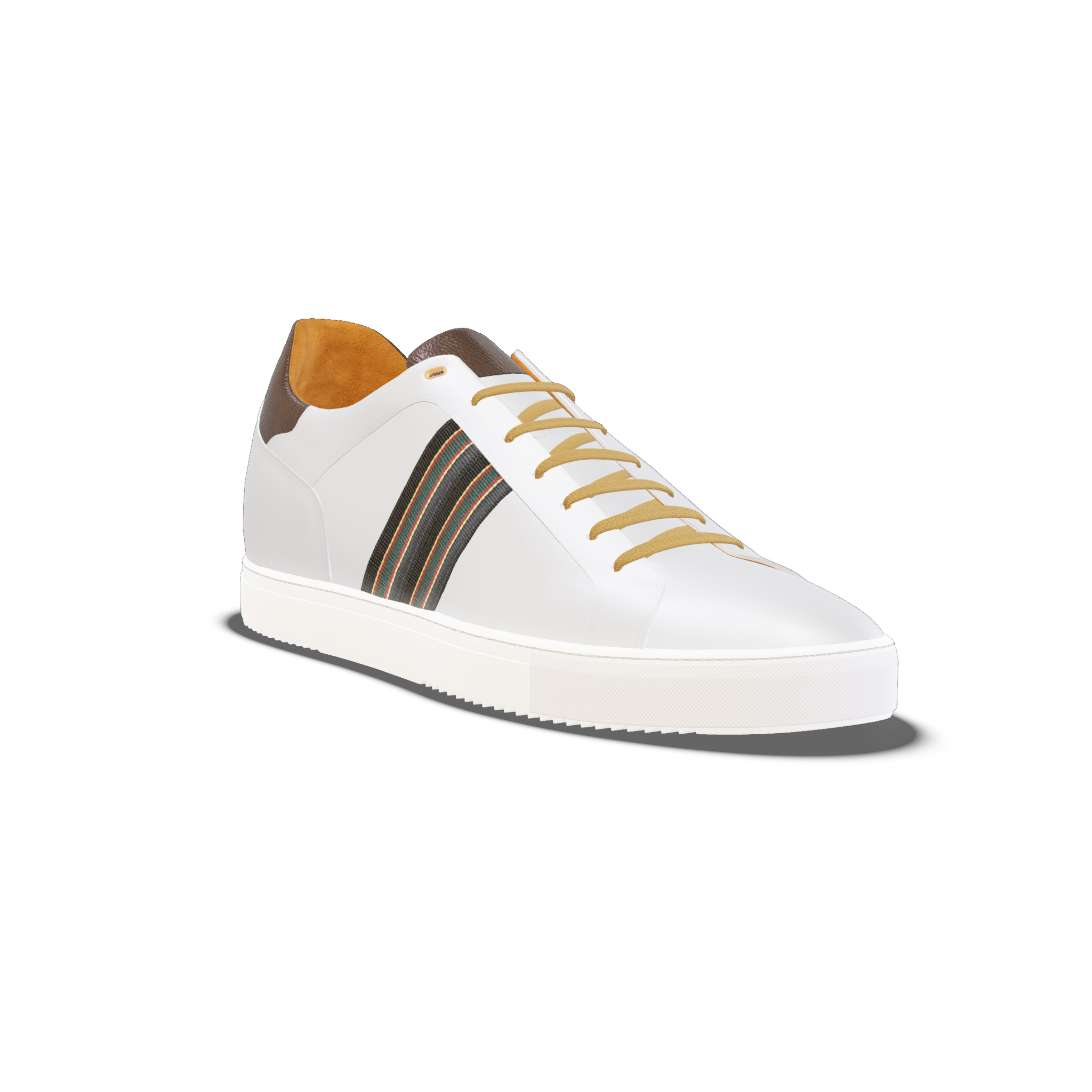
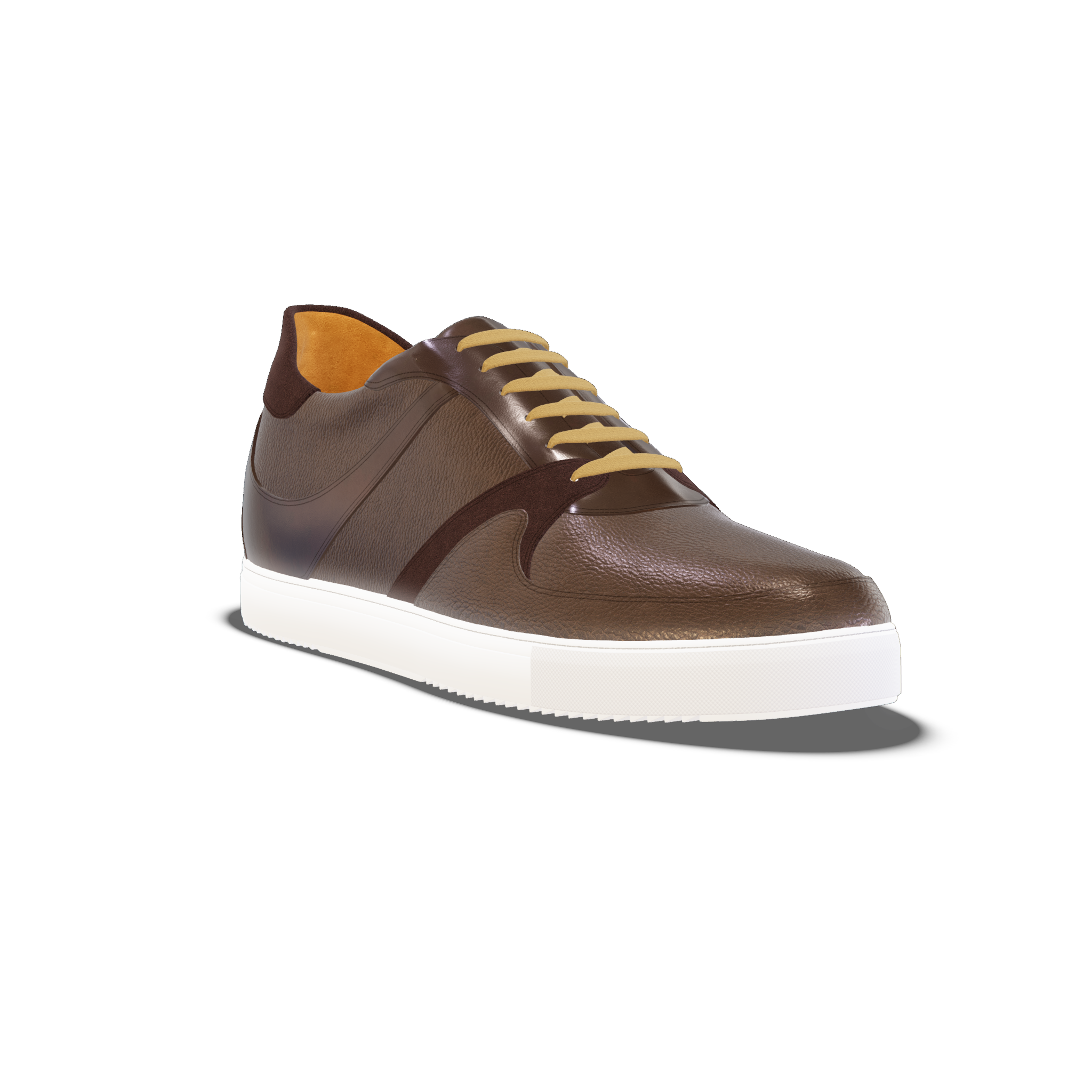
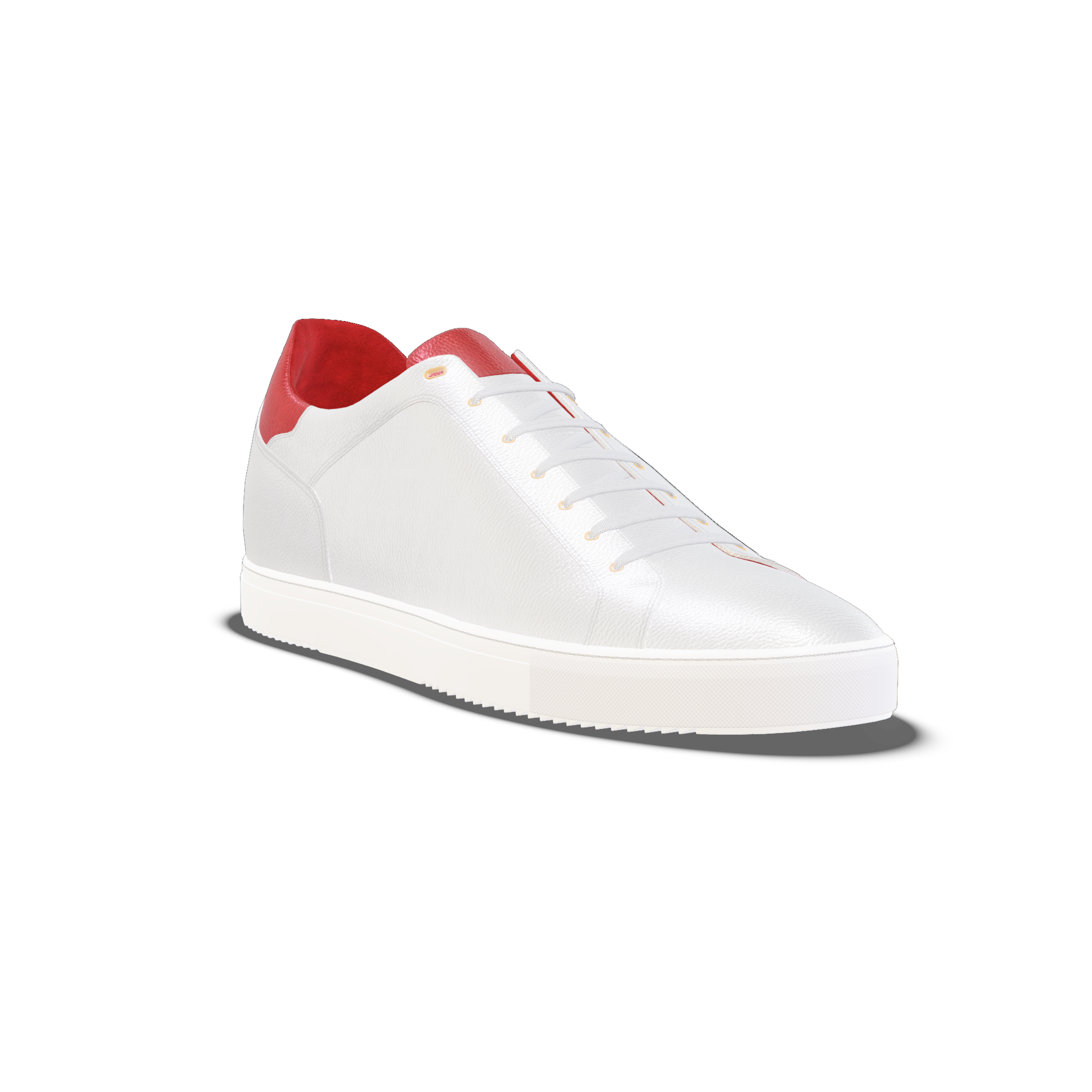
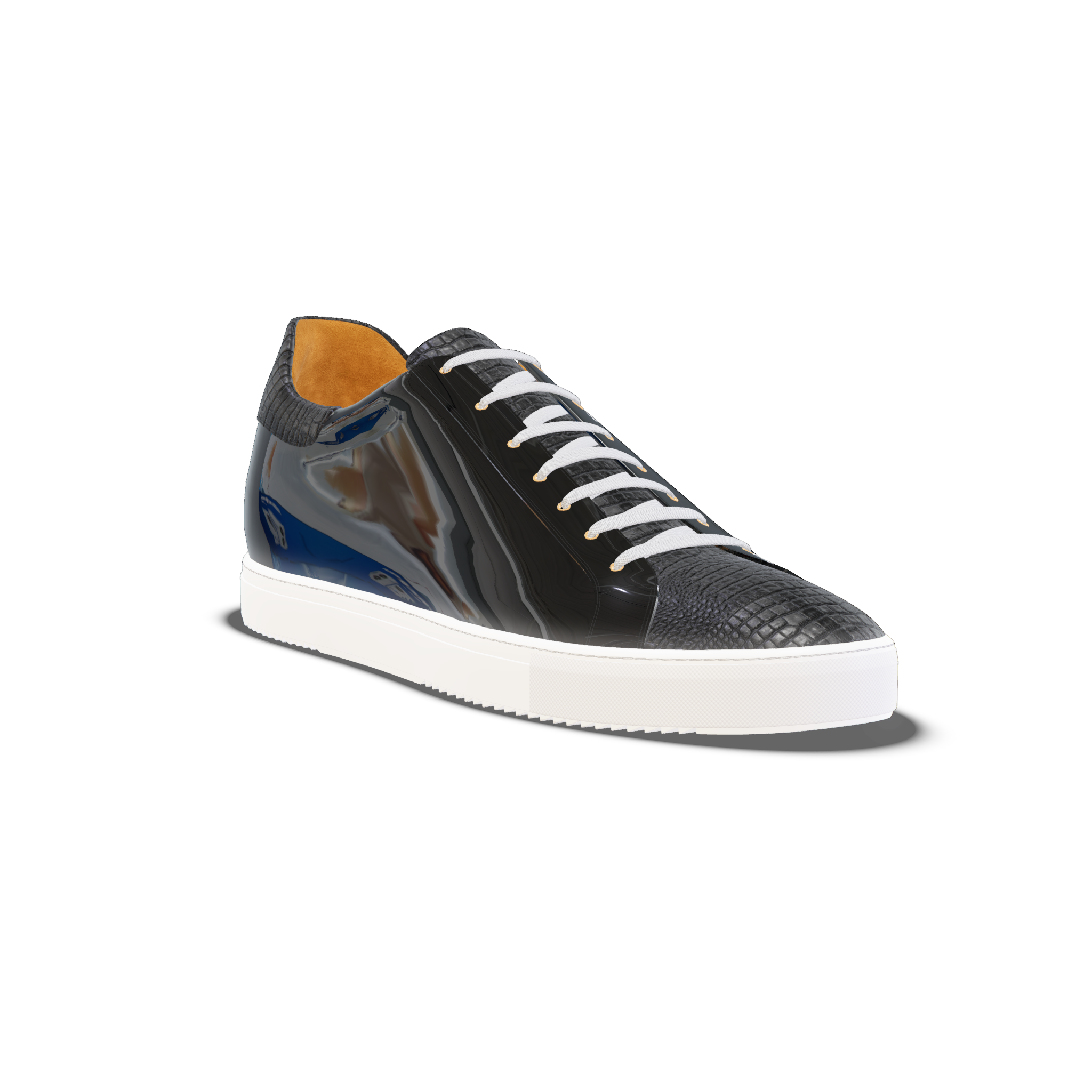
This is central to the philosophy behind Jasperosso’s three dimensional design studio. The value of personalisation is not that every available colour and leather should be deployed simultaneously like an extremely well-funded craft project. It is that the customer can move closer to the combination they would naturally choose if somebody had thought to make it already.
That may be dramatic.
It may be extremely restrained.
Both are equally personal if they accurately reflect the owner.
Someone whose wardrobe revolves around navy might combine smooth navy calf with tonal navy suede, allowing texture rather than colour to provide distinction. Another person might prefer warm brown leather with a contrasting burgundy detail. Someone else might create a sneaker in green because green has appeared repeatedly throughout their wardrobe for twenty years.
The sophistication lies not in how unusual the result is.
It lies in how accurately it reflects preference.
This is where customisation can go wrong. When personalisation becomes primarily a demonstration of difference, customers can feel pressured to create something conspicuous simply because the opportunity exists.
But being different and being personal are not synonymous.
A fluorescent purple sneaker with yellow laces and metallic green panels would certainly be distinctive. Whether it has anything whatsoever to do with the person wearing it is another matter.
Personalisation works best when it amplifies existing taste rather than temporarily replacing it.
That is why the relationship between bespoke design and signature objects is so interesting.
A bespoke object begins with intention.
A signature object requires time.
The first can help create the conditions for the second, but it cannot guarantee it.
The sneaker still has to leave the box.
It needs to be worn to work, dinners, airports, weekends and wherever else life happens. It needs to become familiar enough that reaching for it stops being a decision.
Only then does design become behaviour.
And behaviour is what creates the signature.
10. Eventually, They Become Part of Your Story
The objects that matter most rarely remain confined to the moment when we bought them.
Their significance accumulates.
A watch might begin as a birthday present and eventually become associated with decades of ordinary mornings and extraordinary occasions. A notebook begins as blank paper and gradually becomes a physical record of ideas, plans and occasionally handwriting so incomprehensible that even its author is unable to establish what seemed so important at the time.
Footwear accumulates its own geography.
A pair of sneakers may remember cities better than we do.
They were there for the early flight from Heathrow, the afternoon walking through Florence, the unexpectedly long route back to the hotel, the dinner that continued until considerably later than planned and the meeting where everything finally came together.
Of course, the sneakers remember none of this.
We do.
The object simply provides the trigger.
Psychologists often describe memory as associative. A smell, sound, place or physical object can retrieve experiences that appeared to have disappeared from conscious thought. Personal possessions are particularly effective because they accompany us repeatedly through different contexts.
This helps explain why seemingly ordinary objects can become disproportionately difficult to discard.
Their practical function may have ended, but their psychological function has not.
The old watch no longer keeps particularly accurate time.
The notebook is full.
The sneakers have reached the point where even a generous interpretation of “patina” is becoming ambitious.
Yet throwing them away feels strangely wrong.
They have become containers for memory.
This is the point at which value becomes almost impossible to calculate.
A resale platform might assign a market price to the watch. The notebook is probably worthless commercially. The sneakers may have no residual value whatsoever.
To their owner, however, replacing them is not equivalent to replacing what they represent.
This is why The Gap Between Price and Value matters beyond economics. Price is objective enough to print on a label. Value becomes increasingly subjective as ownership continues.
Time alters the equation.
A new object may cost more.
An old object may mean more.
Luxury tends to focus heavily on acquisition because acquisition is commercially measurable. Yet the most interesting stage begins after the transaction. The question is no longer whether the customer wanted the object enough to buy it.
It is whether they will still want it years later.
That is a much higher standard.
The Quiet Architecture of Identity
Taken individually, the objects surrounding us can seem insignificant.
A pen is a pen.
A notebook is paper.
A watch tells the time, albeit occasionally with the assistance of engineering so complicated that using a telephone would be considerably easier.
Sneakers protect our feet.
Their practical purposes are straightforward.
What makes them meaningful is repetition.
We carry the same pen through thousands of conversations. We write ideas into the same notebook. We fasten the same watch each morning. We lace the same sneakers before walking out of the door.
These behaviours create continuity.
And continuity matters because identity itself is partly constructed through repeated behaviour. We become known not only through what we say about ourselves, but through what we consistently do.
The objects are witnesses to that consistency.
This is why a genuine personal style rarely needs to be particularly theatrical. Recognition can emerge through repetition rather than spectacle. The same colours, materials and objects appear often enough that they become familiar.
In this sense, the most successful signature objects are almost anti-fashion.
Fashion depends upon change.
Signatures depend upon continuity.
Neither is inherently superior. Fashion provides experimentation, creativity and cultural movement. Without it, personal style would have far less material from which to evolve.
But signatures operate on a different timescale.
They require patience.
You cannot accelerate familiarity.
You cannot manufacture ten years of ownership by purchasing something that already looks aged.
And you cannot create personal history by selecting the correct brand.
History has to happen.
Conclusion: The Things We Choose Choose Us Back
We tend to imagine identity flowing in one direction.
We decide who we are, then select objects that express it.
Reality is more complicated.
We choose something because it appeals to us. We use it because it works. Familiarity encourages us to choose it again. Repetition creates attachment. Attachment encourages care. The object remains with us long enough to accumulate memories, and eventually those memories change how we see the object itself.
Choice becomes repetition.
Repetition becomes familiarity.
Familiarity becomes attachment.
Attachment becomes identity.
This is why the objects that quietly define us are rarely the ones purchased specifically for that purpose.
Status can be acquired immediately.
A signature cannot.
It needs ordinary Tuesdays as much as important occasions. It needs scratches, creases, refills, repairs and repetition. It needs enough time for the novelty of ownership to disappear and something more durable to replace it.
This connects with The Ritual of Putting Your Shoes On. Everyday rituals can appear insignificant precisely because we repeat them without thought, yet repetition is what gives them psychological weight. The objects involved become part of those rituals and, consequently, part of our lives.
Perhaps this is also why the best luxury products should not constantly demand attention.
They should be capable of becoming familiar.
They should survive long enough to accumulate history.
They should age in ways that make ownership visible rather than merely deterioration obvious.
And ideally, they should feel sufficiently personal that choosing them tomorrow seems easier than choosing anything else.
The ultimate luxury object may therefore have very little to do with what strangers think when they see it.
It is the watch your family cannot imagine you without.
The pen a colleague immediately recognises as yours.
The notebook whose replacement never feels quite right.
The sneakers a friend could probably pick out from a line-up without needing to see your name.
None needs to be a status symbol.
They have achieved something considerably more personal.
They have become signatures.
And perhaps the clearest indication that an object has reached that point is that you no longer think of it as defining you at all.
You simply reach for it again tomorrow.

By Katy Trumble