


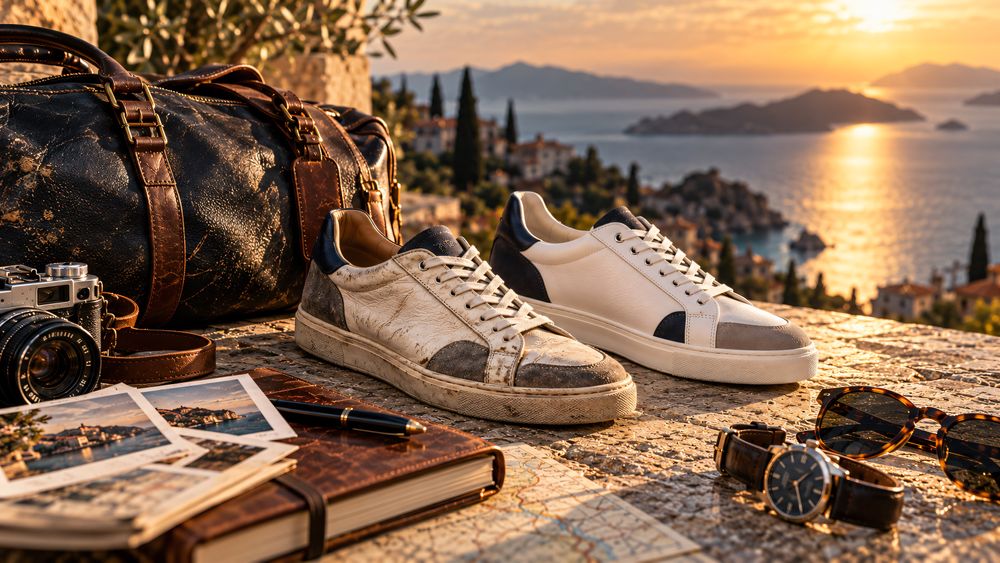
Journal
Why your favourite things are never quite perfect
The strange relationship between imperfection and attachment
8th October 2026
There is probably something in your home that you would struggle to explain to an insurance assessor. It might be a watch with a scratched case, a leather bag that has seen considerably better days, or a pair of sneakers that has long since lost the immaculate appearance it possessed when you first opened the box. Objectively, there may be better examples available. Newer ones, certainly. Possibly more expensive ones. Yet if you were asked to choose between your familiar, slightly battered possession and an identical replacement in perfect condition, you might find the decision surprisingly difficult.
This is a curious contradiction. We spend considerable time and money searching for perfection, only to become attached to things that gradually lose it. We admire flawless craftsmanship, immaculate finishes and pristine materials. We examine photographs, compare specifications and occasionally agonise over differences so small that even the manufacturer would struggle to identify them without consulting the original design drawings. Then we buy the object, use it, scratch it, soften it, crease it and somehow become more fond of it than we were when it was new.
There is something rather wonderful about this. It suggests that the value of a possession is not fixed at the moment of purchase. In fact, some of its most meaningful qualities cannot exist until long afterwards. A new leather bag can be beautifully made, but it cannot yet be familiar. A watch can be mechanically exceptional, but it has not accompanied its owner through anything. A pair of sneakers can be individually designed and handcrafted in Italy, but it has not yet become the pair instinctively chosen for a journey, a dinner or an ordinary Tuesday afternoon.
This article is not another argument that ageing materials look better with time. That territory belongs to Why Real Luxury Rarely Looks New. The more interesting question is psychological: why do imperfections sometimes strengthen our attachment to possessions, and why can the pursuit of perfection prevent us from developing that attachment in the first place?
The answer has surprisingly little to do with scratches, leather or craftsmanship. It has rather more to do with memory, familiarity, identity and the peculiar way human beings turn ordinary objects into personal possessions.
1. The Problem With Perfect Things
Perfection creates expectations. When something arrives in immaculate condition, we instinctively establish that condition as the standard against which every future encounter will be judged. The watch has no scratches, the leather has no creases, the soles are spotless and the finish is precisely as the maker intended. For a brief period, the object exists in a state of complete visual control, and our immediate task appears to be preventing the outside world from interfering with it.
This can make ownership unexpectedly stressful. A beautiful leather bag becomes something to protect from rain, crowded trains and careless restaurant staff. Expensive sneakers are saved for occasions involving favourable weather and relatively trustworthy pavements. A new watch is inspected after every encounter with a doorframe. The object may be ours in the legal sense, but our behaviour suggests we are temporarily responsible for preserving somebody else’s exhibition piece.
The irony is that perfection can create distance. Instead of enjoying the object, we become conscious of its vulnerability. We modify our behaviour to protect it, and in doing so we sometimes reduce the very pleasure that justified buying it. The more expensive or desirable the possession, the more pronounced this effect can become. A product intended to improve everyday life begins imposing restrictions upon it.
This is where the distinction between admiration and attachment becomes important. We can admire something without feeling emotionally connected to it. A perfectly restored vintage car in a museum may be magnificent, but it does not necessarily mean as much to us as the considerably less immaculate car in which we learned to drive. The first offers visual perfection; the second contains personal history. Their value operates on different levels.
Perhaps the real problem with perfection is that it leaves very little room for us. The object arrives complete, and any evidence of our involvement initially appears to diminish it. Emotional attachment begins to develop when we stop treating ownership as an exercise in preservation and allow the object to participate in our lives.
2. The First Scratch Changes Everything
Almost everyone recognises the peculiar disappointment of discovering the first mark on something new. It might be a tiny scratch on a watch clasp, a faint scuff on polished leather or a crease across the front of an expensive sneaker. The damage may be almost invisible to anyone else, yet its owner can locate it immediately, usually with the accuracy of someone identifying a distant lighthouse through binoculars.
The intensity of the reaction is rarely proportional to the physical damage. What has actually changed is the object’s status. Until that moment, it represented an ideal. It was the flawless version we selected, purchased and anticipated. The first imperfection breaks the connection between the object in our possession and the perfect image we had formed of it.
Psychologists studying loss aversion have shown that people often experience losses more strongly than equivalent gains. This provides one useful way to understand why the first scratch can feel disproportionately significant. We perceive the mark as the loss of something we already possessed: perfection. The object may function exactly as before, but an ideal condition has disappeared.
Then, rather inconveniently for our original anxiety, life continues. Another mark appears. The leather develops natural creases. The watch acquires a second scratch. The sneakers encounter a pavement that has apparently never benefited from municipal maintenance. Gradually, the original imperfection loses its importance because the object is no longer being evaluated against an impossible standard.
This transition can be liberating. Once permanent perfection is no longer available, we become more comfortable using the object as intended. The bag travels more frequently. The watch is worn without constant inspection. The sneakers become everyday favourites rather than carefully rationed luxuries. The object begins accumulating experiences instead of merely avoiding damage.
Of course, not every mark becomes desirable. A deep scratch across a watch crystal or damaged leather requiring professional attention may remain frustrating. The point is not that damage is inherently attractive. It is that the loss of immaculate condition can sometimes remove a psychological barrier between possession and enjoyment.
3. Why Familiarity Is More Powerful Than Novelty
Newness is exceptionally good at attracting attention. Familiarity is considerably better at sustaining relationships. This distinction applies to places, routines, people and, perhaps surprisingly, possessions. The excitement of acquisition may be intense, but it is usually temporary. What determines whether something becomes a favourite is what happens after that initial excitement has faded.
Repeated exposure can increase preference, particularly when experiences are positive. Psychologists refer to one aspect of this as the mere-exposure effect: familiarity itself can influence how positively we respond to something. But attachment to possessions involves more than simply seeing them repeatedly. We also learn how they behave, how they feel and how reliably they fit into our routines.
Consider a leather jacket that has been worn for years. Its owner knows how it sits across the shoulders, which pocket holds the keys and exactly how much room remains when worn over a particular jumper. A new jacket might be beautifully made, but it begins without that accumulated knowledge. The familiar one possesses practical advantages that are difficult to communicate through photographs or specifications.
The same applies to footwear. A favourite pair of leather sneakers has already demonstrated its compatibility with the owner’s feet, wardrobe and daily activities. There is no uncertainty about how they will feel after several hours or whether they will work with the trousers selected that morning. They have become a dependable solution to a recurring decision.
This relationship is explored in The Luxury of Familiarity: Why We Wear the Same Sneakers Again and Again. Repetition is not necessarily evidence of limited imagination. Sometimes it is evidence that we have found something particularly well suited to us.
Familiarity also changes the emotional significance of imperfections. A crease that might have been unwelcome on the first day becomes part of the recognised appearance of an old favourite. We no longer compare the object with an idealised version of itself. We recognise it as the version we know, and that recognition can be deeply satisfying.
4. Our Possessions Become Part of Our Identity
There is a reason people become surprisingly defensive about objects that appear unremarkable to everybody else. Personal possessions can become connected to our sense of identity. They reflect choices, experiences, habits and sometimes important periods of our lives. The relationship becomes particularly strong when an object has accompanied us through repeated or emotionally significant events.
Consumer researchers have explored this through the idea of the extended self, in which possessions can become part of how people understand and express who they are. This does not mean our identity is determined by what we own. Rather, certain objects acquire significance because they represent aspects of our personal history, preferences or relationships.
A watch inherited from a parent illustrates the principle clearly. Its market value may be modest. It may have scratches, an outdated design and a strap that would benefit from replacement. Yet those characteristics can become inseparable from its meaning. The owner is not evaluating it as an anonymous watch competing against contemporary alternatives. It is a specific object connected to a specific person.
The same process occurs with possessions we purchase ourselves, although usually more gradually. A favourite bag may become associated with years of travel. A jacket may recall a particular period of life. Sneakers may have accompanied their owner through countless ordinary days and several unforgettable ones. Eventually, the object becomes a physical reminder of continuity.
This is the central idea behind The Objects That Quietly Define Us. The possessions that become most closely associated with us are often not the most expensive or visually impressive. They are the ones we repeatedly choose until they become part of our personal vocabulary.
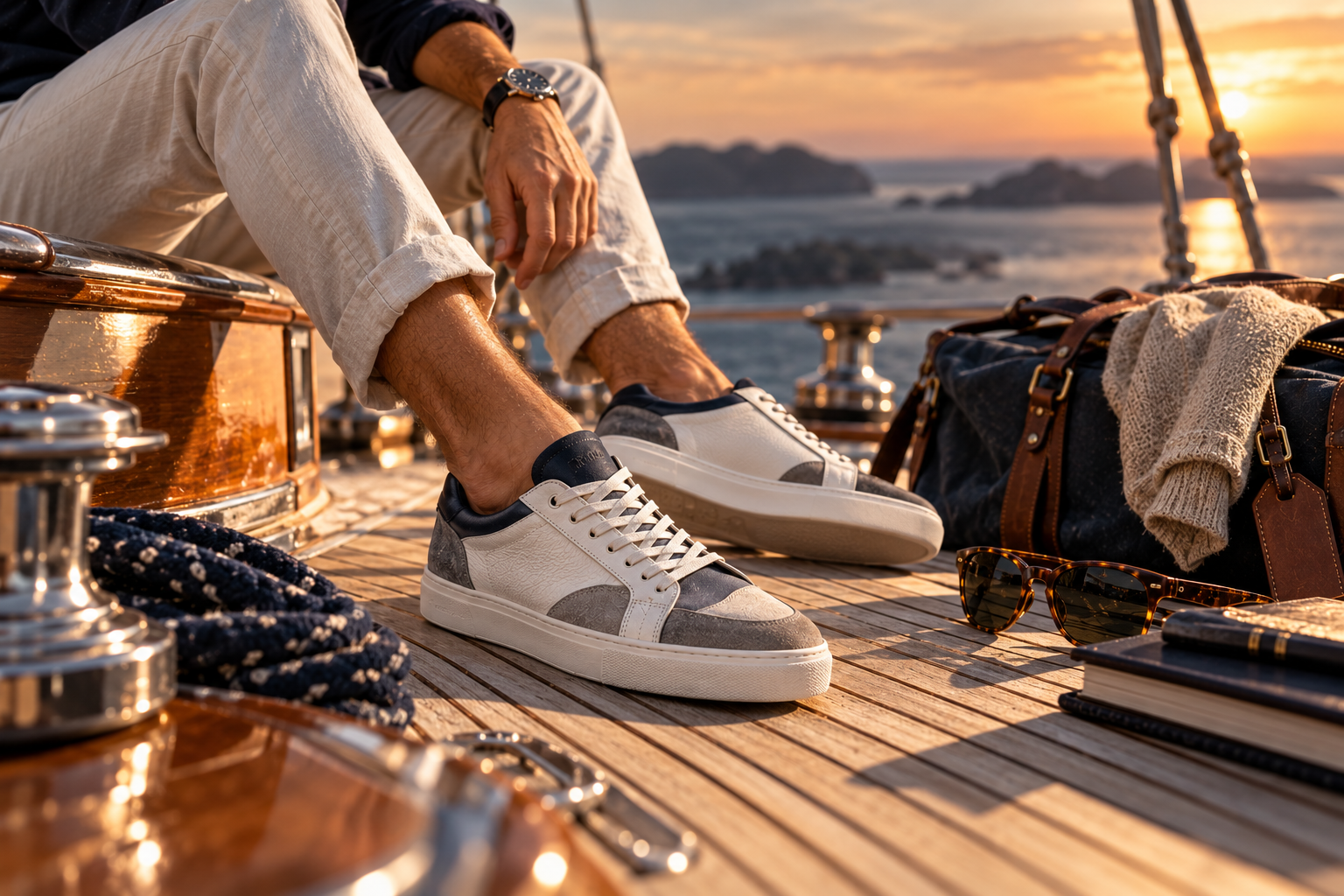
Imperfections can reinforce that connection because they distinguish our particular object from every other example. An identical replacement may reproduce the materials, proportions and construction, but it cannot reproduce the same history. The scratches are not necessarily valuable in themselves; their significance comes from belonging to something that has become personally meaningful.
5. The Strange Comfort of Something That Knows You
There is a difference between physical comfort and psychological comfort, although the two frequently overlap. Physical comfort concerns fit, movement, materials and the absence of irritation. Psychological comfort comes from predictability, familiarity and the confidence that something will behave as expected.
We experience this distinction whenever we return to a familiar place. A hotel room might be objectively more luxurious than our bedroom, but that does not necessarily make it more comfortable. At home, we know where everything is. We understand the lighting, the sounds and the peculiarities of the furniture. Familiarity removes small uncertainties that we barely notice until they disappear.
Possessions can provide a similar experience. A favourite pen feels right in the hand. A familiar chair offers exactly the support we expect. A leather bag has developed an internal arrangement that makes perfect sense to its owner and virtually none to anyone else. A pair of sneakers has become so familiar that selecting them requires almost no conscious effort.
This helps explain why an imperfect possession can feel more comfortable than a perfect replacement. The replacement may offer superior technical performance, but it lacks the accumulated relationship between owner and object. It has not yet earned trust through repeated use.
The idea connects with Luxury Is What You Stop Thinking About, which explores how exceptional products can become mentally unobtrusive. They function so naturally within our lives that we stop noticing the decisions, adjustments and small inconveniences they have removed.
There is something distinctly luxurious about this absence of friction. It is not particularly photogenic, and it does not produce dramatic marketing campaigns, but it can contribute more to everyday satisfaction than an impressive first impression. The object has become comfortable not simply because it was designed well, but because the relationship between product and owner has had time to develop.
6. Why We Become Attached to the Things We Have Changed
An interesting aspect of attachment is that we often value things more when we have contributed something to them. This contribution might involve physical effort, creative decision making, maintenance or simply the accumulated consequences of ownership. The object begins to feel less interchangeable because we have participated in what it has become.
Behavioural researchers have documented related effects, including the IKEA effect, in which people can place additional value on objects they have helped create. The findings do not mean every assembled bookcase becomes a treasured family possession, but they illustrate an important principle: personal involvement can influence perceived value.
Customisation introduces this relationship before the product has even been made. When someone chooses materials, colours, textures and details, the finished object reflects decisions that would not necessarily have been made by anybody else. The customer is no longer selecting only from a range of completed products. They are participating in the design.
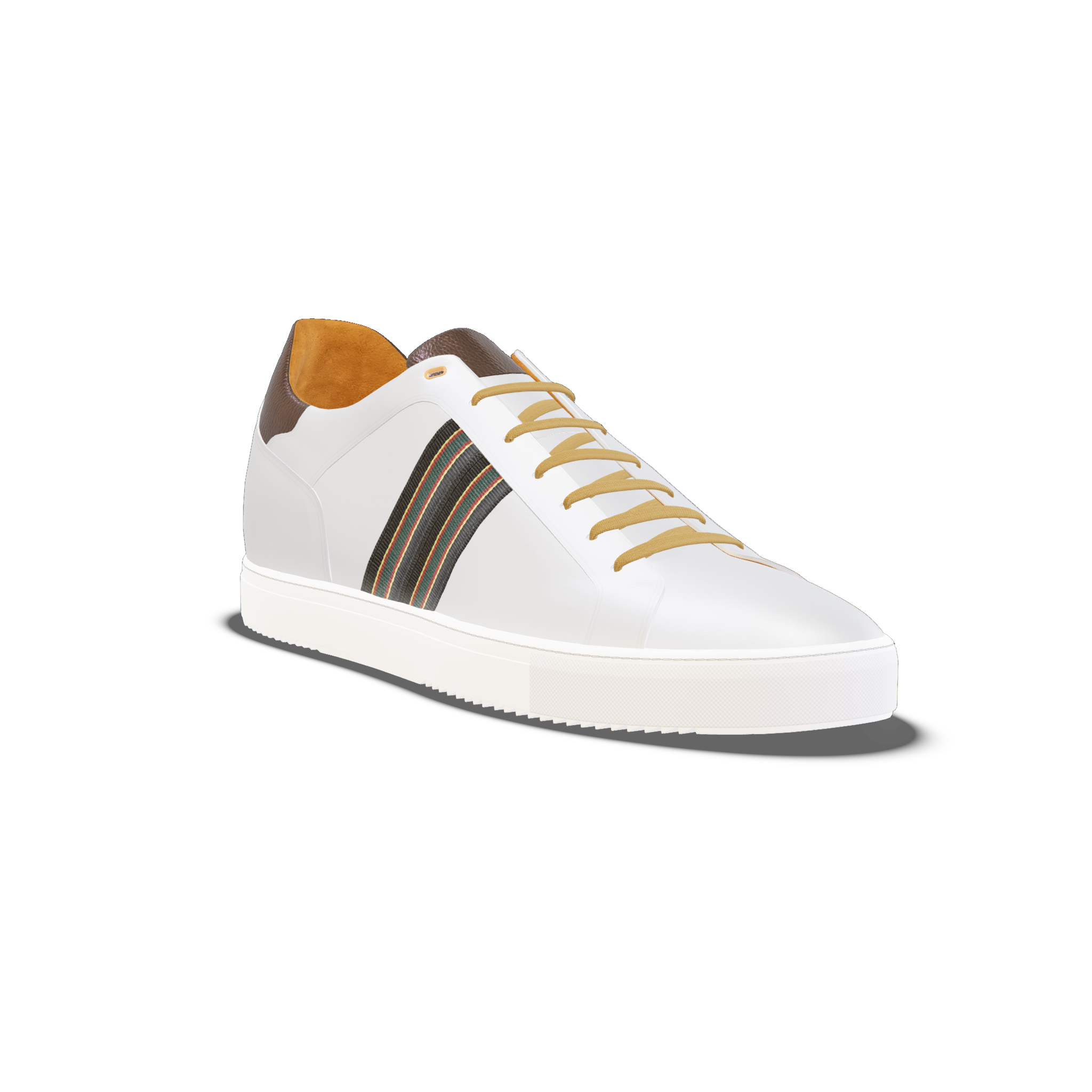
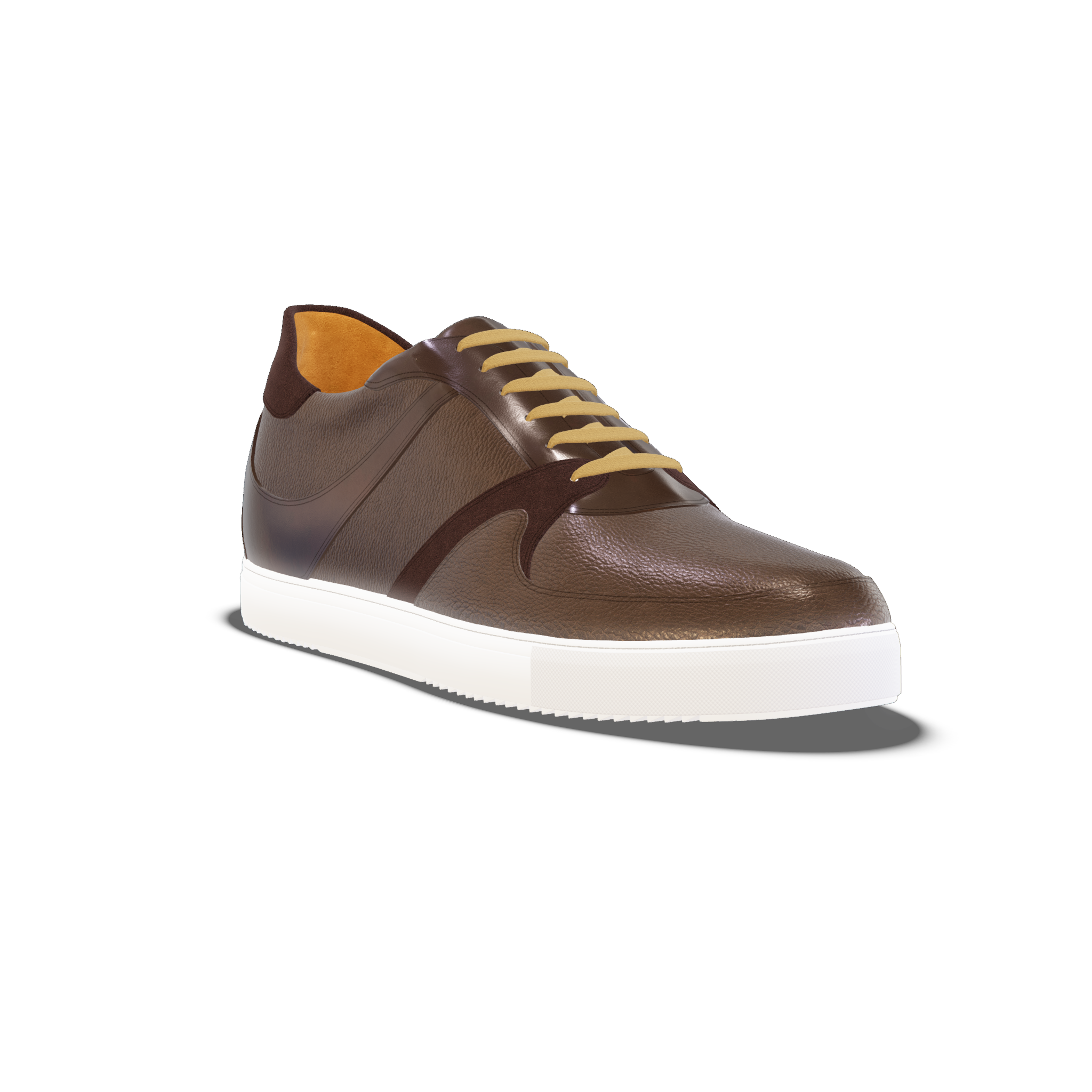
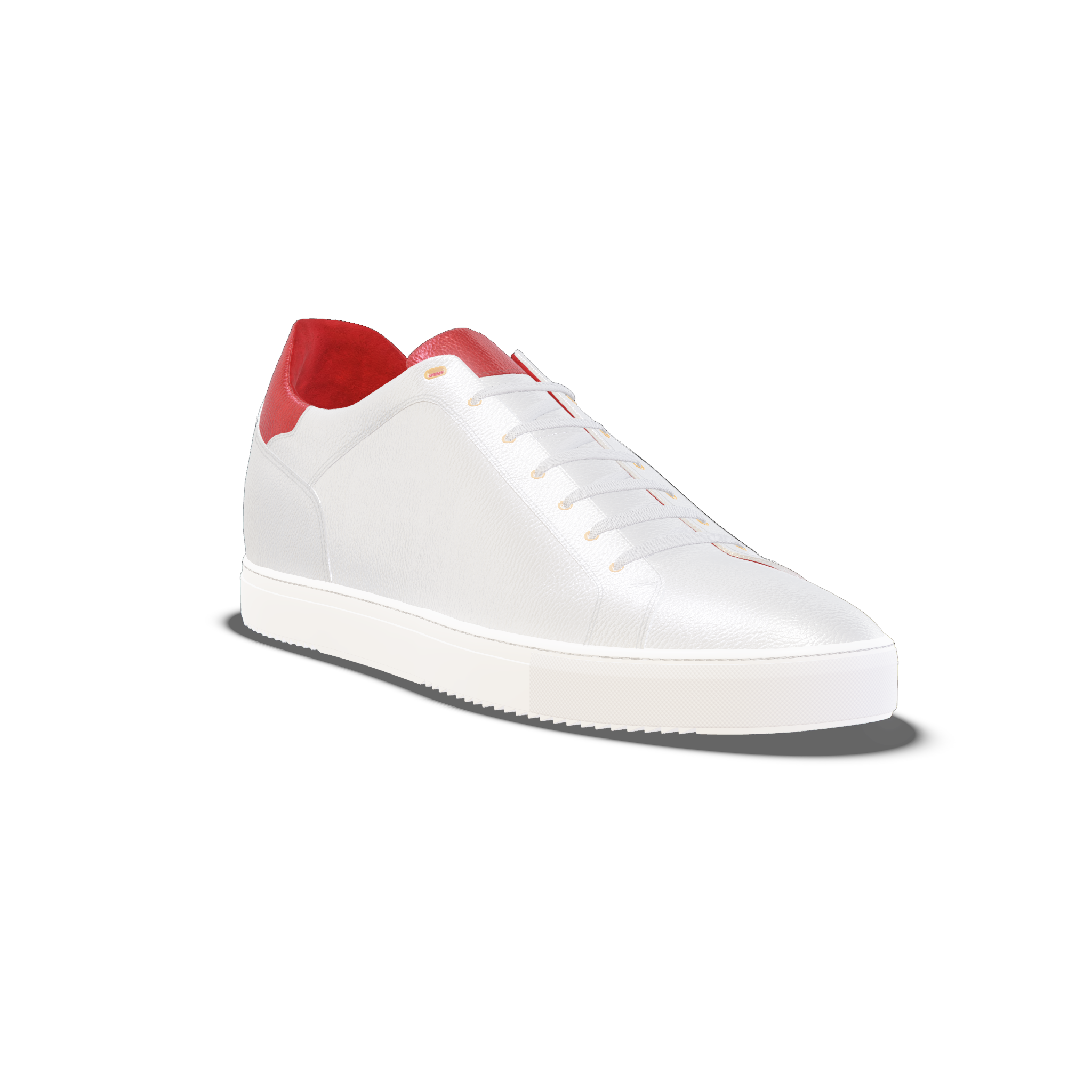
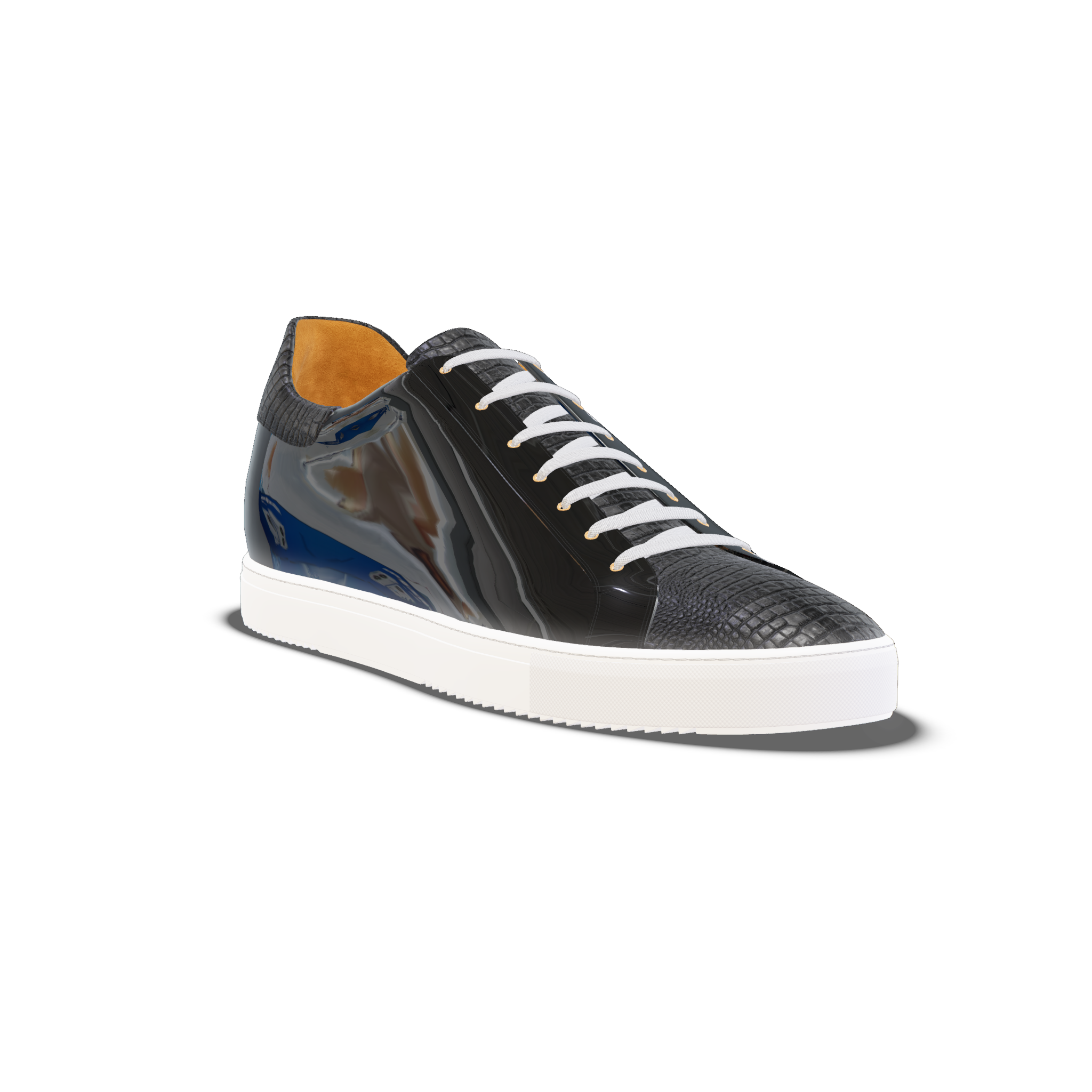
For Jasperosso, this is an important distinction. The three dimensional design studio allows customers to select combinations of Italian leather, suede, colours, laces, eyelets and lining before their sneakers are handcrafted in Le Marche. The resulting pair may be visually restrained or unusually expressive, but its significance lies partly in the fact that those decisions belong to the owner.
There is then a second, less obvious stage of personalisation. As the sneakers are worn, the leather responds to movement, the fit becomes familiar and the pair accumulates evidence of use. The original design remains, but ownership contributes something the customer could not have specified in advance.
This relationship between personal choice and attachment is explored in The Psychology of Personalisation: Why We Crave Bespoke Products. A personalised object can feel more meaningful because it represents both the maker’s skill and the customer’s preferences.
The most interesting implication is that personalisation does not necessarily end when manufacture is complete. We continue shaping our possessions through use, care and experience. The final result is not simply something we selected. It is something we have gradually helped become ours.
7. The Difference Between Character and Neglect
There is a temptation, particularly in luxury writing, to romanticise every imperfection. Scratches become character, stains become memories and visibly exhausted products are described as possessing an authenticity that newer examples supposedly lack. Occasionally, this is convincing. At other times, it is a rather elaborate way of explaining why something desperately needs cleaning.
Not all deterioration is meaningful, and not every imperfection improves an object. A leather bag developing a softened surface through years of use is different from leather cracking because it has been neglected. A watch carrying superficial marks may remain entirely functional, while water damage to its movement is simply a problem. Sneakers with natural creases can look appealing; sneakers with collapsing support or damaged construction require attention rather than philosophical appreciation.
The distinction matters because emotional attachment should encourage care, not excuse neglect. If an object has become personally significant, maintaining it is one way of respecting that relationship. Cleaning, conditioning and appropriate repair allow continued use without attempting to erase every trace of history.
This philosophy underpins Why Some Things Are Worth Repairing. Maintenance acknowledges that an object’s value does not disappear when it stops being perfect. Repair can preserve the useful and meaningful parts of a possession while addressing the elements that have genuinely deteriorated.
For leather footwear, sensible care is particularly important. Smooth leather may benefit from suitable cleaning and conditioning, while suede requires different products and techniques. Wet shoes should be allowed to dry naturally, and appropriate shoe trees can help maintain shape. The aim is not to restore the exact appearance of the first day after every outing. It is to support the material so that it can continue performing and developing naturally.
This distinction also prevents the philosophy of imperfection from becoming an excuse for poor manufacturing. A luxury product should be beautifully designed and competently constructed from the outset. The fact that owners may eventually appreciate signs of use does not reduce the maker’s responsibility to deliver exceptional quality. Quite the opposite: good construction provides the foundation that allows an object to survive long enough for attachment to develop.
8. Why Replacing Something Can Feel Like Losing Something
From a practical perspective, replacement appears straightforward. If an object is damaged, outdated or no longer performing optimally, a new version can solve the problem. Yet anyone who has reluctantly replaced a favourite possession knows that the emotional calculation is rarely so simple.
The new object may be technically superior. It may offer better materials, improved construction or greater convenience. It may even be identical to the original in every measurable respect. Nevertheless, something can feel missing because the relationship has not transferred with the purchase.
This is particularly apparent with possessions connected to important memories. Replacing a watch inherited from a parent does not reproduce the significance of the original. Buying another edition of a beloved book does not necessarily replace the copy filled with handwritten notes. A new leather bag may be objectively better than the old one, but it has not travelled to the same places or accompanied its owner through the same experiences.
The difference lies between functional substitution and emotional substitution. The first is often easy. The second may be impossible because the emotional value is attached to the history of a particular object rather than merely its category or specifications.
This is why the idea of future heirlooms is so compelling. In What Future Heirlooms Look Like, the question is not simply which products are expensive enough to preserve, but which acquire sufficient personal meaning to become worth keeping. An heirloom does not become significant merely because it survives. Its significance develops through the people and experiences associated with it.
Of course, attachment can become excessive. Keeping every possession because it represents a memory eventually produces a house full of objects that are difficult to use and even harder to discard. Emotional value does not automatically justify permanent ownership. The more useful distinction is between things we retain out of habit and things whose continued presence genuinely enriches our lives.
A favourite possession earns its place not because it is irreplaceable in a technical sense, but because replacing it would remove something we still value.
9. Perhaps Perfection Is Better Left to Photographs
Luxury photography has a particular talent for presenting objects in conditions that ordinary life cannot sustain. Leather is immaculate, stitching perfectly aligned, surfaces spotless and lighting arranged to flatter every detail. The resulting image can be beautiful, and it serves a legitimate purpose: showing the design and craftsmanship at their best.
The problem arises when we mistake that presentation for the intended long-term condition of the object. A photograph captures a moment. Ownership unfolds over years. The requirements are different, and the characteristics that make something impressive in a studio may not be the same qualities that make it rewarding to live with.
A chair photographed in an empty architectural interior can look magnificent. Whether it remains enjoyable after three hours of reading is another question. A beautifully styled jacket can appear exceptional on a model. Whether it works with the owner’s existing wardrobe and daily routine determines whether it becomes a favourite. Sneakers may look extraordinary when perfectly positioned for a product photograph, but their real value emerges when someone walks out of the house wearing them.
This is the distinction explored in Designed to Be Lived In. Good luxury should not merely withstand everyday life; it should contribute to it. Materials, comfort, versatility and familiarity become more important as the novelty of acquisition fades.
There is also something artificial about expecting objects to remain untouched while demanding that they accompany us everywhere. We want our possessions to participate in life without displaying any evidence that life has occurred. It is an unreasonable arrangement, rather like expecting a favourite restaurant to remember us while insisting we have never actually visited.
Perhaps perfection is best understood as a starting point rather than a permanent objective. It allows us to appreciate the maker’s original intention before the owner begins contributing a different kind of value. The object may become less visually uniform over time, but it can become more personally meaningful.
The photograph records what the maker created. Ownership reveals what the object became.
10. The Things We Love Most Usually Have a Story
Ask someone to describe a recently purchased luxury item and the answer will often concern its specifications. They may discuss the brand, material, price, construction or the circumstances of purchase. Ask them about a possession they have loved for twenty years and the conversation usually changes.
The specifications become less important. Instead, they tell you where it came from, how long they have owned it, the places it has travelled and why they have never quite managed to replace it. The object becomes an entry point into a personal story.
This is one reason imperfections can acquire meaning. A scratch might recall an incident. A softened handle might represent years of travel. A repaired seam might remind its owner of the decision to keep something rather than discard it. The marks themselves are not necessarily beautiful, but they can act as prompts for memories that would otherwise remain dormant.
Importantly, not every imperfection needs a memorable origin. Most of the marks on a favourite pair of sneakers will have appeared during entirely ordinary activities. We cannot realistically expect every crease to represent an extraordinary journey or every scuff to commemorate a defining moment. Much of life consists of unremarkable days, and the objects we use most frequently accompany us through those as well.
Perhaps that is part of their appeal. They represent the continuity of everyday existence rather than a carefully edited collection of highlights. A favourite possession does not need to be associated exclusively with exceptional occasions. Its significance can come from having been there repeatedly, reliably and without demanding attention.
This returns us to the difference between an impressive object and a meaningful one. The impressive object can be evaluated from a distance. Its quality, design and desirability may be obvious. The meaningful object requires context. Its importance becomes understandable only when we know something about the person who owns it.
And that is why our favourite things are so difficult to replace. We are not simply attached to their physical characteristics. We are attached to the relationship that has developed around them.
Conclusion: The Beauty of Something Becoming Yours
There is a revealing contradiction at the centre of modern luxury. We pursue exceptional quality because we want something better than ordinary, yet the objects we eventually love most are often those that have become thoroughly integrated into ordinary life.
They are not necessarily the most expensive things we own. They may not be the most fashionable, the most impressive or even the best preserved. They are simply the possessions that have repeatedly proved their worth, become familiar and accumulated enough personal meaning that we no longer evaluate them against every available alternative.
Perfection can be admirable, but it is also impersonal. A pristine object tells us about the skill of its maker and the care with which it was presented. A favourite possession tells us something about its owner. The scratches, softened materials and subtle changes may contribute to that story, although the deeper attachment comes from the experiences and familiarity behind them.
This does not diminish craftsmanship. It makes craftsmanship more important. A beautifully made product has the potential to remain useful and desirable long enough for a relationship to develop. Thoughtful design, exceptional materials and skilled construction provide the foundation. Ownership adds the qualities that cannot be manufactured: memory, habit, trust and personal significance.
For Jasperosso, the distinction is particularly relevant. A customer may spend considerable time designing a pair of sneakers that reflects their taste, selecting the precise combination of leathers, textures, colours and details. The finished pair represents an individual creative decision brought to life through Italian craftsmanship. Yet the design process is only the beginning of its story.
The more meaningful transformation happens afterwards. The sneakers are worn, become familiar, accompany their owner through everyday life and gradually acquire the characteristics of a favourite. Their value becomes less dependent on how impressive they looked when new and more connected to how naturally they fit into the owner’s world.
Perhaps this is why the pursuit of permanent perfection is ultimately unsatisfying. It attempts to preserve an object at the moment before its most interesting relationship has begun. It treats evidence of ownership as a problem when, under the right circumstances, ownership is precisely what gives a possession its deepest meaning.
We do not need to celebrate every scratch or invent a romantic explanation for every sign of wear. We simply need to recognise that an object’s imperfections do not necessarily diminish the pleasure of owning it. Sometimes they help us distinguish something we admire from something we genuinely love.
The watch with the scratched clasp, the leather bag with the softened handles and the sneakers that have accompanied us through hundreds of ordinary days may no longer be perfect. Yet each has acquired something that cannot be selected from a catalogue, reproduced in a workshop or purchased as an optional extra.
They have become familiar, personal and unmistakably ours. And perhaps that is the most interesting thing about our favourite possessions: we spend so much time searching for perfection, only to discover that what we really wanted was something we could become attached to.
By Jasper Trumble