


Journal
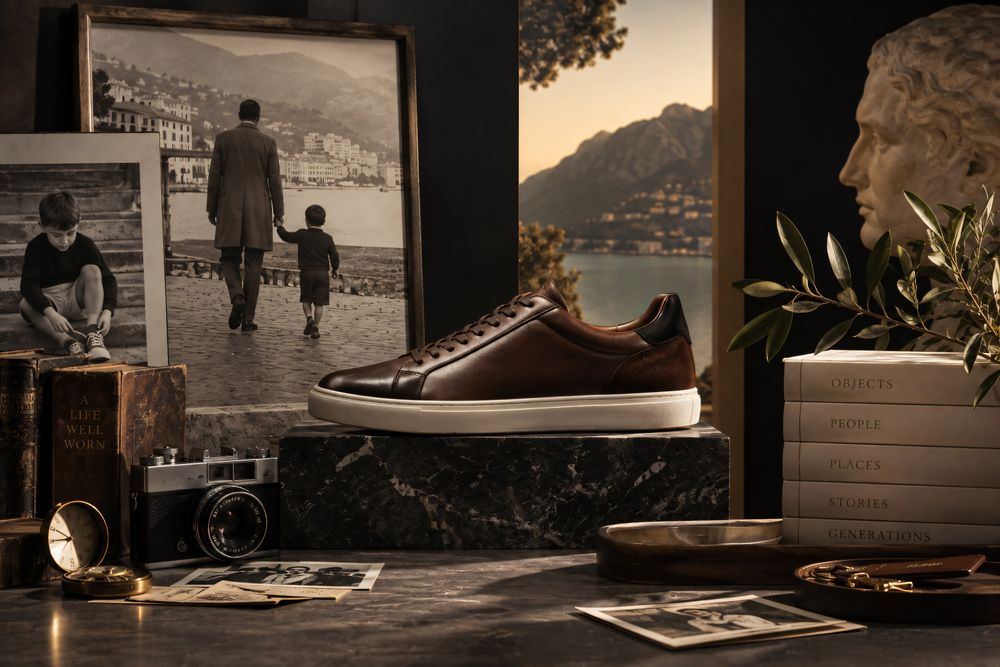
What future heirlooms look like
Could the things we wear today become the objects someone treasures tomorrow?
7th September 2026
There is usually something slightly mysterious about an heirloom.
It may be a watch that belonged to a grandfather, a ring passed between generations, an old leather writing case, a chair nobody is allowed to replace despite the fact that one leg has developed a worrying degree of independence, or a fountain pen that has somehow survived several decades without anyone entirely understanding who originally bought it. These objects occupy a peculiar category. Their financial value may be considerable, negligible or completely unknown, yet asking what they are worth can feel like asking the wrong question.
Their value lies elsewhere.
An heirloom contains evidence of somebody who is no longer its owner. A scratched watch case records years on a particular wrist. The arms of a chair become smooth where hands repeatedly rested. A leather bag darkens at the places it was held. A pen carries tiny marks from thousands of hours of use. These changes would technically be described as wear, yet removing them would often make the object less valuable to the person who inherited it.
This creates an interesting question for a generation surrounded by objects designed, marketed and frequently discarded at unprecedented speed: what will our heirlooms be?
Some answers are obvious. Watches, jewellery, furniture and art will continue travelling between generations. But the boundaries of what we consider worthy of preservation are changing. Objects that previous generations might have regarded as purely functional can acquire cultural and emotional significance. Cameras, vinyl records, musical instruments, cars, luggage and clothing already move between generations.
So what about sneakers?
At first, the suggestion sounds slightly ridiculous. Sneakers are worn against pavements, exposed to weather and expected to survive the occasionally optimistic interpretation of “smart casual”. Most are manufactured as consumable products. They are bought, worn, exhausted and replaced. Nobody gathers the family around to solemnly announce who will inherit the trainers from the hall cupboard.
But perhaps that tells us more about how most sneakers are made than about what sneakers inherently are.
Take a pair constructed from high-quality leather, made carefully by skilled craftspeople, maintained properly and designed without an obvious expiration date. Allow that pair to accompany someone through ten, fifteen or twenty years of their life. Repair it when necessary. Let the leather soften and crease. Let journeys, occasions and ordinary days accumulate around it.
At what point does it stop being merely footwear?
This question follows naturally from The Objects That Quietly Define Us, where we explored how repeated choices become personal signatures. What Future Heirlooms Look Like takes the argument one generation further. If an object becomes strongly associated with us during our lifetime, can it retain some of that association after it passes into somebody else’s hands?
The answer depends upon more than sentiment.
Memory needs something physical to attach itself to. And for that to happen, the object first has to survive.
1. Heirlooms Weren’t Always Heirlooms
We tend to encounter heirlooms at the end of their first story.
By the time a watch is handed down, it has already become Grandad’s watch. The leather chair is already the chair from the old house. The jewellery arrives with names, dates and family stories attached. We see the object after decades of meaning have accumulated around it, which makes it easy to imagine that it was always special.
Usually, it wasn’t.
At some point, somebody simply bought it.
The grandfather’s watch once sat pristine in a shop window. The antique desk was once contemporary furniture. The fountain pen was once an ordinary writing instrument whose owner probably gave considerably more thought to whether it worked properly than to which descendant might inherit it in 70 years.
This is one of the most interesting things about heirlooms: their significance is often retrospective.
Time changes the object without fundamentally changing what it is. A watch remains a watch. A chair remains somewhere to sit. A pair of shoes remains footwear. What changes is the network of memories surrounding it.
This is why age alone cannot create an heirloom.
Every antique shop contains thousands of old objects that have survived perfectly well without becoming emotionally important to anybody. Longevity is necessary, but longevity by itself is merely endurance.
An heirloom requires association.
The object has to belong to someone sufficiently long for their presence to become embedded in how other people perceive it. A favourite watch becomes significant not because it was worn once on an important occasion, but because it appeared repeatedly across hundreds of ordinary ones. The repetition creates recognition.
Eventually, the object becomes difficult to separate from the person.
This explains why an heirloom does not necessarily need to begin life as a conventionally luxurious object. Some do, of course. Exceptional jewellery and watches are deliberately constructed from materials capable of surviving generations, and that physical durability gives them an obvious advantage.
But emotional value operates under different rules.
A relatively inexpensive pen used every day for thirty years may become more important to a family than a considerably more expensive object rarely touched. A modest mechanical watch can acquire greater significance than something technically superior kept pristine in a safe. The object that actually participated in someone’s life has an advantage over the object merely owned by them.
That distinction matters when considering the heirlooms of the future.
We cannot simply look at today’s most expensive possessions and assume they will be tomorrow’s most treasured ones. Some will. Others will eventually arrive at an auction house accompanied by a relative saying, “Apparently he paid quite a lot for this.”
The objects that survive emotionally will be the ones that accumulated a story.
2. The Things We Keep Are Rarely the Things We Expected To
Families are not especially good at following inheritance plans for ordinary possessions.
The objects one generation regards as important are not always those the next generation chooses to keep. The formal dinner service carefully preserved for forty years may receive considerably less enthusiasm than an old coffee mug nobody had considered significant. A valuable piece of furniture may be sold because nobody has room for it, while an inexpensive pocketknife, recipe book or battered suitcase remains in the family indefinitely.
Sentimental value is spectacularly inefficient.
It ignores price, rarity and sometimes good taste.
What matters is connection.
This is because objects can act as cues for autobiographical memory. We associate them with people, places and periods of our lives. Their significance comes partly from the experiences they retrieve.
The smell of an old leather bag can evoke a person with remarkable immediacy. A familiar watch can bring back the image of the wrist on which it was always worn. Handwriting in the margins of a notebook makes its author temporarily present in a way that a perfectly preserved but impersonal object cannot.
Wear can perform a similar function.
The scratch matters because you remember how it happened. The repaired handle matters because you remember it being repaired. The faded section of leather matters because that was where a hand always held it.
This helps explain why pristine condition and emotional value do not always move in the same direction.
Collectors understandably prize condition because rarity and preservation influence market value. Families operate according to a different economy. Sometimes the damage is the valuable part.
A perfectly restored watch may be worth more at auction but feel less like the person who wore it.
A leather chair reupholstered beyond recognition may become objectively better furniture while somehow becoming less that chair.
The same principle sits behind Why Real Luxury Rarely Looks New. Natural materials can record ownership in ways that pristine synthetic surfaces often cannot. Leather creases, develops tonal variation and softens through contact. When the material is good enough, these changes can produce character rather than simply deterioration.
This gives us an important clue about future heirlooms.
The object needs to age in a way worth keeping.
There is a significant difference between something that develops patina and something that simply falls apart. Romantic descriptions of wear only work while the object remains functional. A collapsed sole is not “character”. A detached upper is not “authentic ageing”. At some point even the most enthusiastic luxury copywriter must accept that something is broken.
Durability therefore creates the conditions in which sentiment can develop.
If an object disappears after three years, it has relatively little opportunity to become part of a family’s history. If it remains useful for decades, every additional year gives it another chance to accumulate meaning.
Longevity is not the heirloom.
It gives the heirloom time to happen.
3. Can Something as Ordinary as a Sneaker Become an Heirloom?
Now we reach the awkward part.
The sneaker.
Put a mechanical watch, an antique desk and a pair of leather sneakers next to one another and ask which belongs in a conversation about heirlooms, and the sneakers appear to have wandered into the wrong article.
Partly, this is cultural.
We have spent decades treating sneakers as relatively temporary objects. Even expensive examples are often associated with seasons, collections and rapidly changing aesthetics. Some are collected rather than worn, but that is a different phenomenon. An unworn limited-edition sneaker preserved in a box may become financially valuable, yet its significance comes from scarcity rather than ownership.
The more interesting possibility is the opposite.
Could a sneaker become meaningful precisely because it was worn?
Historically, footwear has certainly survived. Museums contain shoes dating back centuries, and vintage footwear can tell us an extraordinary amount about the people and societies that produced it. The physical object is capable of lasting.
The challenge is construction.
Many contemporary sneakers combine materials and manufacturing techniques optimised for lightness, performance, scale or price rather than multi-decade ownership. Foam compresses. Adhesives fail. Synthetic components degrade. Some constructions make meaningful repair difficult or economically irrational.
Leather footwear can operate differently.
High-quality calf leather, properly maintained, is capable of extraordinary longevity. Stitching can sometimes be repaired. Linings can be addressed. Components can be replaced where the construction allows it. The leather itself can become more individual with age rather than simply looking exhausted.
None of this means every leather sneaker should be preserved for one’s grandchildren.
That would be an excellent way to ensure future generations inherit an enormous amount of footwear they did not request.
The point is possibility.
If sneakers occupy an increasingly important place in how people actually dress, then it follows that some may eventually acquire the same emotional significance previously associated with more formal shoes.
Our wardrobes have changed.
A man who once wore Goodyear-welted Oxfords almost every day may now spend most of his life in premium leather sneakers. The objects accompanying his important meetings, holidays, dinners and family occasions may therefore be sneakers rather than traditional shoes.
Memory does not particularly care about dress codes.
It attaches itself to whatever was there.
This is why The Ritual of Putting Your Shoes On is relevant. Footwear participates in an unusually repetitive ritual. We put it on immediately before leaving home. It accompanies us through the outside world and returns with us afterwards. Few possessions experience quite so much of our physical lives.
If that footwear is made well enough to remain present for years, its apparent ordinariness may actually become an advantage.
Heirlooms do not acquire meaning only through extraordinary occasions.
They accumulate it through ordinary life.
4. An Heirloom Needs to Be Used Before It Can Be Treasured
There is a temptation with beautiful objects to protect them from the very activity for which they were created.
The expensive watch stays in its box because we do not want to scratch it. The car remains in the garage because adding mileage might reduce its value. The beautiful notebook is saved for thoughts sufficiently important to deserve it, resulting in the notebook remaining blank while every mediocre thought is safely recorded elsewhere.
Footwear can suffer the same fate.
A new pair of handcrafted leather sneakers arrives immaculate. The leather is untouched, the soles pristine and every surface exactly as it left the workshop. For a short period, preservation feels entirely reasonable.
Then they need to be worn.
Otherwise, what exactly are we preserving?
An unused object can accumulate age, but it cannot accumulate much personal history.
The distinction is central to the idea of an heirloom. We treasure Grandad’s watch because Grandad wore it. If he had bought it, placed it in a safe for fifty years and never mentioned it, we might inherit an excellent watch. We would not inherit the same story.
Use creates evidence.
With leather footwear, that evidence becomes remarkably personal. Two people can buy identical pairs and, after years of wear, produce subtly different objects. Gait influences creasing. Care routines affect the leather. Environments change colour and texture. Repairs introduce small variations.
The product becomes less standardised with time.
This is the inverse of much modern consumption, where the objective is often to maintain an object as close as possible to its original condition until the moment it is replaced.
Long-term ownership asks something different.
It accepts change.
That philosophy runs through Designed Once, Worn Forever. A product intended to remain relevant for years should be designed not merely to survive wear but to accommodate it aesthetically. The inevitable evidence of use should not immediately make the object feel obsolete.
This is especially important for future heirlooms because wear provides the bridge between physical longevity and emotional significance.
A pristine object tells us how it was made.
A used object can tell us how it was lived with.
The creases are not simply creases anymore. They belong to a particular foot.
The softened leather is not merely ageing. It records thousands of movements.
The repaired section is evidence that somebody once decided the object was worth keeping.
Of course, there is a limit. Nobody’s descendants are obliged to become emotionally attached to a pair of sneakers that should clearly have been retired during the previous decade. Longevity requires maintenance, repair and occasionally the judgement to recognise that a component has reached the end of its useful life.
But that does not weaken the heirloom argument.
It leads directly to its most important practical requirement.
Before an object can carry memories for decades, somebody has to make it capable of surviving them.
5. Craftsmanship Is What Gives Memory Somewhere to Live
Sentiment is surprisingly demanding of materials.
We may want an object to last because it matters to us, but emotional attachment cannot prevent stitching from failing, leather from drying or components from wearing out. Affection is useful for encouraging maintenance. It is less effective as a structural adhesive.
An heirloom therefore needs two forms of durability.
The first is emotional.
The second is physical.
Craftsmanship provides the second.
This is where the word deserves some precision. “Craftsmanship” has become so widely used in luxury marketing that almost anything touched by a human being for several seconds can apparently qualify. Yet genuine craftsmanship is not valuable simply because a person participated in manufacture.
It is valuable because experience informs decisions.
A skilled craftsperson understands how a material behaves, where stresses will occur, how components should interact and when something is properly finished. That knowledge may be difficult to see in a new product because much of it exists beneath the surface.
Years later, it becomes easier to appreciate.
This is the argument explored in Why Handmade Still Matters in an Automated World. Automation can produce extraordinary consistency, and there is no virtue in rejecting technology merely because it is technology. But human judgement remains particularly valuable when working with natural materials whose characteristics are not perfectly uniform.
Leather is one of those materials.
Each hide contains variation. Grain differs. Stretch differs. Texture differs. Experienced hands respond to those characteristics rather than pretending they do not exist.
For a future heirloom, these apparently small decisions matter because durability is cumulative.
The quality of the leather matters.
The precision of the stitching matters.
The way panels are cut matters.
The construction of the sole matters.
The possibility of future repair matters.
No single feature guarantees that an object will survive for decades. Together, they determine whether long ownership is realistic.
This is where the idea of the sneaker as an heirloom becomes less fanciful.
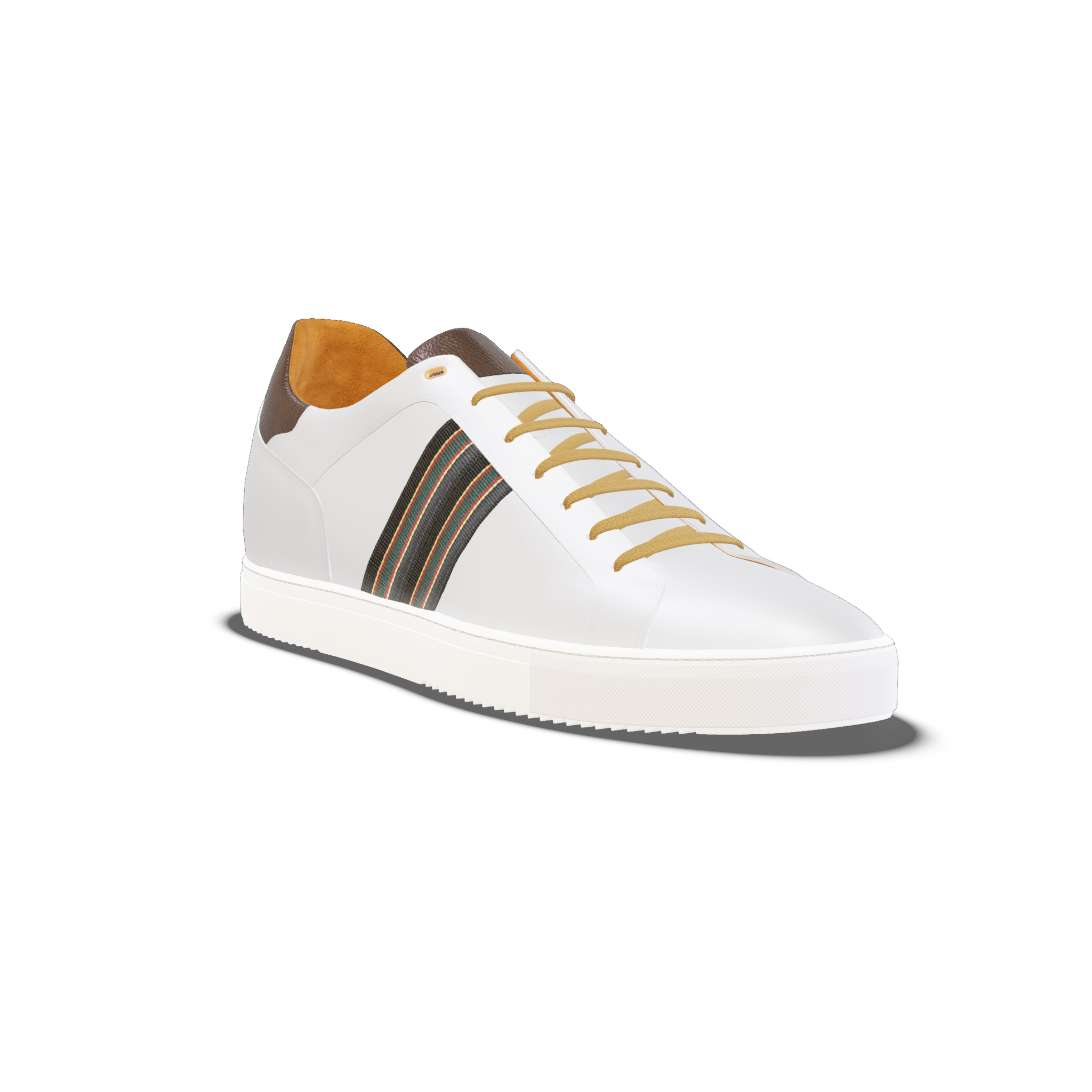
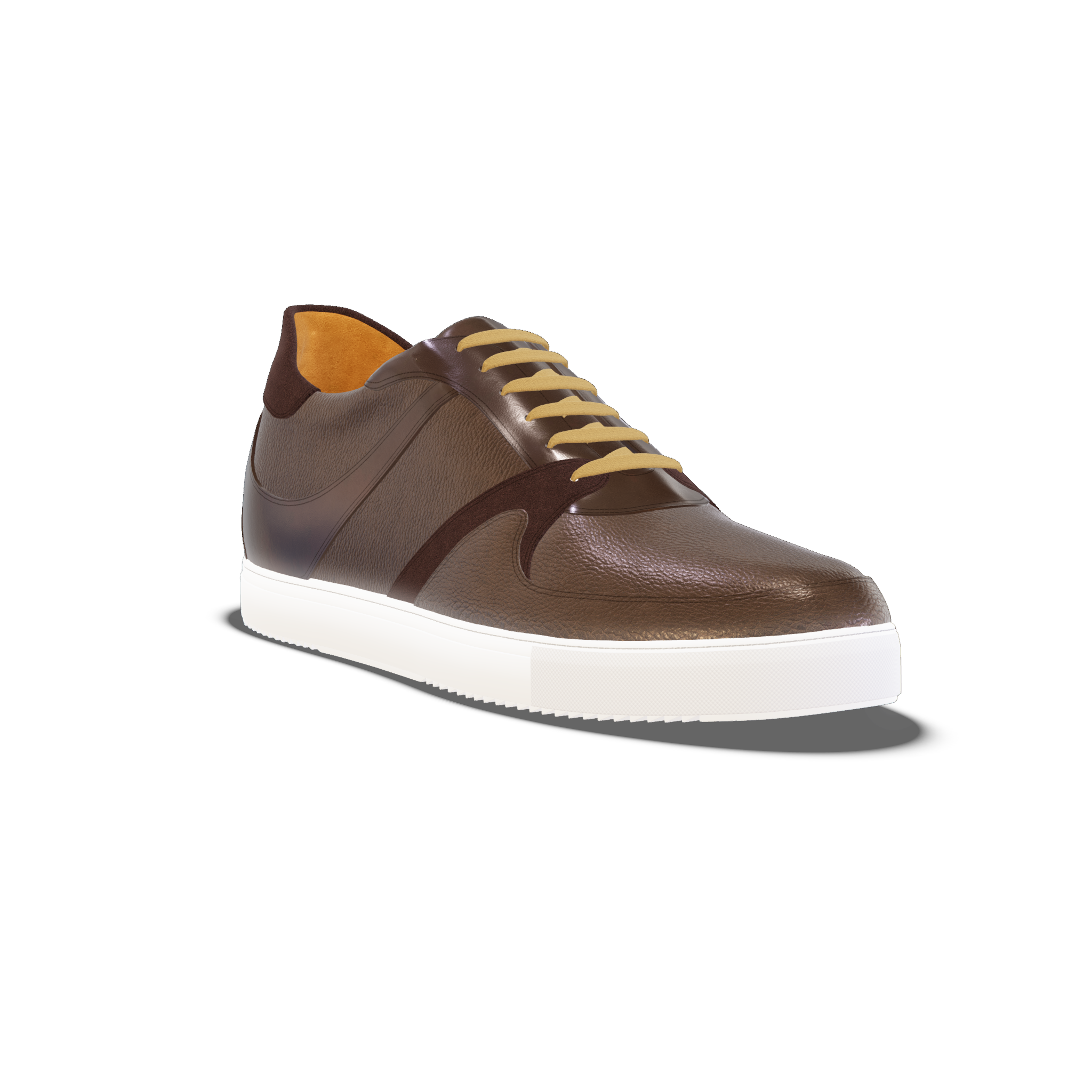
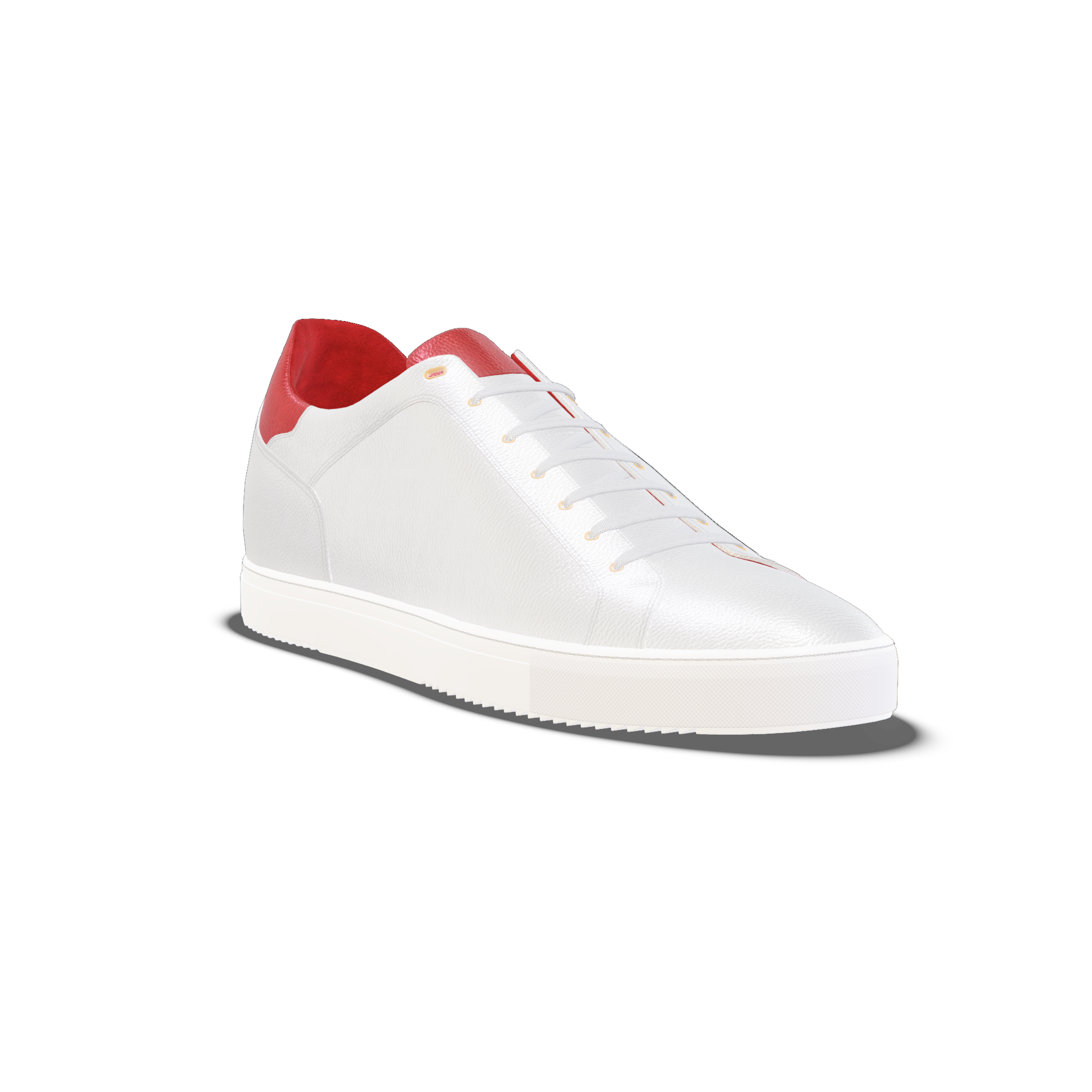
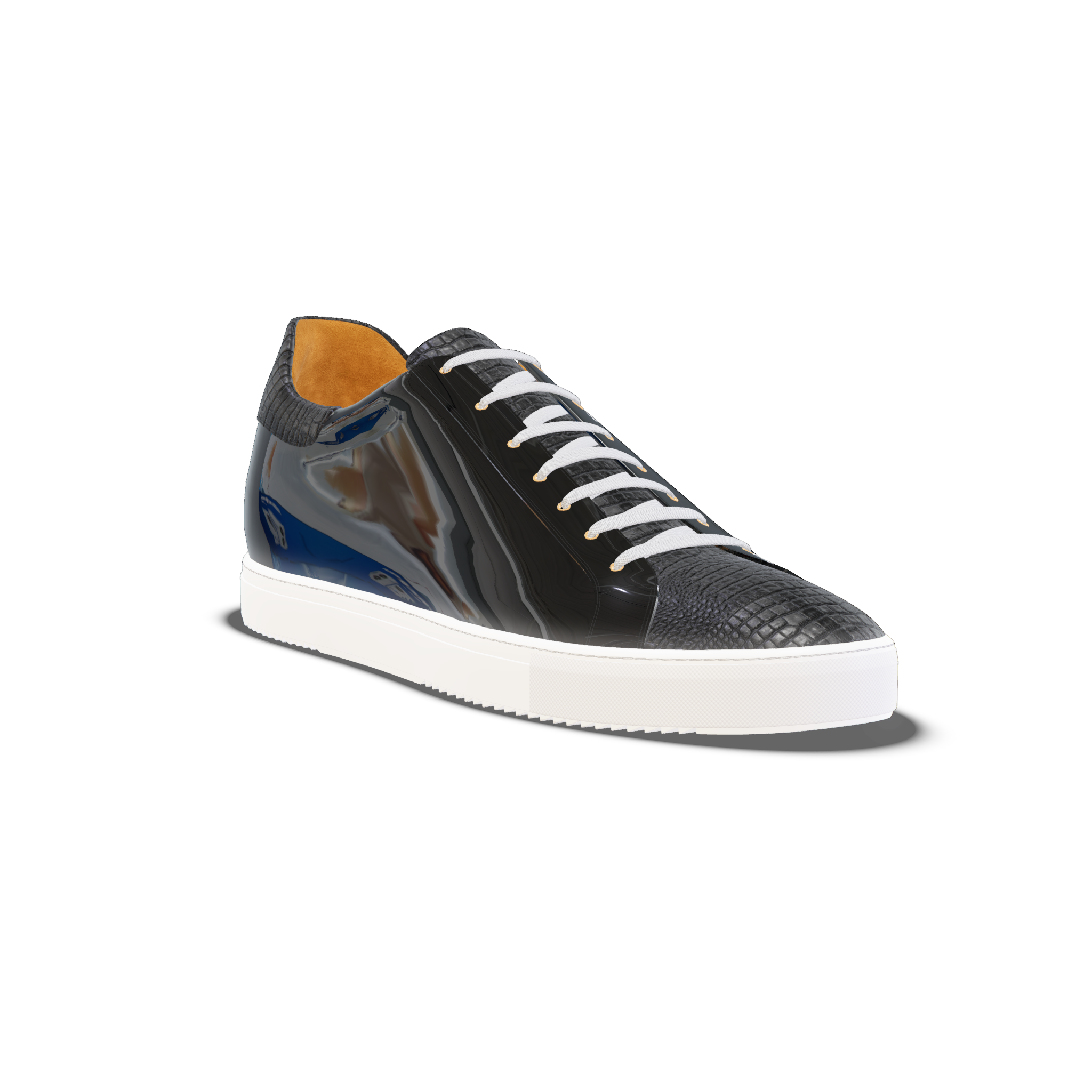
Jasperosso sneakers are handcrafted in Le Marche, Italy, using Italian leathers and made individually after the customer has determined their design. That does not make every pair a future heirloom, and claiming otherwise would rather miss the point.
What it does is establish the first condition.
The object has been created with sufficient material and human investment that keeping it for a long time makes sense.
The second condition belongs entirely to the owner.
They have to use it.
They have to care for it.
At some point, they may have to repair it.
And somewhere during those years, without anybody deliberately deciding that it should happen, the sneaker may begin accumulating something no workshop can manufacture.
Memory.
That is where an object starts becoming more than the sum of its leather, thread and rubber.
6. Repair Is an Act of Refusal
There is a moment in the life of almost every well-used object when something stops working as it once did. A watch needs servicing. A chair needs reupholstering. The zip on a favourite leather bag finally gives up after years of being asked to accommodate slightly more than its designer intended. A shoe needs attention to its sole, stitching or lining. At that moment, the owner faces a deceptively simple choice: repair it or replace it.
Modern consumer culture has become extremely good at making replacement the easier answer. New products are immediately available, repair can take time, and the economics of mass production sometimes make the extraordinary situation possible in which manufacturing an entirely new object costs less than paying a skilled person to repair the old one. Convenience points overwhelmingly towards replacement.
Yet repairing something communicates a very different idea.
I’m not finished with this yet.
That is why repair matters so much to the concept of an heirloom. It represents a deliberate interruption of the normal consumption cycle. Something has reached the point at which replacement would be reasonable, perhaps even easier, and the owner has decided that preserving this particular object matters more than acquiring another one.
The decision may initially be practical. A favourite pair of shoes fits perfectly. A watch has become familiar. A leather bag has exactly the right pockets in exactly the right places, something its owner only fully appreciates after examining seventeen potential replacements that inexplicably put the passport compartment somewhere useless.
But repeated repair changes the relationship.
Consider an old mechanical watch that has been serviced every five or ten years. Over several decades, parts may have been replaced, the movement adjusted, the seals changed and the bracelet repaired. Philosophically, it raises an entertaining version of the Ship of Theseus problem: how much can be replaced before it stops being the same watch?
Most owners would answer immediately.
Of course it is the same watch.
Its identity does not reside exclusively in every original component. It resides in continuity.
Footwear can develop the same relationship. Soles are inevitably sacrificial. Linings experience friction. Laces wear out. Stitching can occasionally require attention. None necessarily means the entire object has reached the end of its useful life, provided the underlying construction and materials remain sound.
This is where repairability becomes an overlooked characteristic of luxury. We frequently judge products by what they are like when new, when perhaps an equally important question is what can be done when they are no longer new.
Can it be maintained?
Can worn components be addressed?
Does the material reward care?
Was the object worth constructing well enough that somebody will eventually consider repairing it?
This connects directly with Why Handmade Still Matters in an Automated World. Craftsmanship is not valuable because old methods should automatically triumph over new ones. It is valuable when material knowledge and skilled human judgement create products capable of continuing rather than simply being replaced.
Repair therefore becomes more than maintenance.
It becomes a vote for continuity.
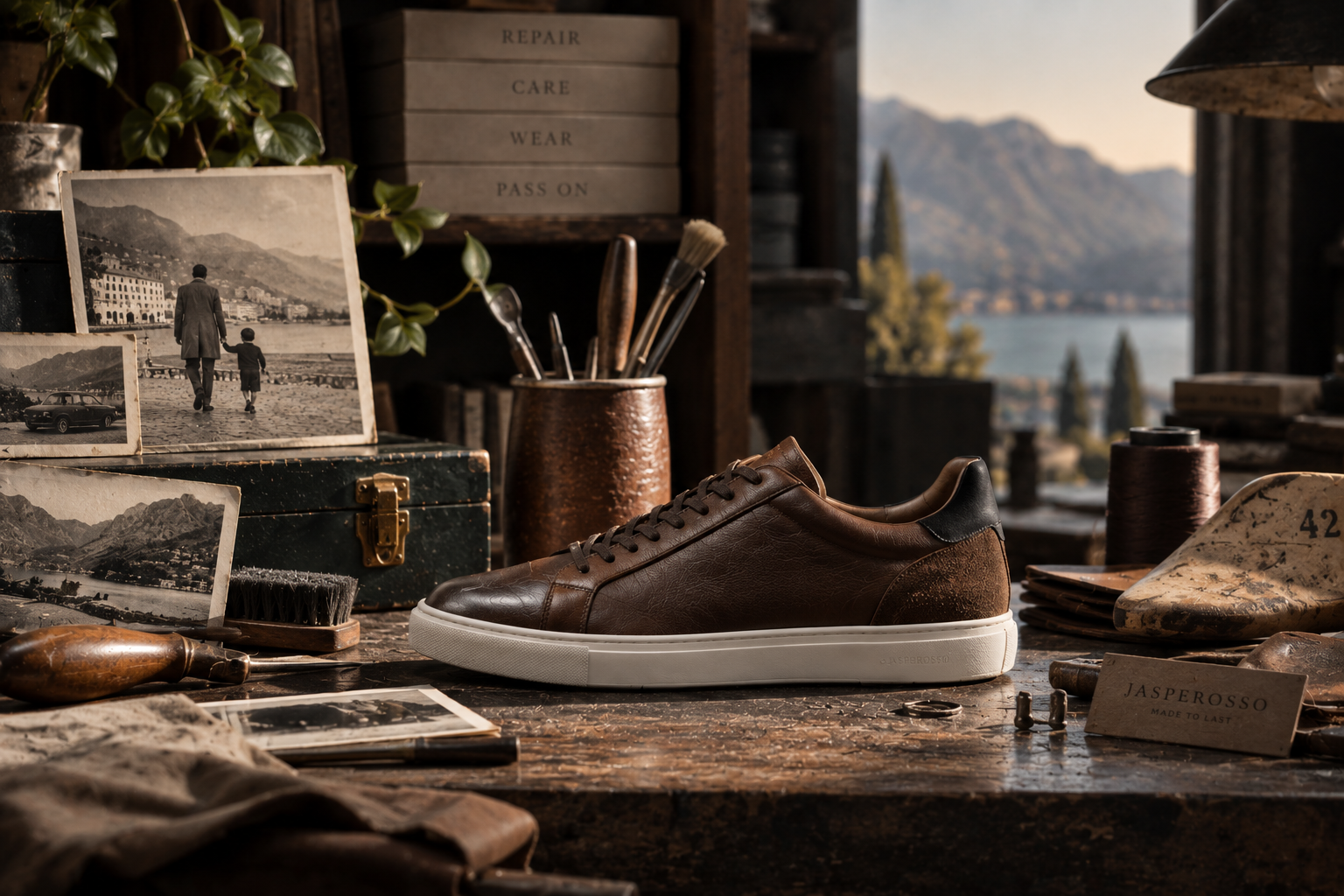
And every time that vote is cast, the object acquires another chapter.
7. Every Mark Has a Story — Even the Ones You’ve Forgotten
People are wonderfully inconsistent about marks on their possessions.
The first scratch on a new watch can ruin an otherwise pleasant afternoon. Six years later, the same owner may struggle to identify which scratch caused the original distress because it is now surrounded by dozens of others. Somewhere along the way, damage became patina.
Leather follows a similar trajectory.
The first significant crease across a new pair of sneakers receives suspicious inspection. Has something gone wrong? Should the leather be doing that? Would standing perfectly still for the foreseeable future help?
Then the second crease appears.
And the third.
Eventually, the leather begins doing what good natural leather has always done: adapting to movement, developing character and becoming visually different from every unworn example of the same product.
These marks are interesting because they are partly autobiographical.
Some have stories attached. A scratch on a watch may have happened during a particular journey. A stain inside a leather bag might recall a bottle of something that should definitely have been tightened more enthusiastically. A repaired seam may remind its owner of the moment an object nearly reached the end of its life and was rescued.
Other marks have no story whatsoever.
They simply appeared.
This arguably makes them even more representative of ownership because most of life consists not of major occasions but of ordinary days. The sneaker worn to a child’s wedding may also have been worn to the supermarket, a hundred dinners, several airports and countless walks whose details disappeared almost immediately.
The object retains evidence even when memory does not.
That idea is central to Why Real Luxury Rarely Looks New. The finest natural materials need not remain frozen in showroom condition to retain their value. Leather can become richer and more individual as ownership leaves its mark.
There is an important qualification. Ageing beautifully and merely becoming shabby are not interchangeable concepts, despite occasional heroic attempts to confuse the two. Patina requires a material capable of developing it and an owner willing to provide reasonable care.
Leather needs conditioning.
Suede needs appropriate cleaning.
Shoes need time to dry properly.
Repairs should be made before minor problems become structural ones.
Care is what allows wear to become character rather than destruction.
This creates a rather attractive paradox. To create something worth handing down, we should neither preserve it obsessively nor use it carelessly. We have to occupy the middle ground: use it properly and care about what happens to it.
That relationship leaves evidence.
Years later, the evidence may be precisely what another person values most.
8. What Would Your Children Actually Want to Keep?
This is where any discussion of future heirlooms encounters an inconvenient stakeholder.
The future heir.
We can buy something beautifully made, care for it meticulously and privately imagine a moving scene in which it is handed to the next generation together with a few carefully chosen words.
Unfortunately, the next generation may hate it.
This is an important limitation on the entire concept of heirlooms. We can create the conditions for an object to become one. We cannot issue instructions from beyond the grave requiring everybody else to find it meaningful.
Families are full of evidence.
The expensive dining table that was supposed to remain in the family for generations turns out to be far too large for anybody’s house. The carefully preserved china receives a polite but unconvincing response. The collection that consumed thirty years of somebody’s life suddenly encounters descendants with absolutely no interest in collecting the same thing.
Meanwhile, everyone wants Dad’s old watch.
Or Mum’s recipe book.
Or Grandad’s battered toolbox.
Or the leather jacket nobody had considered particularly valuable.
This is because inheritance operates emotionally rather than strategically.
The object that survives is often the one most strongly associated with the person.
This is precisely the behavioural relationship explored in The Objects That Quietly Define Us. A signature object acquires meaning through repetition. The same watch appears year after year. The same pen sits on the desk. The same style of sneaker is repeatedly chosen. Eventually, people stop noticing the object independently and start associating it with the person.
That association is enormously powerful when possessions are eventually distributed.
Imagine opening a wardrobe belonging to someone you have known all your life. There may be objectively more expensive items inside, yet your attention immediately goes to the jacket you remember them wearing, the watch you saw on their wrist or the shoes permanently positioned near the door.
You recognise them.
Not the brand.
Not the retail price.
Them.
Could a pair of sneakers survive this test?
Absolutely, although probably not in the way sneaker collecting currently imagines inheritance. The future heirloom may not be the unworn limited edition kept perfectly sealed in its box. That may become collectible and financially valuable, but its story belongs primarily to the market.
The more emotionally interesting pair may be the one that was actually worn.
The leather has softened.
The sole has been repaired.
The colour has deepened.
There is enough evidence of the owner that putting them beside a photograph of the person feels immediately familiar.
Whether the next generation chooses to wear them is another matter. Feet, rather inconveniently, do not inherit sentimental value in standardised sizes.
But an heirloom does not have to continue performing precisely its original function.
Sometimes preservation itself becomes the new function.
9. Passing On More Than an Object
An inherited object is unusual because two forms of ownership overlap.
It belongs physically to the new owner while remaining psychologically connected to the old one.
This is why inherited possessions often feel different from equivalent objects purchased second-hand. A vintage watch bought from a dealer has history, but most of that history is anonymous. The same watch inherited from a parent has provenance in the most personal possible sense.
You know the wrist it sat on.
You remember seeing it.
Perhaps you remember being told not to touch it.
This personal provenance can be especially powerful when the original owner had some role in creating or specifying the object.
A bespoke suit contains decisions about cloth, cut and proportion. A commissioned piece of furniture reflects choices about timber and form. A personalised pair of sneakers can record preferences in leather, colour, texture, lining and detail.
That makes customisation interesting from an heirloom perspective.
Today, personalisation is often discussed as a means of differentiation: creating something nobody else has. But longevity changes the significance of those choices. Decades later, the fact that somebody specifically chose chocolate calf leather, dark brown suede and an unexpectedly burgundy lining may reveal something about them.
Perhaps those colours appeared throughout their wardrobe.
Perhaps the combination was characteristically restrained.
Perhaps it was spectacularly eccentric.
Either way, the design contains decisions.
This is where The Luxury of Knowing Exactly What You Like becomes particularly relevant. Personal style becomes more meaningful when choices emerge from established preference rather than temporary novelty. An object created from those preferences can become a surprisingly accurate physical record of taste.
The same principle underlies The Beauty of Restraint. Personalisation does not require selecting every available option. Sometimes the most distinctive design is the one in which somebody knew exactly what to leave alone.
Imagine receiving such an object decades later.
You are not simply inheriting leather, thread and rubber.
You are inheriting decisions.
Someone stood in front of a range of possibilities and said: this colour, this texture, this combination.
That was what they liked.
And because they then wore the object repeatedly, those original design choices become layered with physical evidence of ownership.
The object contains both intention and experience.
That is a powerful combination.
10. The Heirlooms of Tomorrow Are Being Used Today
There is probably an object somewhere in your home right now that another person will one day regard very differently from the way you do.
You may have no idea which one.
That is part of the fascination.
Perhaps it is the obvious candidate: the good watch, the piece of jewellery or the furniture deliberately purchased with longevity in mind.
Perhaps it isn’t.
Perhaps it is the notebook on your desk.
The camera you take everywhere.
The leather weekend bag that has been on every significant journey for fifteen years.
Or, quite possibly, the pair of sneakers beside the door.
The transformation will not happen because somebody declares the object an heirloom.
It will happen gradually.
You will use it.
It will change.
You will maintain it.
Something will break.
You will decide to repair it rather than replace it.
More years will pass.
Other people will repeatedly see you with it.
Eventually, the object will accumulate enough association that separating it from its owner becomes psychologically difficult.
That is when the possibility of an heirloom begins.
This is why longevity matters beyond durability. The longer an object remains useful, the greater the opportunity for memory to attach itself to it. A product does not become meaningful simply because it lasts twenty years, but it cannot accumulate twenty years of experience if it disintegrates after two.
Physical longevity creates emotional opportunity.
The argument therefore returns to craftsmanship.
We cannot manufacture memories into an object. We can manufacture the conditions that allow memories to accumulate.
We can choose materials that age well.
We can construct products carefully.
We can design beyond the shortest trend cycle.
We can make repair possible where practical.
And owners can choose to care for those objects rather than regard replacement as inevitable.
After that, time takes over.
The Future Heirloom May Look Surprisingly Ordinary
Perhaps our mental picture of an heirloom needs updating.
We tend to imagine mahogany furniture, mechanical watches, silverware, jewellery and other objects already carrying the visual language of permanence.
Tomorrow’s heirlooms may look rather different.
They may include cameras that documented entire childhoods. Headphones used while creating important work. Beautifully made bicycles. Leather bags covered in the evidence of decades of travel. Musical instruments. Clothing. Sneakers.
This does not diminish the idea of an heirloom.
It reflects how our lives have changed.
The objects worth passing down have always been the objects through which people lived. As lifestyles evolve, those objects inevitably evolve with them.
A century ago, formal leather shoes participated in daily life to an extent they no longer do for many people. Today, premium sneakers can occupy that position. They travel between work and leisure, cities and countries, ordinary days and significant occasions.
If heirlooms are partly objects that carry evidence of a person’s life, there is no reason footwear should be excluded simply because its silhouette happens to be contemporary.
The real question is whether it was made to survive long enough.
Conclusion: Made to Last Long Enough to Matter
The most compelling thing about heirlooms is that they expose the limitations of price.
An expensive object can become an heirloom.
So can an inexpensive one.
A rare object can be treasured.
So can something once completely ordinary.
Market value helps explain what an object costs. It does not determine what the object eventually means.
Meaning comes from somewhere else.
It comes from the person who chose it, the years they used it, the places it travelled, the marks it accumulated and the moments in which somebody decided it was worth repairing rather than replacing.
That process cannot be accelerated.
Nor can it be guaranteed.
A company can manufacture an expensive product and describe it as “heirloom quality”, but it cannot manufacture the heirloom itself. The phrase only becomes true retrospectively, when another generation decides the object is worth keeping.
This is why the future-heirloom idea offers such an interesting definition of luxury.
Luxury stops being merely about acquisition and starts becoming about continuity.
The object needs to be good enough that novelty is not its greatest quality. It needs materials capable of ageing, construction capable of enduring and a design capable of remaining relevant after the season in which it was purchased has become an increasingly distant memory.
Most importantly, somebody has to want to keep using it.
This is closely aligned with the philosophy behind The Confidence of Wearing Less. Fewer, better objects only make sense when those objects reward repeated ownership. The goal is not simply to possess less, but to own things sufficiently good that replacement stops feeling urgent.
And perhaps that is the most useful way to think about the possibility of a sneaker becoming an heirloom.
Do not design it to sit in a box for thirty years.
Design it to be worth wearing for as many of those years as possible.
Let the leather crease.
Look after it.
Repair what can sensibly be repaired.
Take it somewhere.
Allow ordinary life to happen around it.
One day, somebody else may pick it up and see nothing more than an old pair of sneakers.
Or they may immediately know whose they were.
That difference cannot be designed, marketed or bought.
It has to be lived.
We cannot manufacture an heirloom. We can only make something well enough to have the chance of becoming one.

By Katy Trumble